Category: Calling & Call Center

Articles about business calling, call center operations, call routing, call handling, and call performance.

  • Call Abandonment Rate: How to Calculate and Reduce It

    Call Abandonment Rate: How to Calculate and Reduce It

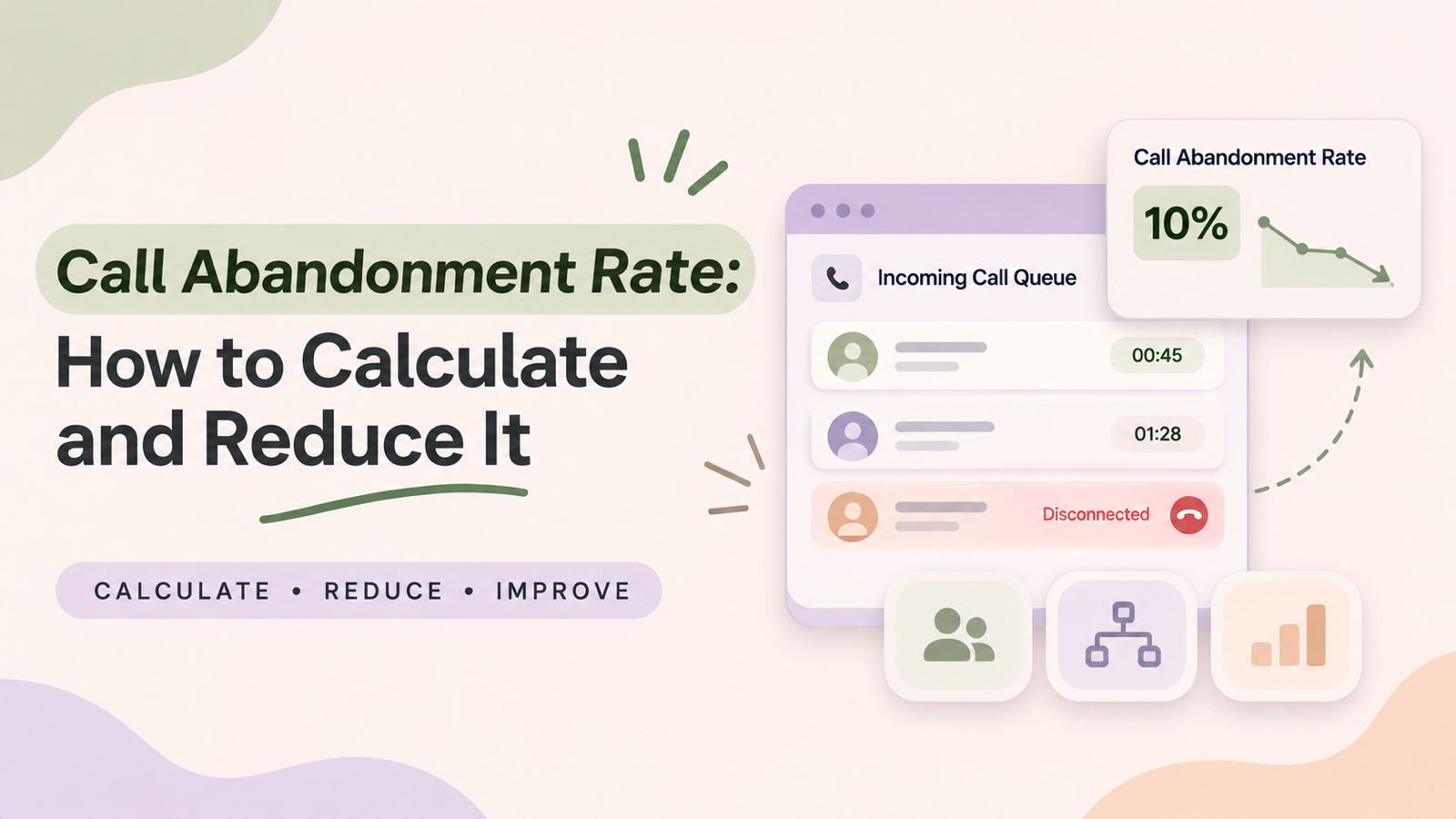
    Call Abandonment Rate measures the percentage of inbound calls that customers disconnect before reaching a live agent. It helps businesses understand how many callers leave without receiving the support they need.

    Long waiting times, confusing call menus, and unavailable agents are common reasons why customers abandon calls. As a result, businesses may lose potential customers, miss important inquiries, and create a poor customer experience.

    In this guide, you will learn how to calculate Call Abandonment Rate, understand why customers disconnect, and discover 10 practical ways to reduce abandoned calls. You will also learn how call analytics can help businesses improve call handling and manage incoming calls more effectively.

    What Is Call Abandonment Rate?

    Call Abandonment Rate is the percentage of eligible inbound callers who disconnect before speaking with a live agent. It usually happens when customers have to wait too long or cannot reach the right department.

    For example, imagine a customer calling a company’s support team to ask about an order. The caller enters the phone queue but waits several minutes without receiving an answer. Eventually, the customer hangs up.

    This is an example of an abandoned call.

    Businesses track this metric to understand whether their support teams can handle incoming calls effectively. A higher rate may point to long queues, poor routing, or a lack of available agents.

    However, the metric should not be viewed alone. Managers should also review waiting times, call volumes, and staffing levels to understand the full picture.

    How to Calculate Call Abandonment Rate

    Businesses can calculate Call Abandonment Rate with a simple formula.

    Call Abandonment Rate Formula:

    Call Abandonment Rate = (Number of Abandoned Calls ÷ Total Eligible Inbound Calls Offered) × 100

    Here:

    • Abandoned calls: Eligible inbound calls disconnected by customers before reaching a live agent.
    • Total eligible inbound calls offered: Inbound calls included in the reporting period according to the business’s measurement rules.

    Call Abandonment Rate Calculation Example

    Suppose a customer support team receives 1,000 eligible inbound calls in one day.

    The call results are:

    Call outcomeNumber of calls
    Calls answered900
    Calls abandoned100
    Total eligible inbound calls1,000

    Using the formula:

    Call Abandonment Rate = (100 ÷ 1,000) × 100

    Call Abandonment Rate = 10%

    This means that 10% of eligible incoming calls were abandoned during that reporting period.

    For accurate reporting, businesses should define how they treat short abandons, IVR disconnects, callbacks, and technical disconnections. Calls excluded under the measurement policy should not be included in the eligible call count.

    The exact calculation can vary depending on the phone system and reporting methodology. Therefore, businesses should document their rules and apply them consistently.

    Should You Exclude Short Abandoned Calls?

    Some callers disconnect within the first few seconds. They may have dialed the wrong number, called by mistake, or ended the call before entering the queue.

    Therefore, some businesses exclude these short abandons from their main calculation.

    For example, a company may choose a five-second threshold. However, this is not a universal rule.

    The important thing is to document the chosen threshold and use the same method when comparing results.

    For more details about abandoned calls and how they are measured, refer to TechTarget’s explanation of abandoned call rates.

    Why Is Call Abandonment Rate Important?

    Tracking this metric helps businesses understand how easily customers can reach their support teams.

    Here are five important reasons to monitor it.

    1. Better Customer Experience

    Customers want quick answers to their questions. When they spend too much time waiting, they may become frustrated.

    As a result, they may choose another way to contact the business or stop seeking help altogether.

    2. Fewer Lost Sales Opportunities

    An incoming call may come from a new customer who wants to learn about a product or service.

    If nobody answers, that potential customer may contact a competitor instead.

    Therefore, improving call handling can help businesses respond to more sales inquiries.

    3. Improved Support Operations

    A high abandonment rate can point to problems with agent availability, call routing, or queue management.

    Managers can use this information to review their processes and decide where improvements are needed.

    4. Better Team Planning

    Call volume often changes throughout the day.

    For example, a business may receive more calls during the morning or after a promotional campaign.

    By reviewing these patterns, managers can plan agent schedules more effectively.

    5. More Consistent Customer Communication

    Customers should be able to reach the right team without unnecessary transfers or delays.

    Therefore, businesses should review their calling processes regularly and make sure each department can handle its incoming calls.

    What Causes a High Call Abandonment Rate?

    Before trying to reduce abandoned calls, businesses should identify why customers are disconnecting.

    The following issues are common causes.

    1. Long Call Waiting Times

    Long waiting times are a major reason customers leave a phone queue.

    When more people call than the available agents can handle, the queue becomes longer.

    As a result, some customers may disconnect before receiving assistance.

    2. Limited Agent Availability

    A support team may not have enough available agents during busy periods.

    This can happen because of staff shortages, breaks, unexpected absences, or sudden increases in call volume.

    Therefore, businesses should compare agent availability with actual incoming call demand.

    3. Poor Call Routing

    Call routing problems can send customers to the wrong department or an unavailable employee.

    For example, a customer calling about a payment issue should not have to move between several teams before reaching the billing department.

    Clear routing rules can make the process easier.

    4. Complicated IVR Menus

    An Interactive Voice Response (IVR) system helps callers select the department they need.

    However, menus with too many options can confuse customers.

    In addition, unclear instructions may force callers to repeat the same steps.

    A simple menu with clear options can make the calling experience better.

    5. Sudden Increases in Call Volume

    Marketing campaigns, seasonal demand, product launches, and service issues can increase incoming calls.

    If businesses do not prepare for these changes, their support teams may struggle to respond.

    As a result, more callers may disconnect while waiting.

    6. No Clear Alternative for Customers

    Sometimes, customers cannot wait on the phone.

    If a business does not provide another suitable contact option, callers may simply disconnect and look elsewhere.

    Therefore, businesses should make other available support channels easy to find.

    10 Ways to Reduce Call Abandonment Rate

    Reducing abandoned calls requires a clear plan. Businesses should improve how calls enter the system, reach agents, and receive follow-up.

    Here are ten practical ways to improve call handling.

    1. Improve Call Routing

    First, make sure incoming calls reach the correct department.

    Businesses can organize their phone menus around common customer needs.

    For example:

    • Press 1 for Sales.
    • Press 2 for Customer Support.
    • Press 3 for Billing.

    This helps customers choose the right option without unnecessary transfers.

    2. Monitor Busy Calling Hours

    Next, review call activity throughout the day.

    Identify the hours when incoming call volume is highest. Then, compare those periods with the number of available agents.

    For example, if calls increase between 10 AM and 12 PM, managers can plan additional coverage during those hours.

    This helps teams prepare for busy periods instead of reacting after queues become long.

    3. Plan Agent Availability

    Staffing plans should reflect actual customer demand.

    Managers should consider:

    • Incoming call volume.
    • Agent availability.
    • Average call handling time.
    • Break schedules.
    • Seasonal changes.

    In addition, review these factors regularly because customer demand can change over time.

    4. Keep IVR Menus Simple

    An IVR menu should help customers reach the right team quickly.

    Use clear language and avoid unnecessary options.

    For example, separate sales, support, and billing inquiries instead of placing every request under a single menu option.

    Also, review menu instructions when departments or business hours change.

    5. Use Call Distribution Carefully

    When several employees share one business number, call distribution can help organize who receives incoming calls.

    For example, a round-robin setup can send each new call to the next available teammate in the configured order.

    However, call distribution and call queuing are not the same thing. A hunt group distributes calls among team members, while a queue holds callers until an agent accepts the call.

    Businesses should choose the approach that fits their team structure.

    6. Communicate Waiting Information Clearly

    Customers should not be left unsure about what is happening after they call.

    Where the phone system supports it, provide clear queue messages and explain the available options.

    In addition, keep recorded messages short and useful.

    Clear communication helps customers understand the next step.

    7. Review Missed Calls and Follow Up

    Not every call will be answered on the first attempt.

    Therefore, businesses should review missed calls and decide which customers need a follow-up.

    For example, a sales team can prioritize calls from new prospects, while a support team can reconnect with customers who requested assistance.

    A clear follow-up process helps prevent missed opportunities.

    8. Train Agents to Handle Calls Efficiently

    Agent training also plays an important role.

    Employees should understand how to handle common questions, transfer calls correctly, and use the available communication tools.

    Moreover, clear internal processes can reduce unnecessary transfers and repeated explanations.

    9. Track Calling Performance Regularly

    Businesses should review their calling data every day or week, depending on call volume.

    Look for patterns such as:

    • Higher abandoned calls during specific hours.
    • Increased missed calls in one department.
    • Changes in incoming call volume.
    • Repeated problems with call routing.

    This makes it easier to identify problems and take action.

    10. Improve the Process Based on Results

    Finally, do not stop after reviewing the numbers.

    Use the findings to make practical changes.

    For example, adjust schedules when demand increases, simplify confusing menus, or improve the way incoming calls reach agents.

    Then, measure the results again.

    This creates a continuous improvement process rather than a one-time fix.

    Call Abandonment Rate vs. Missed Call Rate

    These two metrics are related, but they do not always describe the same outcome.

    MetricMeaning
    Call Abandonment RateEligible callers disconnect before reaching an agent.
    Missed Call RateIncoming calls that the business does not answer.
    Call Answer RatePercentage of eligible calls answered.
    Average Speed of AnswerAverage time taken to answer eligible calls.

    For example, a customer who disconnects while waiting in a queue may count as an abandoned call.

    On the other hand, a call that rings without an employee answering may be recorded as a missed call.

    The exact definitions depend on the phone system and reporting rules. Therefore, businesses should keep their measurement methods consistent.

    Which Contact Center Metrics Should You Track Alongside Abandonment?

    A single metric cannot explain every problem in a support team.

    For better decisions, businesses should review several performance indicators together.

    MetricWhat It Measures
    Average Handle Time (AHT)Time spent handling a call, including related work.
    Average Speed of Answer (ASA)Average waiting time before an agent answers.
    First Call Resolution (FCR)Issues resolved during the first call.
    Call VolumeTotal incoming and outgoing calls.
    Call Answer RateShare of eligible calls answered.
    Service LevelCalls answered within a defined time target.
    Missed Call RateShare of calls not answered by the business.

    For example, a rise in abandoned calls alongside longer waiting times may suggest that a team needs better staffing or call handling.

    Similarly, an increase in missed calls during specific hours may show where additional coverage is required.

    According to Genesys’s contact center metric definitions, teams can use performance indicators such as abandonment rate, answer rate, and average wait time to understand contact center operations.

    How Call Analytics Helps Businesses Understand Abandoned Calls

    Call analytics helps businesses review calling activity and identify areas that need attention.

    Instead of relying on assumptions, managers can use call reports and dashboards to understand what is happening.

    A useful review process includes:

    1. Check incoming call activity.
    2. Review answered and missed calls.
    3. Identify busy calling hours.
    4. Compare performance across reporting periods.
    5. Review the available abandonment data.
    6. Make changes to the calling process.
    7. Measure the results again.

    DialNext provides call reporting that keeps answered and missed calls together in one list. Teams can also see who handled each answered call.

    In addition, DialNext Analytics dashboards include metrics such as total calls, inbound and outbound calls, missed rate, average handle time, abandonment rate, and busy hours.

    These insights help businesses understand their calling activity and identify areas that may need attention.

    Explore DialNext Call Analytics to learn more about call reporting and performance visibility.

    Best Practices for Managing Incoming Calls

    Businesses can improve their calling processes by following a few simple practices.

    • Review call activity regularly.
    • Keep IVR menus clear and easy to follow.
    • Match agent availability with incoming demand.
    • Use suitable call routing rules.
    • Review missed calls and follow up when needed.
    • Track performance across consistent reporting periods.
    • Train agents to handle common customer questions.
    • Use call reports to identify areas for improvement.

    Most importantly, focus on making it easier for customers to reach the right person.

    A lower abandonment rate is useful, but the real goal is to provide reliable and helpful customer support.

    Frequently Asked Questions

    1. What is Call Abandonment Rate?

    Call Abandonment Rate is the percentage of eligible inbound callers who disconnect before reaching a live agent. It helps businesses understand how many customers leave before receiving assistance.

    2. How do you calculate Call Abandonment Rate?

    Divide the number of eligible abandoned calls by the total number of eligible inbound calls offered. Then multiply the result by 100 to get the percentage.

    Formula: Call Abandonment Rate = (Abandoned Calls ÷ Total Eligible Inbound Calls) × 100.

    3. What causes a high Call Abandonment Rate?

    Common causes include long waiting times, limited agent availability, complicated IVR menus, poor call routing, and unexpected increases in incoming call volume.

    4. What is a good Call Abandonment Rate?

    There is no single target that works for every business. The right target depends on the industry, customer expectations, queue design, and measurement rules. Businesses should first establish a reliable baseline and then work to improve it.

    5. What is the difference between an abandoned call and a missed call?

    An abandoned call happens when a customer disconnects before reaching an agent. A missed call is an incoming call that the business does not answer. The exact classification can vary by phone system.

    6. How can IVR reduce abandoned calls?

    A clear IVR menu helps callers select the correct department. As a result, customers can reach the right team without unnecessary transfers or confusion.

    7. Why should businesses monitor abandoned calls?

    Monitoring abandoned calls helps businesses identify service gaps, understand customer waiting problems, and improve staffing and call handling.

    8. How often should businesses review Call Abandonment Rate data?

    Businesses should review the data regularly. High-volume support teams may benefit from daily reviews, while smaller teams can begin with weekly reviews and investigate unusual changes.

    9. Can call analytics help reduce abandoned calls?

    Yes. Call analytics can help businesses identify patterns in call activity, review performance metrics, and find periods when calling processes may need improvement.

    10. What is the difference between call abandonment and call drop?

    Call abandonment usually occurs when a customer disconnects before reaching an agent. A call drop happens when an active call disconnects unexpectedly because of a technical or network issue.

    Conclusion

    Call Abandonment Rate helps businesses understand how effectively they handle incoming customer calls.

    A high rate may point to long waiting times, limited agent availability, confusing phone menus, or poor call routing. However, businesses can address these problems by reviewing call activity and improving their support processes.

    Start by calculating the metric consistently. Then, identify the busiest hours, review agent availability, and make it easier for customers to reach the right department.

    In addition, use call analytics to monitor changes and understand whether your improvements are working.

    With regular monitoring and better call management, businesses can make their support teams more accessible and deliver a better customer experience.

    References and Further Reading

    Improve Your Business Calling Experience with DialNext

    Managing incoming calls starts with understanding what happens when customers contact your business.

    DialNext helps businesses manage customer conversations with cloud business calling, IVR, call distribution, and call reporting. Review answered and missed calls, understand calling activity, and build more organized communication workflows.

    Explore DialNext Call Analytics to learn how better call visibility can support your team’s communication processes.

    Ready to improve the way your business manages incoming calls? Explore DialNext and discover how better calling workflows can help your team manage customer conversations more effectively.
  • Call Center Quality Assurance: A Complete Guide

    Call Center Quality Assurance: A Complete Guide

    Call center quality assurance (QA) helps businesses evaluate customer interactions, identify service gaps, and improve agent performance. Every customer call is an opportunity to understand customer needs, resolve issues, and build trust. However, without a structured quality assurance process, it can be difficult to maintain consistent service standards across a team.

    A well-defined call center quality assurance process allows managers to review conversations, measure agent performance, identify recurring problems, and provide meaningful feedback. As a result, businesses can improve customer satisfaction while helping agents handle conversations more effectively.

    In this guide, we will explain what call center quality assurance is, why it matters, which metrics to track, how to build a QA scorecard, and which best practices can help improve contact center performance.

    What Is Call Center Quality Assurance?

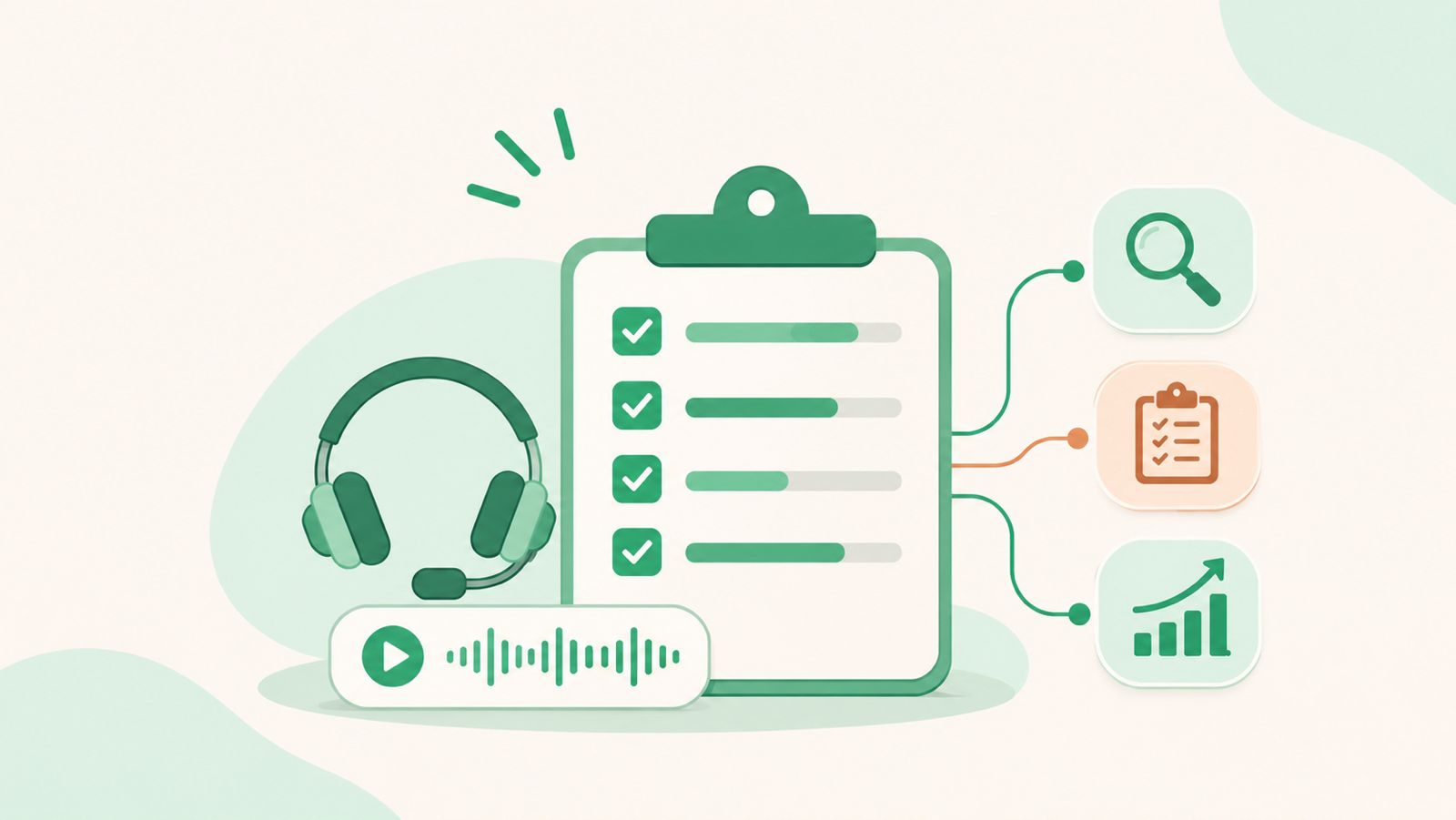
    Call center quality assurance is the process of monitoring, reviewing, and evaluating customer interactions to ensure that agents follow company standards and deliver a consistent customer experience.

    In practice, this process involves reviewing recorded calls, evaluating communication skills, checking whether customer issues were resolved, and assessing compliance with internal policies.

    For example, a QA manager may review a customer support call to check whether the agent:

    • Greeted the customer professionally.
    • Understood the customer’s concern.
    • Provided accurate information.
    • Followed the correct procedures.
    • Resolved the issue or explained the next steps.
    • Ended the conversation politely.

    After the evaluation, managers can assign scores, identify improvement areas, and provide targeted coaching. As a result, agents get clearer guidance on how to improve their customer interactions.

    Why Is Call Center Quality Assurance Important?

    A structured QA process benefits both customers and employees. More importantly, it helps businesses understand how customer conversations are handled and where improvements are needed.

    1. Improves Customer Satisfaction

    Customers expect quick, accurate, and helpful responses. Therefore, managers need to understand how agents handle customer concerns.

    By reviewing interactions, managers can identify communication gaps and improve the way agents respond. As a result, customers receive more consistent support and are more likely to have positive experiences.

    2. Improves Agent Performance

    Quality monitoring helps managers understand individual agent strengths and weaknesses. Instead of relying on assumptions, they can use actual call evaluations to provide specific feedback.

    For instance, an agent who struggles with product knowledge may benefit from additional training. Similarly, an agent who interrupts customers may need coaching on active listening.

    3. Maintains Consistent Service Standards

    As call volumes increase, maintaining consistent service quality becomes more challenging. For this reason, a standard QA framework is important.

    It ensures that every agent is evaluated using the same criteria. Consequently, managers can maintain service expectations across different teams and shifts.

    4. Identifies Training Requirements

    Call evaluations can reveal recurring knowledge gaps, process errors, and communication problems.

    Instead of providing generic feedback to the entire team, managers can use these findings to create focused training sessions. This approach makes coaching more relevant and practical.

    5. Helps Maintain Compliance

    Depending on the industry, agents may need to follow specific procedures when handling customer information, payments, or sensitive requests.

    Through regular quality checks, managers can identify situations where agents miss required disclosures or fail to follow internal policies. However, QA reviews should complement, rather than replace, formal compliance controls.

    6. Reduces Repeated Customer Issues

    When managers identify why customers repeatedly contact support, they can investigate the underlying problem.

    For example, repeated calls about the same billing issue may indicate unclear communication, an inefficient process, or an unresolved customer concern. By addressing the root cause, businesses can reduce repeat interactions and improve the overall support experience.

    How Does the Call Center Quality Assurance Process Work?

    An effective QA process follows a consistent workflow. Although the exact process varies by business, most call centers use the following steps.

    Step 1: Define Quality Standards

    First, identify what a successful customer interaction should look like.

    Set clear expectations for greetings, communication, product knowledge, problem resolution, compliance, and call closure. Additionally, document these standards so that agents and evaluators understand how performance will be assessed.

    Step 2: Select Calls for Evaluation

    Next, select customer interactions for review.

    Managers can evaluate a sample of calls from each agent, focus on specific interaction types, or review calls associated with customer complaints and escalations.

    However, selecting only unusually good or poor calls may not provide an accurate picture of overall performance. Therefore, use a balanced sampling approach.

    Step 3: Review and Evaluate Conversations

    Once calls have been selected, listen to the recordings and assess each interaction against the established QA criteria.

    During the review, consider whether the agent followed the correct process, communicated clearly, understood the customer, and provided an appropriate resolution. To maintain consistency, use a standard scorecard for every evaluation.

    Step 4: Record Scores and Observations

    After reviewing a conversation, document the evaluation results, including scores, strengths, and areas that need improvement.

    Where possible, include specific examples from the conversation. This makes feedback easier to understand and helps agents identify exactly what they need to improve.

    Step 5: Provide Feedback and Coaching

    Once the evaluation is complete, share the results with agents through regular coaching sessions.

    Start by recognizing good performance. Then, explain improvement areas and suggest practical ways to handle similar situations better. In addition, allow agents to ask questions or share context about difficult interactions.

    Step 6: Monitor Progress and Improve

    Finally, compare evaluation results over time to understand whether coaching and process changes are working.

    Review recurring issues, update training materials, and adjust QA criteria when business requirements change. Ultimately, quality assurance should be an ongoing improvement process rather than a one-time evaluation.

    Important Call Center Quality Assurance Metrics to Track

    Tracking the right metrics helps managers understand service quality and identify performance trends. However, individual metrics should always be considered alongside call evaluations and customer feedback.

    Here are some important metrics to monitor.

    1. QA Score

    The QA score measures how well an agent follows the quality standards defined in the evaluation scorecard.

    A higher score generally indicates that the agent is meeting more of the expected service criteria.

    Formula:

    QA Score = (Points Earned ÷ Total Possible Points) × 100

    2. First Call Resolution (FCR)

    First Call Resolution measures the percentage of customer issues resolved during the first interaction without requiring another contact for the same issue.

    Formula:

    FCR = (Issues Resolved on First Contact ÷ Total Eligible Issues) × 100

    Generally, a higher FCR can indicate effective issue resolution. Nevertheless, businesses should define what counts as a resolved issue and how repeat contacts are identified.

    3. Customer Satisfaction Score (CSAT)

    CSAT measures how satisfied customers are with a particular interaction, product, or service.

    Businesses commonly collect this information through post-call surveys. For accurate comparisons, the survey scale and definition of a positive response should remain consistent.

    Formula:

    CSAT = (Positive Survey Responses ÷ Total Survey Responses) × 100

    4. Average Handle Time (AHT)

    Average Handle Time measures the average duration required to handle a customer interaction, including talk time, hold time, and after-call work.

    Formula:

    AHT = (Total Talk Time + Total Hold Time + Total After-Call Work) ÷ Total Handled Calls

    Although AHT can help identify operational inefficiencies, it should not be treated as a standalone measure of quality. Instead, managers should consider it alongside customer satisfaction and resolution quality.

    5. Call Abandonment Rate

    Call Abandonment Rate measures the percentage of callers who disconnect before reaching an agent.

    Formula:

    Call Abandonment Rate = (Abandoned Calls ÷ Total Eligible Incoming Calls) × 100

    A high abandonment rate may indicate long waiting times, insufficient staffing, or inefficient call routing. Therefore, managers should investigate these factors before deciding which operational changes are required.

    6. Compliance Score

    A compliance score evaluates whether agents follow required procedures, scripts, disclosures, and internal policies during customer interactions.

    For businesses operating in regulated industries, these checks are especially important. However, evaluation criteria should always reflect the specific legal and operational requirements applicable to the business.

    Manual vs. Automated Call Center Quality Assurance

    Call centers can use manual or automated methods to evaluate customer interactions. Although both approaches aim to improve service quality, they have different advantages and limitations.

    Manual QA provides context and human judgment, especially when evaluating empathy, tone, and complex customer situations.

    On the other hand, automated QA tools can help teams process larger volumes of interactions and identify patterns. However, automated results may still require human review, particularly when evaluating context, customer intent, or nuanced conversations.

    For this reason, many businesses combine both approaches to balance coverage and evaluation quality.

    Common Call Center Quality Assurance Mistakes

    Even when a QA framework is in place, certain mistakes can reduce its effectiveness. Therefore, managers should understand these common problems and take steps to avoid them.

    1. Evaluating Too Few Calls

    Reviewing only a small number of interactions may not represent an agent’s overall performance.

    How to avoid it: Use a consistent sampling approach. Additionally, include different call types, shifts, and customer scenarios.

    2. Focusing Only on Scores

    A numerical score does not always explain why an agent performed well or poorly.

    How to avoid it: Include specific observations and examples alongside evaluation scores. This gives agents a clearer understanding of their performance.

    3. Ignoring Agent Feedback

    QA should not be a one-way process. In fact, agents may have useful context about difficult customer situations, unclear procedures, or recurring operational problems.

    How to avoid it: Encourage two-way discussions during coaching sessions. As a result, managers can understand operational challenges more effectively.

    4. Prioritizing Call Duration Over Resolution

    Reducing Average Handle Time without considering customer outcomes can encourage rushed conversations.

    How to avoid it: Evaluate call duration alongside customer satisfaction, resolution quality, and compliance. This ensures that efficiency does not come at the expense of customer experience.

    5. Providing Inconsistent Evaluations

    Different reviewers may interpret the same quality criteria differently.

    How to avoid it: Use a standardized scorecard and train evaluators. Furthermore, conduct periodic calibration sessions to maintain consistent evaluation standards.

    Best Practices for Improving Call Center Quality Assurance

    A strong QA program requires consistent evaluation, clear communication, and regular improvements. To make the process more effective, consider these best practices:

    • Set measurable quality standards: Define clear expectations for every stage of a customer interaction.
    • Use standardized scorecards: Evaluate agents using consistent criteria and scoring methods.
    • Review a balanced sample of calls: Include different interaction types and customer scenarios.
    • Provide regular coaching: Share specific feedback and practical improvement suggestions.
    • Recognize good performance: Acknowledge agents who consistently deliver helpful customer experiences.
    • Track trends over time: Look for recurring problems instead of focusing only on individual call scores.
    • Collect customer feedback: Use surveys and complaints to understand how customers perceive the service.
    • Review QA criteria regularly: Update evaluation standards when processes, products, or customer expectations change.

    Most importantly, make quality assurance part of everyday operations. When agents understand the evaluation process and receive useful feedback, they can take a more active role in improving customer interactions.

    How DialNext Supports Call Center Quality Assurance

    An effective quality assurance process depends on reliable interaction records, clear communication workflows, and useful performance information. This is where business communication tools can support day-to-day operations.

    DialNext provides business calling and customer communication capabilities that can support these activities.

    For example:

    • Call Recording: Recorded conversations can help managers review customer interactions, support agent coaching, and investigate customer concerns.
    • Call Tags and Notes: Agents can categorize call outcomes and add notes to maintain useful interaction context.
    • Call Routing: IVR menus, ring groups, and business-hours rules help direct customers to the appropriate teams.
    • Support Analytics: Call activity and performance information can help managers identify operational trends.

    For teams handling customer inquiries, DialNext’s Customer Support solutions bring call routing, recording, tags, notes, and support analytics together.

    Similarly, teams focused on customer retention can explore DialNext for Customer Success. These capabilities can help teams maintain better visibility into customer conversations and support a more structured approach to quality monitoring.

    Improve Your Call Center Communication With DialNext

    Consistent customer communication starts with having the right processes and tools in place.

    Call center quality assurance helps businesses identify service gaps, improve agent performance, and deliver more reliable customer experiences. By combining structured call evaluations, meaningful coaching, and relevant performance metrics, teams can build a continuous improvement process.

    DialNext helps businesses manage customer conversations through calling, call recording, call routing, tags, notes, and analytics.

    Explore DialNext to see how its communication capabilities can support your team’s customer interaction workflows.

    Final Thoughts

    Call center quality assurance is an ongoing process that helps businesses understand how customer interactions are handled and where service improvements are needed.

    By defining clear standards, reviewing conversations, tracking relevant metrics, and providing regular coaching, managers can improve agent performance while maintaining consistent customer service.

    Ultimately, the goal of QA is not simply to achieve higher scores. Instead, it is to make every customer interaction more helpful, accurate, and effective.

  • Call Center Service Level: Meaning, Formula, Examples, and How to Improve It

    Call Center Service Level: Meaning, Formula, Examples, and How to Improve It

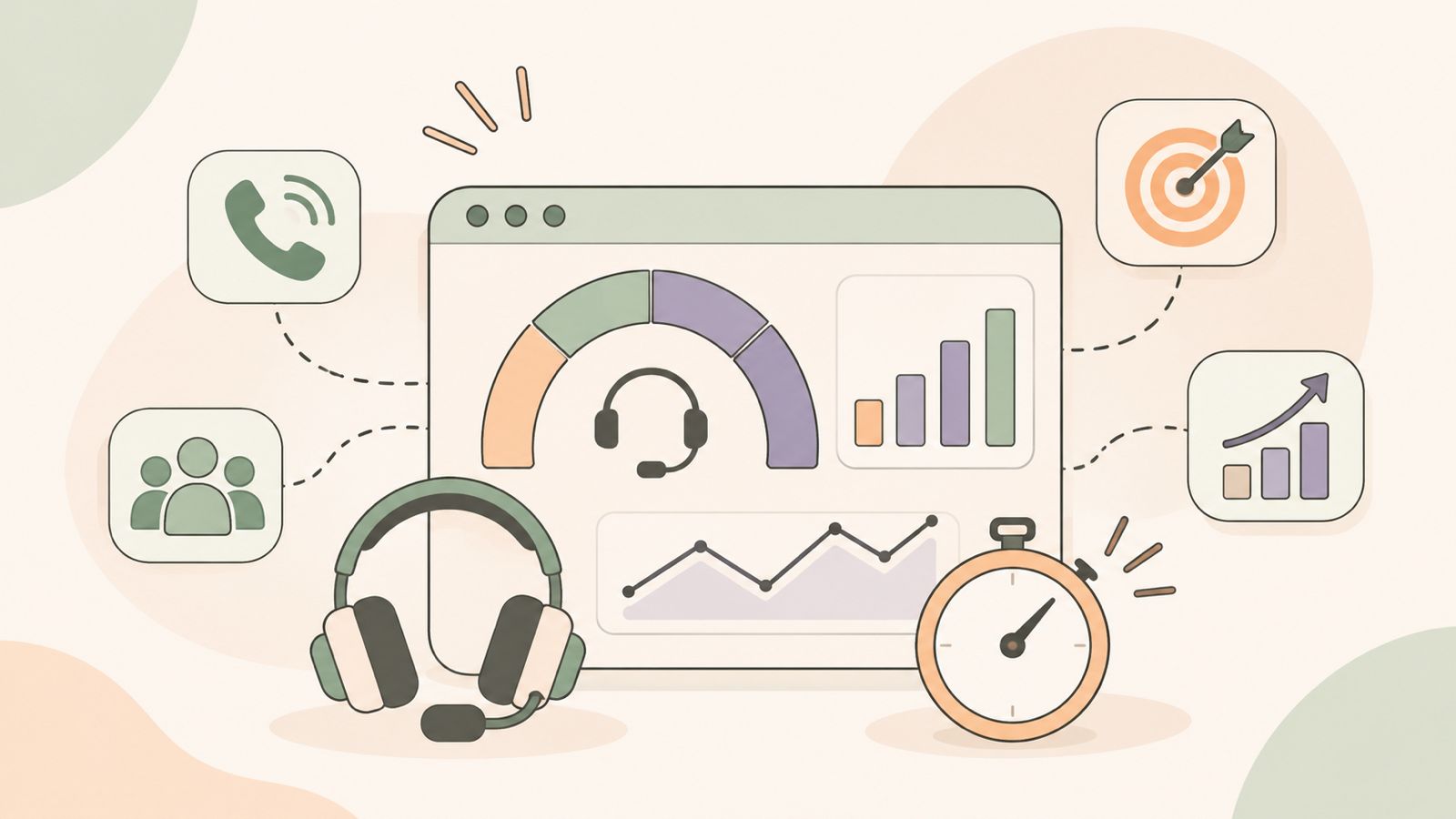
    Customers expect businesses to answer their calls quickly. However, long waiting times can frustrate callers and cause them to hang up before speaking with an agent. Therefore, businesses track call center service level to measure how quickly their teams answer incoming calls.

    Call center service level measures the percentage of eligible incoming calls answered within a set time. For example, a contact center may aim to answer 80% of eligible calls within 20 seconds. This target is commonly known as the 80/20 rule.

    By tracking this metric, managers can understand how well their teams handle calls. Additionally, they can identify delays, plan staff schedules, and improve customer service.

    In this guide, you will learn what call center service level means, how to calculate it, how abandoned calls affect it, and how to improve it.

    What Is Call Center Service Level and Why Does It Matter?

    Call center service level is a performance metric that measures the percentage of incoming calls answered within a specified time.

    Businesses use this metric to check whether their teams are meeting their call response targets. For example, a contact center may set the following targets:

    • Answer 80% of eligible calls within 20 seconds.
    • Answer 85% of eligible calls within 30 seconds.
    • Answer 90% of eligible calls within 60 seconds.

    These targets help managers understand how quickly customers can reach an agent.

    A higher service level usually means that more customers receive a quick response. However, this metric does not show the complete customer experience. Therefore, managers should also review waiting times, abandoned calls, and customer feedback.

    What Is the 80/20 Call Center Service Level Rule?

    The 80/20 rule is a common service level target used by contact centers. In simple terms, it means that a team aims to answer at least 80% of eligible incoming calls within 20 seconds.

    For example, imagine a contact center receives 500 eligible calls in one day. To meet the 80/20 target, the team must answer at least 400 calls within 20 seconds.

    However, the remaining calls may take longer to answer. Some customers may also hang up before an agent picks up.

    It is important to remember that the 80/20 rule is not a fixed target for every business. Instead, the right target depends on call volume, customer needs, team size, and available resources.

    For instance:

    • Customer support teams: May need faster response targets when handling urgent customer issues.
    • Sales teams: May set targets based on lead volume and agent availability.
    • Small businesses: May choose targets that match their team size and budget.

    Therefore, each business should choose a target that works for both its customers and its team.

    How to Calculate Call Center Service Level: Formula and Example

    Businesses can calculate call center service level using a simple formula.

    Service Level (%) = (Calls Answered Within the Target Time / Total Eligible Calls) × 100

    Before using this formula, it is important to understand each part:

    • Calls answered within the target time: Calls picked up by an agent before the set time limit.
    • Total eligible calls: Calls included in the calculation for the selected reporting period, based on the contact center’s reporting rules.
    • Service level percentage: The final result, expressed as a percentage.

    However, the exact calculation may vary depending on how the reporting system handles abandoned calls and short calls.

    Call Center Service Level Formula: Calculation Example

    Suppose a contact center receives 1,000 eligible calls in one day. During that period, the team answers 800 calls within the target time of 20 seconds.

    Using the formula:

    Service Level = (800 / 1,000) × 100

    Service Level = 80%

    This means the team answered 80% of eligible calls within 20 seconds. As a result, the contact center met its 80/20 target for that day.

    How Do Abandoned Calls Affect Call Center Service Level?

    An abandoned call happens when a customer hangs up before an agent answers. These calls can change the service level result. However, their effect depends on the reporting rules used by the contact center.

    There are three common ways to handle abandoned calls:

    1. Ignore abandoned calls: Exclude them from the calculation.
    2. Count abandoned calls negatively: Include them in the denominator but do not count them as calls answered within the target time.
    3. Count abandoned calls positively: Include abandoned calls that disconnect within the service level threshold in the number of calls that meet the target, based on the reporting rules.

    Consider the following example:

    • Total eligible calls: 100
    • Calls answered within the target: 70
    • Calls abandoned within the target: 10
    • Other calls that did not meet the target: 20

    The service level result changes depending on how abandoned calls are handled.

    Abandoned call treatmentCalculationService level
    Abandoned calls ignored70 / (100 – 10)77.8%
    Abandoned calls counted negatively70 / 10070%
    Abandoned calls counted positively(70 + 10) / 10080%

    As you can see, the same call data can produce different results.

    In addition, some contact centers use a short-abandonment threshold. Under this approach, calls disconnected within a set number of seconds may be excluded from the calculation.

    Therefore, managers should check their reporting rules before comparing service level results across teams or reporting periods.

    For more details, read Cisco’s guide to service level calculations.

    Call Center Service Level vs. Average Speed of Answer (ASA)

    Service level and Average Speed of Answer (ASA) are two important contact center metrics. However, they measure different aspects of call performance.

    • Service level: Measures the percentage of eligible calls answered within a set time.
    • Average Speed of Answer (ASA): Measures the average time customers wait before an agent answers.

    For example, a contact center may answer 80% of eligible calls within 20 seconds. However, the remaining calls may have much longer waiting times.

    In this situation, the team may meet its service level target. Even so, some customers may still experience delays.

    MetricWhat it measuresExample
    Service LevelPercentage of eligible calls answered within a target time80% within 20 seconds
    Average Speed of Answer (ASA)Average time customers wait before an agent answers18 seconds (illustrative example)

    Both metrics provide useful information. When reviewed together, they help managers understand how quickly calls are answered and how long customers wait.

    Call Center Service Level vs. Service Level Agreement (SLA)

    Service level and Service Level Agreement (SLA) are related terms. However, they do not mean the same thing.

    Service level is a metric that shows how quickly a contact center answers incoming calls.

    In contrast, an SLA is a formal agreement between a service provider and a customer or business partner. It explains the level of service both sides expect.

    An SLA may include:

    • Response time requirements.
    • Issue resolution targets.
    • Service availability.
    • Performance standards.
    • Reporting requirements.

    For example, a business may set an internal target to answer 80% of eligible calls within 20 seconds. At the same time, its customer agreement may require the team to respond to support requests within a set period.

    In short, service level measures performance, while an SLA sets service expectations.

    Why Is Call Center Service Level Important for Businesses?

    Tracking call center service level helps businesses understand how well they respond to customer calls. Additionally, it helps managers identify problems and make better decisions about daily operations.

    1. Improves Customer Experience

    Customers usually prefer speaking with an agent without waiting too long. Therefore, clear response targets help teams reduce delays.

    As a result, customers can reach the right person more quickly. This can also make the support process more convenient.

    2. Helps Identify Staffing Gaps

    A sudden drop in service level may mean that the team is receiving more calls than available agents can handle.

    To identify the problem, managers can compare call volume with the number of available agents. After reviewing this information, they can adjust work schedules or plan additional staff coverage.

    3. Supports Better Staff Planning

    Past call data helps managers understand when customers call the most.

    For example, if call volume rises every afternoon, the business can plan more agents during those hours. Consequently, teams can prepare for busy periods more effectively.

    At the same time, this approach can help prevent unnecessary staffing during quieter hours.

    4. Makes Team Performance Easier to Track

    A service level target gives managers a clear way to check call response times.

    They can compare results across days, weeks, and teams. Moreover, regular reviews can help identify patterns that need attention.

    5. Helps Reduce Long Waiting Times

    A low service level may point to problems with call routing, agent availability, or call queues.

    By reviewing these areas, managers can identify where delays begin. They can then take suitable steps to improve the call process.

    How to Improve Call Center Service Level Performance

    Improving service level takes good planning and regular monitoring. First, businesses should identify why customers are waiting. Then, they can choose the right way to address the problem.

    Here are eight practical ways to improve call center service level.

    1. Check Incoming Call Patterns

    Start by checking call volume across different days and hours.

    Next, identify the times when the team receives the most calls. Then, compare those periods with agent availability.

    For example, if call volume rises between 11 AM and 1 PM, managers can plan enough agents for that period.

    As a result, teams can prepare for busy hours instead of reacting after queues become long.

    2. Match Agent Schedules With Call Demand

    Too few agents during busy hours can increase customer waiting times.

    Therefore, plan work schedules around expected call volume, breaks, shift changes, and staff availability.

    At the same time, avoid having too many agents during quiet hours. Ultimately, the goal is to maintain enough coverage without adding unnecessary costs.

    3. Improve Call Routing

    Call routing sends incoming calls to the right agent, team, or department.

    However, poor routing can lead to extra transfers and longer waiting times.

    To prevent this, review routing rules regularly. Make sure calls reach the right team based on its responsibilities, business hours, and agent availability.

    For more details, read our guide on call routing systems.

    4. Keep IVR Menus Simple

    Interactive Voice Response (IVR) lets callers choose options through keypad inputs or voice commands.

    However, long menus can make customers spend more time before reaching an agent.

    To make the process easier:

    • Keep menu options short.
    • Use clear and simple instructions.
    • Group related departments together.
    • Remove old or unused options.
    • Avoid unnecessary steps.

    This way, callers can move through the menu with less effort and reach the appropriate department more easily.

    5. Check Agent Availability

    Service level can fall when too few agents are available to answer incoming calls.

    For this reason, managers should review breaks, shift changes, training sessions, and sudden staff absences.

    In addition, they should look for tasks that keep agents away from customer calls for too long.

    By checking these factors, managers can identify availability problems and plan better staff coverage.

    6. Review Call Queue Performance

    Call queues hold incoming calls when agents are busy.

    However, placing customers in a queue does not always guarantee a good experience.

    Therefore, check waiting times, abandoned calls, and call patterns to identify where delays happen.

    Additionally, read our guide on managing call queues and reducing caller wait times to learn more.

    7. Monitor Call Center Service Level Regularly

    Daily averages may hide short periods when customers wait too long.

    For example, a team may meet its daily target but still have long queues during busy hours.

    Therefore, check service level at different intervals, such as:

    • Hourly.
    • Daily.
    • Weekly.

    Also, use the same reporting rules when comparing results. This makes it easier to understand changes in team performance and identify recurring problems.

    8. Set Realistic Call Center Service Level Targets

    A service level target should match customer needs and the team’s available resources.

    Setting a very high target may increase staffing costs and put pressure on agents. On the other hand, a very low target may lead to long waiting times.

    To set a suitable target, review past results first. Then, choose a goal that the team can meet without reducing service quality.

    Common Call Center Service Level Mistakes Businesses Should Avoid

    Even when businesses track service level, some common mistakes can lead to poor decisions.

    Here are the main mistakes managers should avoid:

    • Ignoring abandoned calls: Excluding abandoned calls without checking reporting rules can hide part of the customer experience.
    • Checking only daily averages: Daily results may hide busy hours with long waiting times. Therefore, review shorter reporting periods as well.
    • Setting targets that are too high: Targets should match business needs and available staff. Copying another company’s target may not work for your team.
    • Ignoring other metrics: Service level cannot explain every contact center problem. Instead, review it alongside ASA, abandoned call rate, and customer feedback.
    • Changing calculation rules: Different rules for abandoned calls can produce different results. Consequently, keep reporting rules consistent when comparing performance.
    • Focusing only on speed: Agents should not rush customer calls just to meet a target. Rather, balance quick answers with helpful customer support.

    How DialNext Helps Businesses Manage Calls

    Managing incoming calls requires clear processes, effective call routing, and reliable communication tools.

    DialNext provides business communication solutions that help teams manage their calling operations. Depending on the product setup, businesses can use features such as:

    • Call Queuing: Manage incoming calls when agents are busy.
    • IVR: Guide callers through menu options to reach the right department.
    • Ring Groups: Organize incoming calls across selected groups.
    • Business-Hours Routing: Manage how calls are handled during and outside business hours.
    • Call Analytics and Reporting: Review available call activity and identify areas that may need attention.

    Together, these tools can help teams manage calls in a more organized way. In addition, regular reviews of call activity can help managers identify areas for improvement.

    However, service level also depends on staff numbers, routing rules, reporting settings, and the way the team handles calls.

    Visit the DialNext Help Center to learn more about business calling and call management.

    Call Center Service Level: Frequently Asked Questions

    1. What is a good call center service level?

    A common target is to answer 80% of eligible calls within 20 seconds. This is known as the 80/20 rule. However, the right target depends on customer needs, call volume, and available staff.

    2. What is the formula for call center service level?

    The basic formula is:

    Service Level (%) = (Calls Answered Within the Target Time / Total Eligible Calls) × 100

    However, the exact calculation may change based on how the reporting system handles abandoned calls.

    3. What does an 80/20 service level mean?

    It means the contact center aims to answer 80% of eligible incoming calls within 20 seconds. In other words, at least 80 out of every 100 eligible calls should be answered within that time.

    4. Do abandoned calls affect call center service level?

    Yes. Their effect depends on the reporting rules. For example, some systems exclude abandoned calls, while others count them as calls that did not meet the target.

    5. What is the difference between service level and ASA?

    Service level measures the percentage of calls answered within a set time. In comparison, ASA measures the average time customers wait before an agent answers.

    6. Can a call center reach 100% service level?

    Yes. A contact center can reach 100% if every eligible call is answered within the set time. However, maintaining this result may require additional staff and resources.

    7. How often should call center service level be checked?

    Businesses can check service level hourly, daily, and weekly. In particular, shorter reporting periods can help identify problems that daily averages may hide.

    8. What affects call center service level?

    Several factors can affect service level. These include call volume, agent availability, staff numbers, call routing, IVR menus, queue waiting times, and abandoned calls.

    9. Is service level the same as an SLA?

    No. Service level is a performance metric, whereas an SLA is a formal agreement that sets service rules and expectations.

    10. How can businesses improve call center service level without hiring more agents?

    Businesses can review call patterns, improve work schedules, simplify IVR menus, fix call routing, and reduce delays. Ultimately, the best approach depends on the main reason for low service level.

    Final Thoughts

    Call center service level helps businesses understand how quickly they answer incoming customer calls.

    By setting clear targets, using consistent calculation rules, and reviewing call activity regularly, managers can identify problems and improve daily operations.

    However, service level should not be measured alone. When businesses also review Average Speed of Answer, abandoned call rate, and customer feedback, they get a clearer picture of contact center performance.

    Ultimately, better call management and the right communication tools can help businesses provide customers with a more consistent experience.

    Improve Your Business Call Management with DialNext

    Looking to manage incoming business calls more efficiently?

    DialNext offers business communication tools that help teams organize incoming calls through features such as call routing, IVR, call queues, and ring groups.

    Whether you are managing customer support or sales calls, DialNext helps your team organize business communication through flexible calling solutions.

    Ready to improve the way your business handles calls? Explore DialNext and discover communication solutions for your team.

    External Resources

  • Call Disposition Codes: 30 Examples, Definitions and Best Practices

    Call Disposition Codes: 30 Examples, Definitions and Best Practices

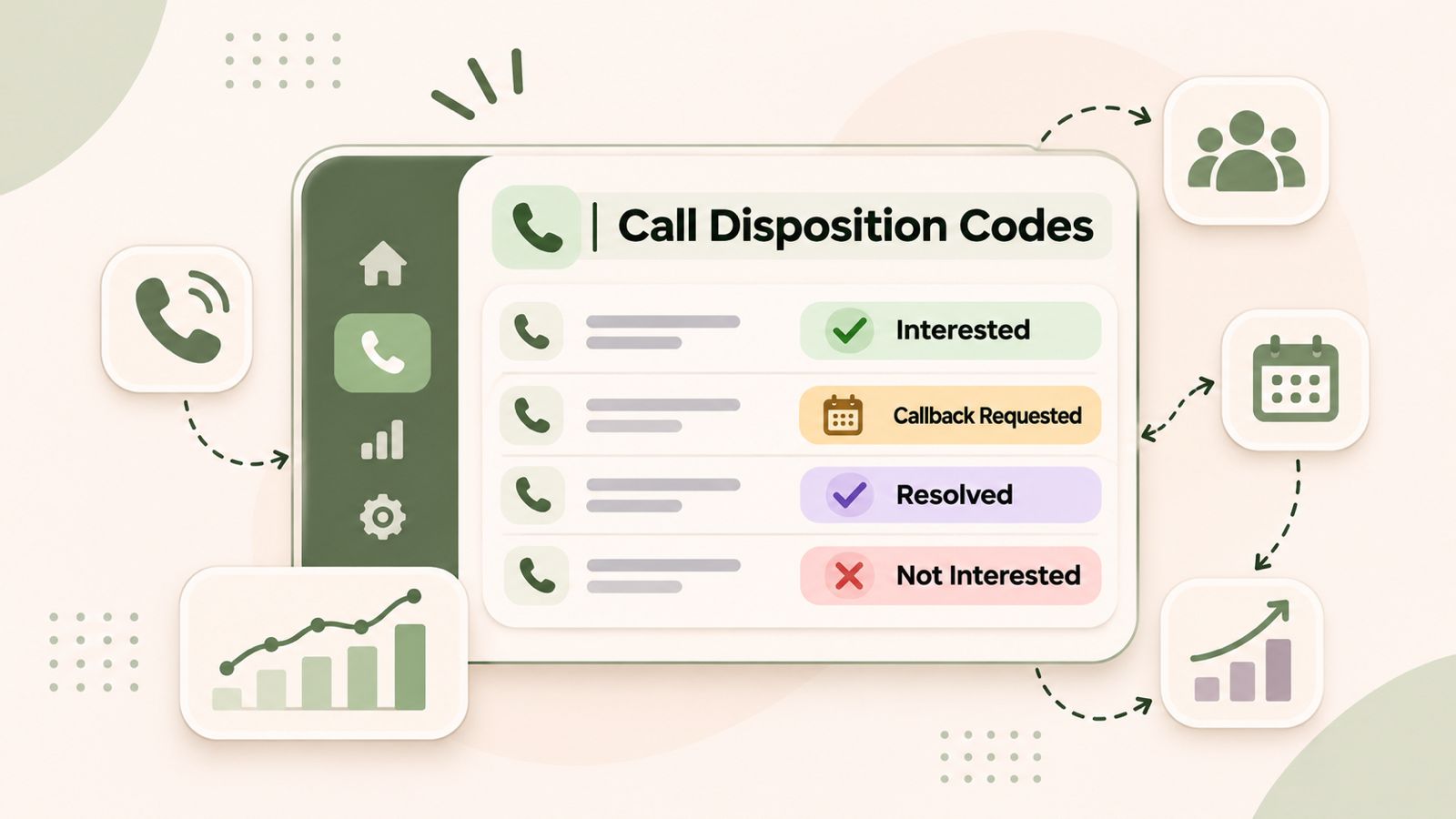
    Call disposition codes help sales and customer support teams record the outcome of every phone call. These codes show whether a customer answered, a prospect showed interest, a customer requested a callback, or an issue needs more attention.

    For example, a sales representative can use a call disposition code to mark an interested prospect for follow-up. Similarly, a support agent can record whether a customer’s issue was resolved or needs further help.

    As a result, businesses can keep better call records, manage follow-ups, and understand their calling activity. In this guide, we explain what call disposition codes are, share 30 practical examples, and cover the best ways to use them.

    What Are Call Disposition Codes and How Do They Work?

    Call disposition codes are predefined labels that describe the result of a phone conversation. After a call, an agent or sales representative selects the label that best matches the outcome.

    For example, a sales representative might select “Interested – Follow-Up Required” after speaking with a potential customer. On the other hand, a support agent might select “Issue Resolved” after solving a customer’s problem.

    These labels help every team member record calls in the same way.

    Some common call disposition codes include:

    • Answered
    • No Answer
    • Voicemail Left
    • Callback Requested
    • Interested
    • Not Interested
    • Demo Scheduled
    • Issue Resolved
    • Escalation Required
    • Wrong Number

    However, not every business needs the same list. The right codes depend on the type of calls your team handles and the actions your business wants to track.

    Why Are Call Disposition Codes Important for Businesses?

    Recording a call is only the first step in managing customer communication. However, businesses also need to know what happened during the conversation and what should happen next.

    This is where call disposition codes become useful.

    1. Improve Sales Follow-Ups

    Sales teams speak with prospects at different stages of the buying process. Some prospects request a demo, while others need more information or time to decide.

    Therefore, sales representatives can use call disposition codes to record each result.

    For example, a prospect marked “Callback Requested” needs another call. Similarly, a prospect marked “Demo Scheduled” has moved to the next stage of the sales process.

    2. Maintain Consistent Call Records

    Without standard labels, employees may describe the same result in different ways.

    For example, one representative might write “Call Later,” while another writes “Follow Up Tomorrow.”

    As a result, managers may find it difficult to review and compare call records.

    A shared set of call disposition codes solves this problem. It gives employees clear options and makes call records easier to understand.

    3. Understand Team Performance

    Managers can review call outcomes to understand how their teams handle customer conversations.

    For example, they can check:

    • How many calls were answered.
    • How many prospects requested callbacks.
    • How many calls resulted in meetings.
    • How often customers requested extra help.
    • How many conversations still need follow-up.

    In addition, managers can compare these results over time to identify changes in team activity.

    4. Improve Customer Support Workflows

    Customer support teams handle different types of requests every day. Some issues are resolved during the first call, while others need more work.

    Call disposition codes help agents separate resolved issues, pending requests, escalations, and missed interactions.

    Therefore, support managers can quickly identify which conversations still need attention.

    5. Keep Better CRM Records

    A CRM stores customer details and records of previous interactions. Similarly, clear call outcomes make these records more useful.

    For example, a representative can review a previous call before contacting the same customer again.

    In addition, managers can use these records to create reports and understand customer communication patterns.

    30 Call Disposition Codes Examples for Sales and Customer Support

    The right call disposition codes depend on your business, sales process, and customer support needs.

    Below are 30 practical examples divided into four groups. Each code includes its meaning and the next action your team can take.

    A. General Call Outcome Codes

    These codes describe what happened when someone made or received a call.

    CodeDefinitionNext Action
    AnsweredThe recipient answered the callRecord the conversation outcome
    No AnswerThe recipient did not answerSchedule another attempt
    Voicemail LeftThe agent left a voicemailPlan a follow-up
    BusyThe recipient’s line was busyTry again later
    Wrong NumberThe number does not belong to the intended contactCheck the contact details
    Call DisconnectedThe call ended unexpectedlyTry to reconnect
    Callback RequestedThe recipient asked for another callSchedule a callback
    Not ReachableThe recipient could not be reachedCheck the number and try again

    These basic codes help teams understand the result of each call attempt. In addition, they make it easier to plan the next action.

    B. Sales Call Disposition Codes

    Sales teams need codes that show prospect interest and progress through the sales process.

    CodeDefinitionNext Action
    InterestedThe prospect showed interest in the product or serviceShare more information
    Not InterestedThe prospect declined the offerRecord the reason
    Qualified LeadThe prospect meets the sales team’s requirementsMove to the next sales stage
    Unqualified LeadThe prospect does not meet the requirementsUpdate the lead status
    Demo ScheduledThe prospect agreed to a product demoConfirm the meeting
    Follow-Up RequiredMore discussion is neededCreate a follow-up task
    Pricing DiscussionThe prospect asked about pricingShare pricing details
    Decision PendingThe prospect needs more time to decideSchedule another conversation
    ConvertedThe prospect became a customerUpdate the CRM
    Do Not ContactThe contact asked not to receive further callsUpdate contact preferences and respect the request

    These sales call disposition codes help representatives understand where each prospect stands. As a result, they can focus on the right follow-up activities.

    C. Customer Support Call Disposition Codes

    Support teams can use these codes to track customer issues and service requests.

    CodeDefinitionNext Action
    Issue ResolvedThe customer’s problem was solvedClose the support case
    Issue PendingThe problem still needs attentionContinue the investigation
    Escalation RequiredAnother team needs to handle the issueTransfer or escalate the request
    Information ProvidedThe customer received the requested informationRecord the details
    Complaint ReceivedThe customer reported a problemReview the complaint
    Technical Support RequiredThe issue needs technical helpAssign a specialist
    Refund RequestedThe customer asked for a refundFollow the refund process
    Follow-Up RequiredMore communication is neededSchedule another interaction

    For example, a support agent can select “Issue Pending” when a problem cannot be solved during the first conversation. The next agent can then review the record and continue the work.

    D. Appointment and Service Call Codes

    Businesses that manage bookings, appointments, and service requests may need these additional codes.

    CodeDefinitionNext Action
    Appointment ScheduledA new appointment was confirmedUpdate the calendar
    Appointment RescheduledAn existing appointment was changedConfirm the new time
    Appointment CancelledThe customer cancelled the bookingUpdate the booking record
    Confirmation ReceivedThe customer confirmed the appointmentKeep the booking active

    These examples provide a starting point. However, businesses should choose codes that match their actual calling process instead of using every available option.

    What Is the Difference Between Call Status, Call Disposition and Call Notes?

    Call status, call disposition, and call notes are related terms. However, each one serves a different purpose.

    TermMeaningExample
    Call StatusShows the connection resultAnswered, missed, failed
    Call DispositionShows the business outcomeInterested, demo scheduled, issue resolved
    Call NotesGive extra details about the conversationCustomer requested a quotation next Monday

    Consider this example.

    A sales representative calls a potential customer. The call record may look like this:

    • Call Status: Answered
    • Call Disposition: Interested – Follow-Up Required
    • Call Notes: Customer wants to review the pricing proposal with their manager.

    In this example, the call status shows that the connection was successful. Meanwhile, the disposition explains what happened during the conversation. Finally, the notes provide extra details.

    Using all three helps businesses maintain clear and useful customer records.

    How to Choose the Right Call Disposition Codes for Your Team

    A good disposition system should be easy to understand and simple to use. Therefore, businesses should plan their categories before adding them to their calling workflow.

    Follow these steps to create a useful system.

    1. Identify Your Calling Objectives

    First, understand why your team makes calls.

    For example:

    • Sales teams focus on lead qualification, meetings, and sales.
    • Customer support teams focus on solving issues and handling requests.
    • Recruitment teams focus on candidate availability and interviews.
    • Service teams focus on bookings and job completion.

    Your call disposition codes should match these goals. This way, employees can select the right result after each conversation.

    2. Separate Main Outcomes From Extra Details

    Use the main disposition to record the primary result of a call.

    For example:

    • Interested
    • Not Interested
    • Callback Requested
    • Issue Resolved
    • Escalation Required

    Then, use call notes or secondary tags to record more details where your platform supports them.

    This approach keeps your main categories simple. It also makes reports easier to read.

    3. Use Clear Labels

    Avoid vague labels such as:

    • Other
    • Miscellaneous
    • General
    • Done

    Instead, choose labels that describe a clear result.

    For example, use “Pricing Information Requested” instead of “Other.” This makes it easier for employees and managers to understand the call record.

    4. Avoid Too Many Categories

    A long list can confuse employees. Moreover, it may slow down their work after a call.

    Therefore, start with the outcomes your team uses most often. Add more codes only when your business needs them.

    5. Explain When to Use Each Code

    Write a short description for every category.

    For example, use “Callback Requested” only when the customer or prospect asks for another call.

    Similarly, use “Issue Resolved” only when the customer’s problem has been solved.

    Clear rules help employees choose the same code for similar situations.

    6. Review Your Categories Regularly

    Business needs can change over time. Therefore, review your call disposition codes on a regular basis.

    Look for categories that:

    • Are rarely used.
    • Have the same meaning as another category.
    • No longer match your calling process.
    • Do not provide useful information.

    Finally, update the list and inform your team about any changes.

    How to Use Call Disposition Codes to Improve Sales Performance

    Sales managers can use call outcomes to understand how prospects move through the sales process.

    Here are four practical ways to use this information.

    Track Prospect Interest

    Compare outcomes such as Interested, Not Interested, No Answer, and Callback Requested.

    This helps managers understand how prospects respond to sales calls. In addition, it can help teams review their outreach approach.

    Find Follow-Up Opportunities

    A prospect marked “Follow-Up Required” should not get lost in the sales pipeline.

    Instead, connect the disposition to a clear next step. This could be another call, an email, or a product demonstration.

    Review Sales Progress

    Compare the number of qualified leads, scheduled demos, and converted prospects over the same period.

    As a result, managers can see where prospects are moving forward and where they may need more support.

    Improve Sales Training

    Managers can review call recordings, notes, and outcomes to understand how representatives handle conversations.

    For example, they can identify common customer questions or objections. Then, they can use these findings to improve sales training and communication.

    Learn more about DialNext sales calling solutions.

    How to Use Call Disposition Codes in Customer Support

    Customer support teams can use call disposition codes to keep a clear record of customer conversations.

    Here are three useful ways to apply them.

    Identify Unresolved Issues

    Use codes such as Issue Pending and Escalation Required to find conversations that need more work.

    Therefore, managers can review open requests and assign them to the right team members.

    Understand Common Customer Problems

    Review the support categories that appear most often.

    For example, frequent complaints or technical support requests may show where customers need more help.

    As a result, support managers can focus on common problems and improve their service process.

    Maintain Better Customer History

    Clear call outcomes and notes help another agent understand previous conversations.

    This means customers do not need to explain the same problem again when the team has accurate records.

    Learn more about DialNext customer support solutions and how organized communication can help support teams manage customer conversations.

    How Does Call Disposition Data Improve CRM Reporting?

    A CRM stores customer details and records of business interactions. When teams record call outcomes in a consistent way, they can create more useful reports.

    For example, managers can review:

    • Call outcomes: See how many calls were answered, missed, or ended with another result.
    • Sales progress: Track qualified leads, scheduled demos, and conversions.
    • Follow-up activity: Find contacts that need another call or message.
    • Agent activity: Compare recorded call outcomes across team members.
    • Customer support: Review resolved, pending, and escalated issues.

    Consider a sales manager who wants to find prospects waiting for another call.

    The manager can filter records marked “Callback Requested.” Next, they can check whether each representative completed the follow-up.

    This makes it easier to manage pending sales activities.

    However, the quality of these reports depends on accurate records, clear categories, and reliable CRM activity logging.

    For more information, explore DialNext lead generation solutions.

    For additional guidance, read the HubSpot guide to creating custom call and meeting outcomes.

    You can also review the Salesforce CallDisposition field reference.

    Common Call Disposition Mistakes to Avoid

    Even a good disposition system can fail if employees do not use it correctly.

    Therefore, businesses should avoid these common mistakes.

    Using Vague Categories

    Labels such as “Other” and “Done” do not explain what happened during a call.

    Instead, use clear categories that describe the actual outcome.

    Mixing Call Status With Business Outcomes

    An answered call does not always mean a successful sales conversation.

    For this reason, keep connection results separate from sales and support outcomes.

    Ignoring Follow-Up Actions

    Recording “Callback Requested” is not enough.

    Managers should also assign responsibility and set a clear next step. Otherwise, the prospect or customer may not receive the expected response.

    Creating Duplicate Categories

    Avoid using labels such as “Call Later,” “Follow Up,” and “Callback Required” for the same result.

    Instead, choose one standard label and explain when employees should use it.

    Not Training Employees

    Employees need to know how and when to select each category.

    Therefore, provide simple guidelines and review how your team uses the codes.

    Ignoring Call Reports

    Collecting data is only useful when managers review it.

    Regularly check call outcomes and use the results to improve team workflows.

    How DialNext Helps Teams Manage Call Outcomes

    Managing business communication involves more than making and receiving calls. Teams also need a clear way to review conversations and maintain customer records.

    DialNext provides business calling, call recording, call tags, notes, SMS, and CRM connectivity to support sales and customer support workflows.

    With DialNext, teams can:

    • Record and review customer conversations.
    • Add call tags to group and identify interactions.
    • Maintain notes alongside customer interaction history.
    • Track call activity through available analytics and reporting.
    • Manage inbound and outbound business calls.
    • Connect communication activity with supported CRM workflows.

    For example, a lead generation team can use call tags to group prospect interactions based on outcomes such as Qualified, Not Interested, and Callback Needed.

    As a result, managers can get a clearer view of campaign activity and follow-up needs.

    Similarly, customer support teams can use call tags and notes to keep track of customer requests.

    By combining business calling with organized interaction records, DialNext helps teams manage customer communication more clearly.

    Explore the DialNext business calling platform to learn more about its communication solutions.

    Frequently Asked Questions About Call Disposition Codes

    1. What are call disposition codes?

    Call disposition codes are predefined labels that record the result of a phone call. They help businesses group conversations, track follow-ups, and review call activity.

    2. What are the most common call disposition codes?

    Common call disposition codes include Answered, No Answer, Voicemail Left, Callback Requested, Interested, Not Interested, Demo Scheduled, Issue Resolved, and Escalation Required.

    3. What is the difference between a call disposition and a call tag?

    A call disposition usually describes the main result of a conversation. On the other hand, a call tag can group calls by topic, customer type, campaign, or another detail. The exact difference depends on the calling platform.

    4. Why are call disposition codes important for sales teams?

    Call disposition codes help sales teams track prospect interest, find follow-up opportunities, review sales progress, and understand the results of outbound calls.

    5. Can call disposition codes improve customer support?

    Yes. Support teams can use these codes to track solved issues, pending requests, complaints, and escalations. As a result, agents can maintain better customer records and manage follow-ups.

    6. How many call disposition codes should a business use?

    There is no fixed number. Start with a small list that covers your team’s most common call outcomes. Then, add more codes only when they provide useful information.

    7. Should call disposition codes be mandatory?

    Making dispositions mandatory can improve record keeping. However, employees need clear options and a simple process. Businesses should also allow suitable exceptions when a call cannot be placed into a specific category.

    8. Are call disposition codes the same as call outcomes?

    These terms are often used in the same way. However, some platforms separate automatic call results, such as Answered or No Answer, from outcomes selected by an agent, such as Interested or Callback Requested.

    9. Can call disposition codes be used in CRM systems?

    Yes. Many CRM systems support call outcomes or custom activity categories. These records help teams filter interactions, review sales progress, and manage follow-up tasks.

    10. How often should businesses review their call disposition codes?

    Businesses should review their codes regularly and whenever their sales or support process changes. Remove duplicate labels and update categories that no longer match your team’s needs.

    Final Thoughts

    Call disposition codes help businesses turn phone conversations into clear and useful records.

    By using simple categories, keeping accurate call notes, and connecting outcomes to follow-up tasks, sales and support teams can manage their daily work more effectively.

    However, the best disposition system is not the one with the most categories. It is the one employees can understand and use in the same way.

    With clear calling workflows and reliable interaction records, businesses can get more value from every customer conversation.

    For better call management, explore DialNext’s business calling platform to manage customer conversations and organize your calling workflows.