Tag: SIP Trunking

  • What Is SIP Trunking?

    What Is SIP Trunking?

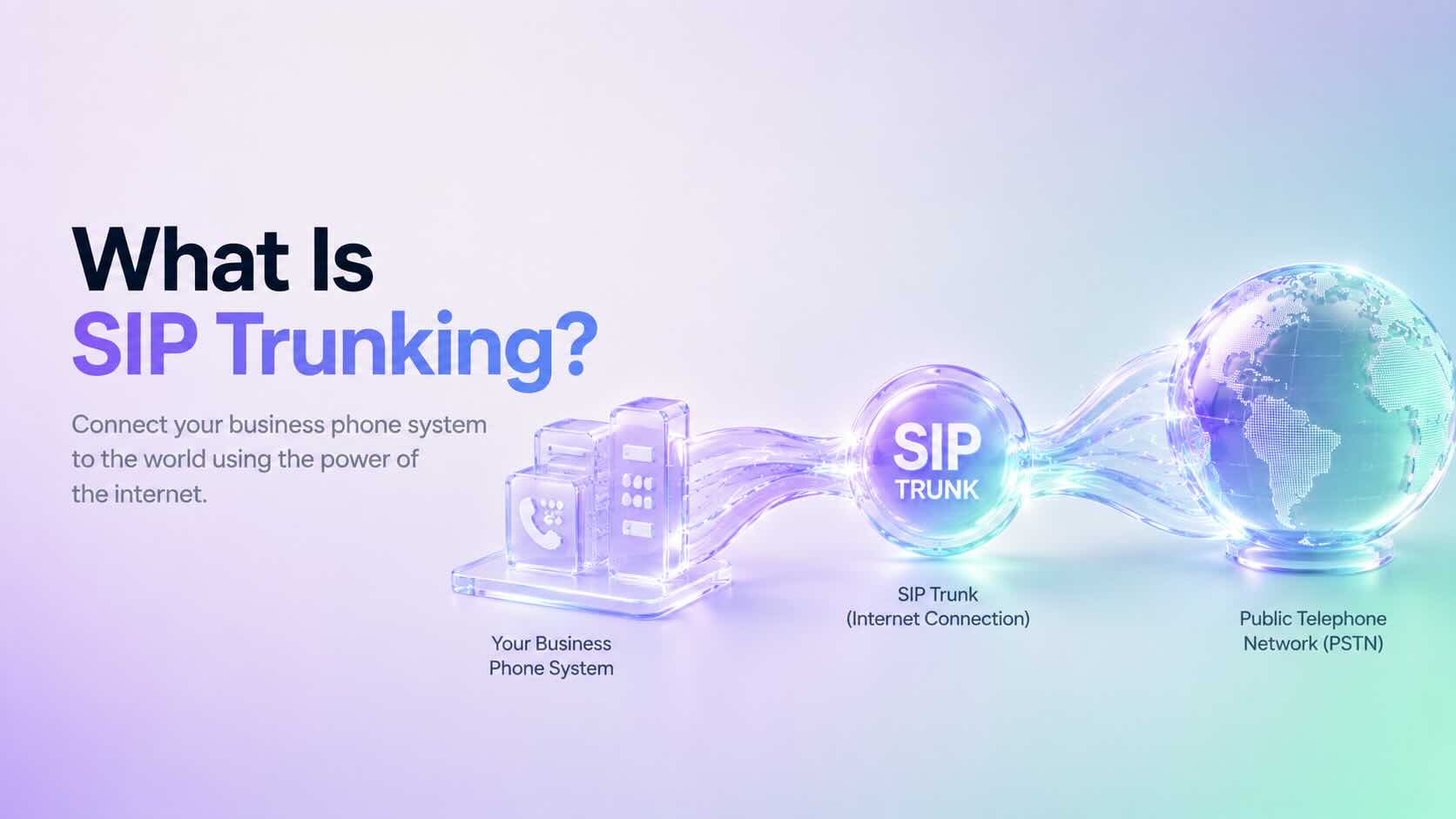
    SIP Trunking is a technology that connects your business phone system to the public telephone network (PSTN) using an internet connection instead of traditional telephone lines. Businesses use SIP Trunking to make and receive calls over the internet while reducing communication costs and improving scalability.

    Today, SIP Trunking is widely used by cloud phone systems, contact centers, and businesses that want a flexible and reliable communication solution.

    How Does SIP Trunking Work?

    SIP Trunking creates a virtual connection between your business phone system and the telephone network.

    A typical call follows these steps:

    1. A user places or receives a call.
    2. The phone system sends the request through a SIP trunk.
    3. The SIP provider routes the call to the public telephone network or another internet-connected endpoint.
    4. Voice travels over the internet using VoIP technologies.
    5. The SIP session ends when the call is completed.

    Unlike traditional phone lines, SIP trunks use your existing internet connection, making deployment much faster and easier.

    Why Do Businesses Use SIP Trunking?

    Many organizations choose SIP Trunking because it offers several advantages over traditional telephone systems.

    Benefits include:

    • Lower calling costs
    • Easy scalability
    • Better call reliability
    • Support for remote and hybrid teams
    • Faster deployment
    • Reduced hardware requirements
    • Cloud-based communications

    Additionally, businesses can add or remove channels without installing new physical phone lines.

    SIP Trunking vs Traditional Phone Lines

    Traditional business phone systems depend on physical telephone circuits.

    In contrast, SIP Trunking uses your internet connection to carry voice traffic.

    Traditional Phone LinesSIP Trunking
    Physical circuitsInternet connection
    Fixed capacityEasily scalable
    Higher maintenanceLower maintenance
    Expensive upgradesFlexible expansion
    Office-dependentSupports remote work

    As a result, SIP Trunking offers greater flexibility for growing businesses.

    SIP Trunking vs VoIP

    Although the terms are often used together, SIP Trunking and VoIP are different.

    • VoIP (Voice over Internet Protocol) is the technology that carries voice over the internet.
    • SIP Trunking provides the connection between your phone system and the public telephone network.

    In simple terms, VoIP enables internet calling, while SIP Trunking connects your business to the outside world.

    SIP Trunking vs PRI

    Many businesses replace older PRI (Primary Rate Interface) circuits with SIP Trunking.

    Compared with PRI, SIP Trunking offers:

    • Lower operating costs
    • Faster provisioning
    • Better scalability
    • Simpler maintenance
    • Improved flexibility

    Furthermore, SIP Trunking eliminates many of the limitations associated with traditional telecom infrastructure.

    Who Should Use SIP Trunking?

    SIP Trunking is ideal for organizations that:

    • Operate a business phone system
    • Manage a contact center
    • Support remote employees
    • Need multiple business phone numbers
    • Want to reduce telecom costs
    • Plan to scale communications as the business grows

    Small businesses and large enterprises alike benefit from the flexibility of SIP Trunking.

    Does DialNext Support SIP Trunking?

    DialNext uses modern cloud communication technologies that rely on SIP to deliver reliable business calling experiences.

    Businesses using DialNext benefit from cloud-based communications without managing traditional telephone infrastructure.

    Frequently Asked Questions

    Is SIP Trunking the Same as VoIP?

    No. VoIP is the technology that transmits voice over the internet, while SIP Trunking connects your phone system to the public telephone network.

    Do I Need Physical Phone Lines?

    No. SIP Trunking replaces traditional telephone lines with internet connectivity.

    Can SIP Trunking Reduce Costs?

    Yes. Many businesses reduce telecom expenses by replacing traditional circuits with SIP Trunking.

    Is SIP Trunking Secure?

    When properly configured, SIP Trunking supports secure business communications using encrypted connections, authentication, and modern network security practices.

    Related Articles

    Additional Resources

    Learn more about SIP from the official Session Initiation Protocol specification:

    https://www.rfc-editor.org/info/rfc3261/

    Need Help?

    If you have questions about SIP Trunking or cloud communications, contact us at help@dialnext.io.
  • What Is SIP?

    What Is SIP?

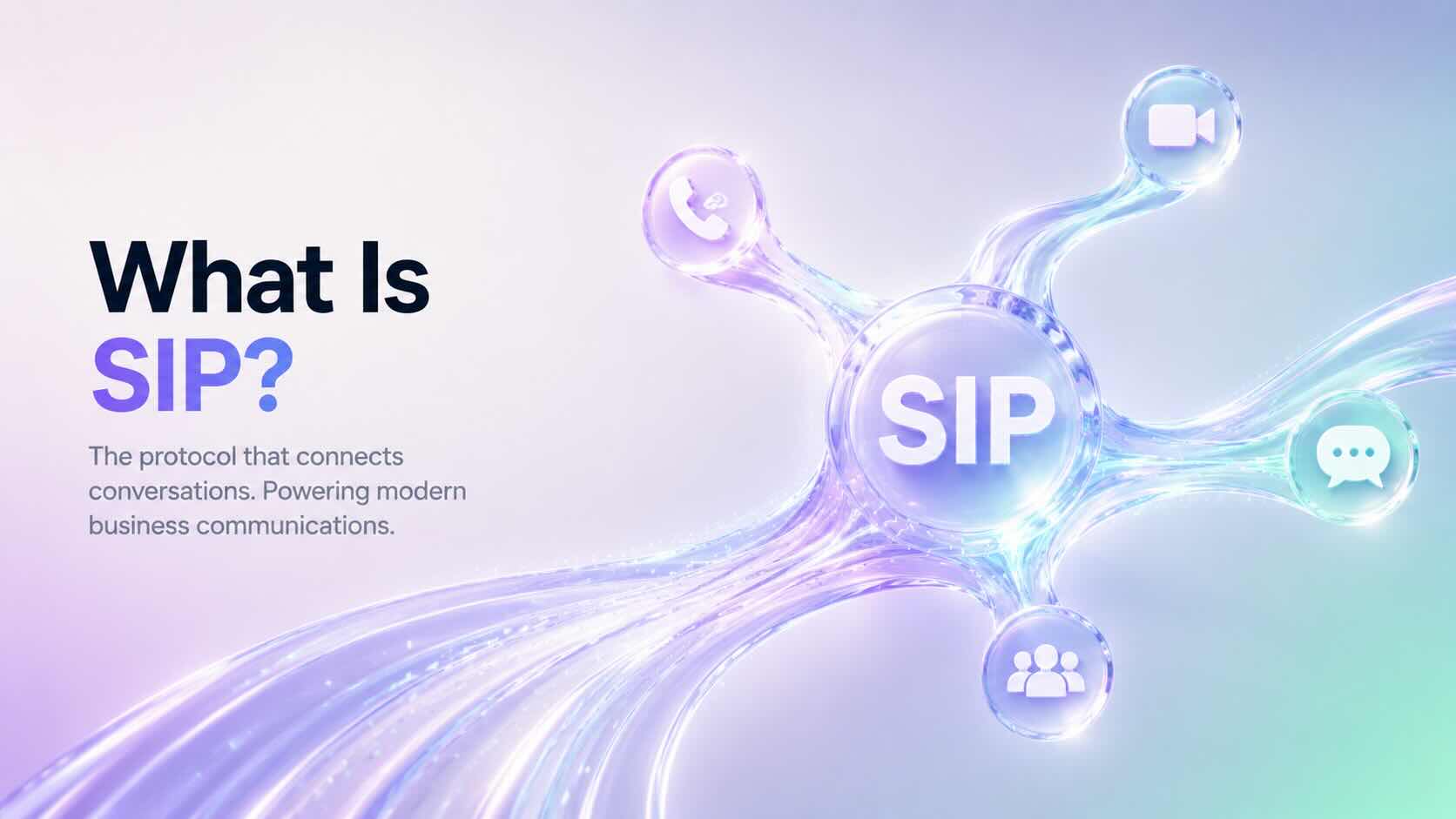
    Session Initiation Protocol (SIP) is a communication protocol that establishes, manages, and ends voice and video calls over the internet. Instead of relying on traditional telephone lines, SIP enables modern business phone systems to make and receive calls using an internet connection.

    Today, cloud phone systems, contact centers, and VoIP providers widely use SIP. Furthermore, it has become the industry standard for internet-based business communications because it is reliable, scalable, and widely supported.

    How Does SIP Work?

    SIP establishes and manages communication sessions between two or more participants.

    A typical SIP call follows these steps:

    1. A user initiates a call.
    2. SIP locates the destination.
    3. The receiving device accepts the call.
    4. The network transmits voice using the Real-time Transport Protocol (RTP).
    5. Finally, SIP ends the communication session when the conversation is complete.

    Although SIP manages the call session, RTP carries the actual voice data between participants.

    What Is SIP Used For?

    Businesses use SIP to support many communication services, including:

    • Business phone calls
    • Video conferencing
    • Unified communications
    • Contact centers
    • VoIP phone systems
    • SIP trunking
    • Softphones and desktop calling applications

    Additionally, many organizations choose SIP because it offers flexibility, compatibility, and reliable performance across a wide range of devices and platforms.

    SIP vs Traditional Phone Lines

    Traditional phone systems rely on dedicated physical telephone lines to make and receive calls.

    In contrast, SIP uses an internet connection to establish communication sessions.

    Traditional Phone SystemSIP-Based Phone System
    Physical phone linesInternet connection
    Limited scalabilityEasily scalable
    Expensive hardwareCloud-based infrastructure
    Higher maintenanceLower maintenance
    Fixed office locationsWork from anywhere

    As a result, businesses can expand more easily without installing additional phone infrastructure.

    Benefits of SIP

    Organizations adopt SIP for several reasons:

    • Lower communication costs
    • Easy scalability
    • High-quality voice calls
    • Support for remote and hybrid teams
    • Faster deployment
    • CRM and business application integrations
    • Voice, video, and messaging support

    Additionally, SIP allows businesses to grow without significantly increasing communication costs.

    What Is SIP Trunking?

    SIP trunking connects your business phone system to the public telephone network using an internet connection.

    Instead of purchasing multiple physical telephone lines, businesses can use SIP trunks to route incoming and outgoing calls.

    Consequently, organizations modernize their existing PBX systems while reducing hardware costs and improving scalability.

    SIP vs VoIP

    Although SIP and VoIP are closely related, they are not the same technology.

    • VoIP (Voice over Internet Protocol) is the technology that allows voice calls over the internet.
    • SIP (Session Initiation Protocol) is one of the protocols used to establish, manage, and end those VoIP calls.

    In simple terms, VoIP is the service, while SIP is one of the technologies that enables it.

    Does DialNext Use SIP?

    Yes. DialNext uses modern communication technologies, including SIP, to deliver reliable cloud calling for businesses.

    Additionally, SIP enables DialNext to support inbound and outbound calling, CRM integrations, remote teams, and scalable cloud communications from virtually anywhere.

    Frequently Asked Questions

    Is SIP the Same as VoIP?

    No. SIP is a signaling protocol, while VoIP is the technology that delivers voice communication over the internet.

    Do I Need a SIP Phone?

    No. Many businesses use softphones, desktop applications, or web browsers instead of dedicated SIP desk phones.

    Is SIP Secure?

    Businesses can deploy SIP securely by using encryption, authentication, secure network configurations, and industry best practices.

    Can I Use SIP for Video Calls?

    Yes. SIP supports voice calls, video conferencing, screen sharing, and other real-time communication sessions.

    Related Articles

    Additional Resources

    Learn more about the Session Initiation Protocol (SIP):

    https://www.rfc-editor.org/info/rfc3261/

    Need Help?

    If you have questions about SIP, VoIP, or business phone systems, contact us at help@dialnext.io.