Tag: Text Messaging

  • What Is Carrier Filtering in Messaging?

    What Is Carrier Filtering in Messaging?

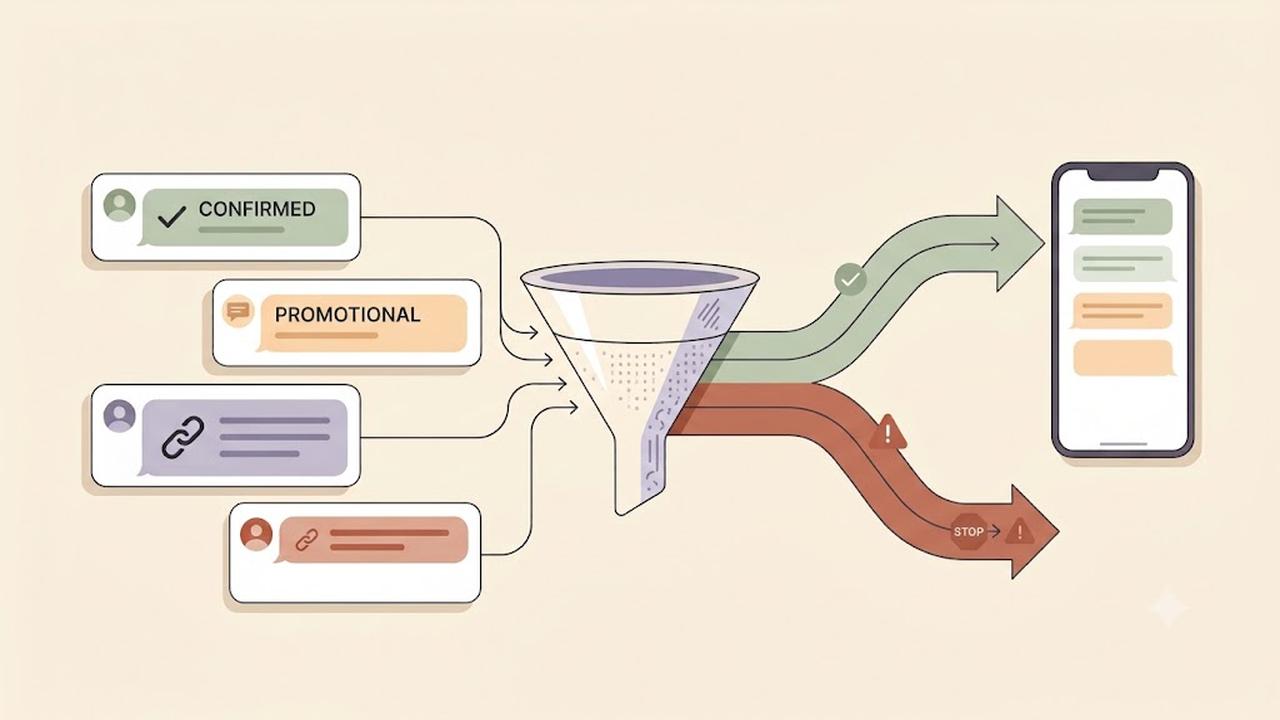
    Carrier Filtering is the process mobile carriers use to identify, review, and block messages that may violate messaging rules or appear suspicious. It helps protect users from spam, fraud, phishing, and unwanted text messages.

    Businesses that send SMS messages should understand how Carrier Filtering works because it can affect message delivery and customer communication.

    Why Does Carrier Filtering Happen?

    Mobile carriers process billions of messages every day. To protect recipients, carriers analyze messaging traffic and identify content that may be unwanted or harmful.

    Filtering systems help detect:

    • Spam messages
    • Fraud attempts
    • Phishing links
    • Unapproved marketing campaigns
    • High-risk message patterns
    • Policy violations

    Additionally, carriers use filtering systems to maintain trust across messaging networks.

    How Does Carrier Filtering Work?

    Carrier Filtering uses a combination of automated systems, compliance checks, and network rules to evaluate messages.

    Carriers may review several factors, including:

    • Message content
    • Sender reputation
    • Sending patterns
    • Message volume
    • Links included in messages
    • Recipient complaints
    • Registration status

    If a message triggers filtering rules, the carrier may block it before it reaches the recipient.

    Common Reasons Messages Get Filtered

    Messages can be filtered for many reasons.

    Common causes include:

    Missing Registration Requirements

    Some regions require businesses to register before sending application-to-person (A2P) messages.

    For example, businesses sending SMS messages to users in the United States often need approved A2P 10DLC registration.

    Suspicious Message Content

    Carriers may block messages containing:

    • Misleading information
    • Unclear sender identity
    • Suspicious links
    • Excessive capitalization
    • Unusual formatting

    Therefore, businesses should write clear and transparent messages.

    Public URL Shorteners

    Many carriers discourage public URL shorteners because bad actors frequently use them to hide unsafe destinations.

    Instead, use branded links whenever possible.

    Missing Opt-In Consent

    Recipients should agree to receive messages before a business contacts them.

    A clear opt-in process improves compliance and reduces filtering risk.

    High Complaint Rates

    If many recipients report messages as spam, carriers may reduce trust in future messages from the sender.

    Sending relevant messages only to interested users helps maintain a positive reputation.

    How to Reduce Carrier Filtering

    Although filtering decisions depend on carriers, businesses can follow best practices to improve SMS deliverability.

    We recommend:

    • Register required messaging campaigns
    • Collect proper customer consent
    • Clearly identify your business
    • Avoid misleading content
    • Use branded links
    • Provide opt-out instructions
    • Keep contact lists updated
    • Avoid sending unwanted messages

    Following these practices improves message reliability and customer trust.

    Carrier Filtering and A2P 10DLC

    A2P 10DLC registration helps carriers understand who is sending messages and why messages are being sent.

    Approved registration does not guarantee every SMS will be delivered. However, it helps establish sender legitimacy and reduces the chance of unnecessary filtering.

    Businesses should still follow messaging policies after approval.

    Does Carrier Filtering Mean My Message Failed?

    Not always.

    Some carriers provide filtering errors when a message is blocked, while others may silently filter messages based on their internal systems.

    Delivery behavior depends on:

    • Destination carrier
    • Country regulations
    • Sender reputation
    • Message content
    • Compliance requirements

    Does DialNext Prevent Carrier Filtering?

    DialNext helps businesses send reliable SMS messages by supporting proper messaging practices and compliance workflows.

    However, final delivery decisions are controlled by mobile carriers.

    To improve delivery rates, always follow carrier guidelines, maintain customer consent, and send relevant messages.

    Frequently Asked Questions

    Can Carrier Filtering Be Removed?

    No. Carrier filtering exists to protect users and messaging networks. Following best practices reduces the likelihood of legitimate messages being blocked.

    Why Are My SMS Messages Being Blocked?

    Messages may be blocked due to compliance issues, suspicious content, missing registration, or carrier filtering rules.

    Does A2P 10DLC Stop Carrier Filtering?

    No. A2P 10DLC improves sender verification but does not guarantee delivery of every message.

    Do All Carriers Use the Same Filtering Rules?

    No. Each carrier manages its own filtering systems, which means delivery behavior can vary between networks.

    Related Articles

    Additional Resources

    Learn more about messaging guidelines:

    https://www.ctia.org

    Need Help?

    If you have questions about SMS delivery, carrier filtering, or messaging compliance, contact us at help@dialnext.io.
  • SMS Segment Optimization with Smart Encoding

    SMS Segment Optimization with Smart Encoding

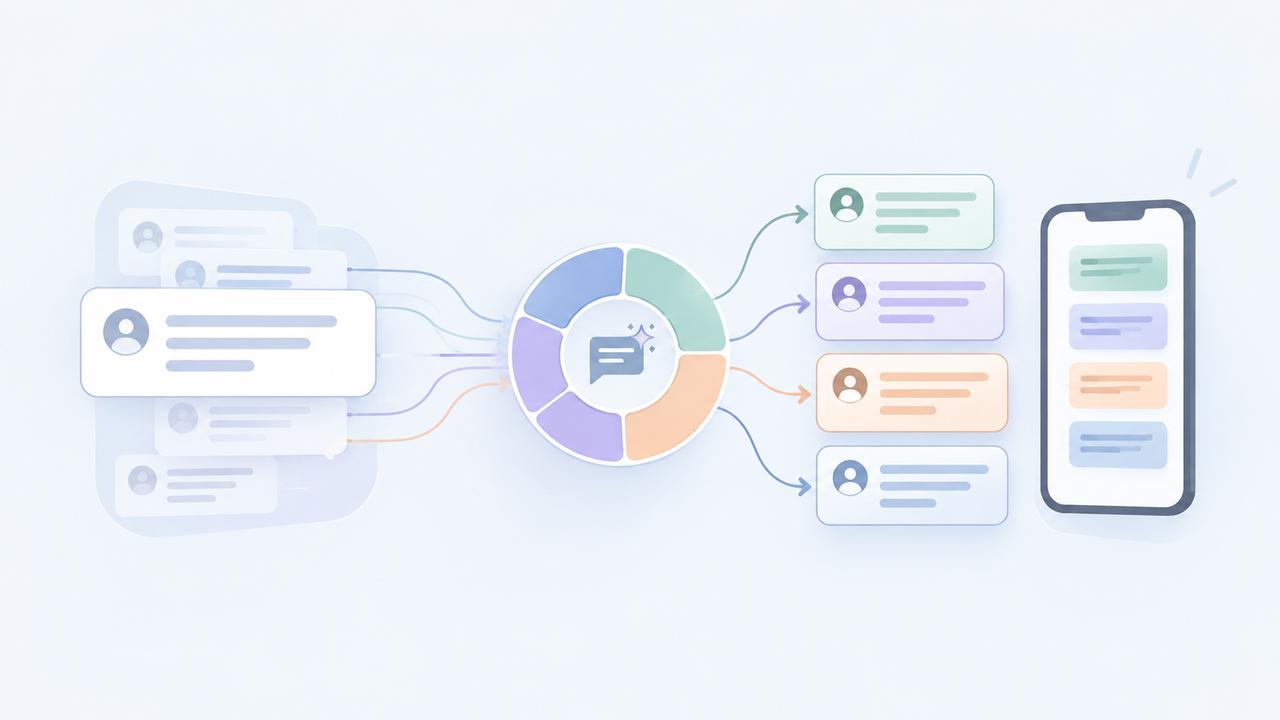
    SMS segment optimization helps reduce unnecessary message segments and control SMS costs. DialNext automatically applies Smart Encoding to outgoing SMS messages, replacing supported Unicode characters with GSM-7-compatible alternatives where possible.

    This helps messages stay within GSM-7 encoding when possible and reduces unnecessary segmentation.

    What Is an SMS Segment?

    An SMS segment is an individual unit used to transmit a text message. The number of segments depends on both the length of the message and the character encoding used.

    A standard GSM-7 SMS supports up to 160 characters in a single segment, while a message that requires Unicode/UCS-2 encoding typically supports up to 70 characters.

    For longer, concatenated messages, the limits are generally:

    Encoding Single Segment Multi-Segment
    GSM-7160 characters153 characters per segment
    Unicode/UCS-270 characters67 characters per segment

    Longer messages are split into multiple segments and typically reassembled on the recipient’s device.

    How SMS Segment Optimization Works

    SMS messages can use different character encodings.

    Most standard Latin letters, numbers, and common symbols can be encoded using GSM-7. However, some characters—such as smart quotation marks, certain special symbols, emojis, and characters from many non-Latin scripts—may require Unicode encoding.

    A single unsupported character can cause the message to use Unicode/UCS-2 encoding, reducing the number of characters available per segment and potentially increasing the total number of SMS segments. 

    DialNext Smart Encoding helps prevent unnecessary Unicode encoding by automatically replacing supported Unicode characters with visually similar GSM-7-compatible alternatives before the message is sent.

    Smart Encoding Examples :

    OriginalGSM-7-Compatible Replacement
    “ ”” “
    ‘ ’‘ ‘
    ……

    For example:

    Hello “John”

    can be automatically converted to:

    Hello “John”

    before the message is sent.

    Smart Encoding only replaces characters when a suitable GSM-compatible alternative is available. Characters such as emojis or characters from many non-Latin scripts may still require Unicode encoding.

    Why SMS Segment Count Matters

    SMS usage and costs often depend on how many segments a message requires. Even a relatively short message may use additional segments when its encoding changes from GSM-7 to Unicode.

    For example, a Unicode smart quote can trigger Unicode encoding. However, Smart Encoding can replace supported Unicode characters with GSM-compatible alternatives. As a result, replacing a smart quote with a straight quote can help keep the message in GSM-7 when all other characters are compatible.

    Benefits of SMS Segment Optimization

    • Reduce unnecessary SMS segments by keeping compatible messages in GSM-7 encoding where possible.
    • Control messaging costs by avoiding additional segments caused by replaceable Unicode characters.
    • Improve SMS compatibility across carriers and devices.
    • Automatic optimization with no manual character cleanup required for supported replacements.

    Is Smart Encoding Enabled by Default?

    Yes. DialNext automatically applies Smart Encoding to SMS messages sent from the DialNext Inbox.

    No additional configuration is required.

    SMS Segment Optimization FAQs

    Will Smart Encoding change the meaning of my message?

    Smart Encoding replaces supported special characters with visually similar GSM-7-compatible alternatives while preserving the intended message wherever possible.

    Why does SMS segment count matter?

    SMS messages can be billed based on the number of segments used. Longer messages or messages requiring Unicode encoding may use more segments and therefore cost more to send.

    Does an emoji affect SMS segmentation?

    Yes. Emojis generally require Unicode encoding. This can reduce the single-segment character limit from 160 GSM-7 characters to 70 Unicode characters and may increase the number of segments required.

    Can Smart Encoding convert every Unicode character?

    No. Smart Encoding only replaces supported characters when an appropriate GSM-7-compatible alternative exists. Emojis and many non-Latin characters may continue to use Unicode encoding. 

    Can I disable Smart Encoding?

    Smart Encoding is automatically applied by DialNext to help optimize SMS segment usage and messaging costs.

    Need Help?

    For SMS delivery, segmentation, or encoding questions, contact help@dialnext.io

    Related Articles

    How SMS Pricing Works
    SMS Character Limits
    SMS Deliverability Best Practices

    Reference

    GSM 03.38 Character Set