Author: Harshita Upreti

  • Call Disposition Codes: 30 Examples, Definitions and Best Practices

    Call Disposition Codes: 30 Examples, Definitions and Best Practices

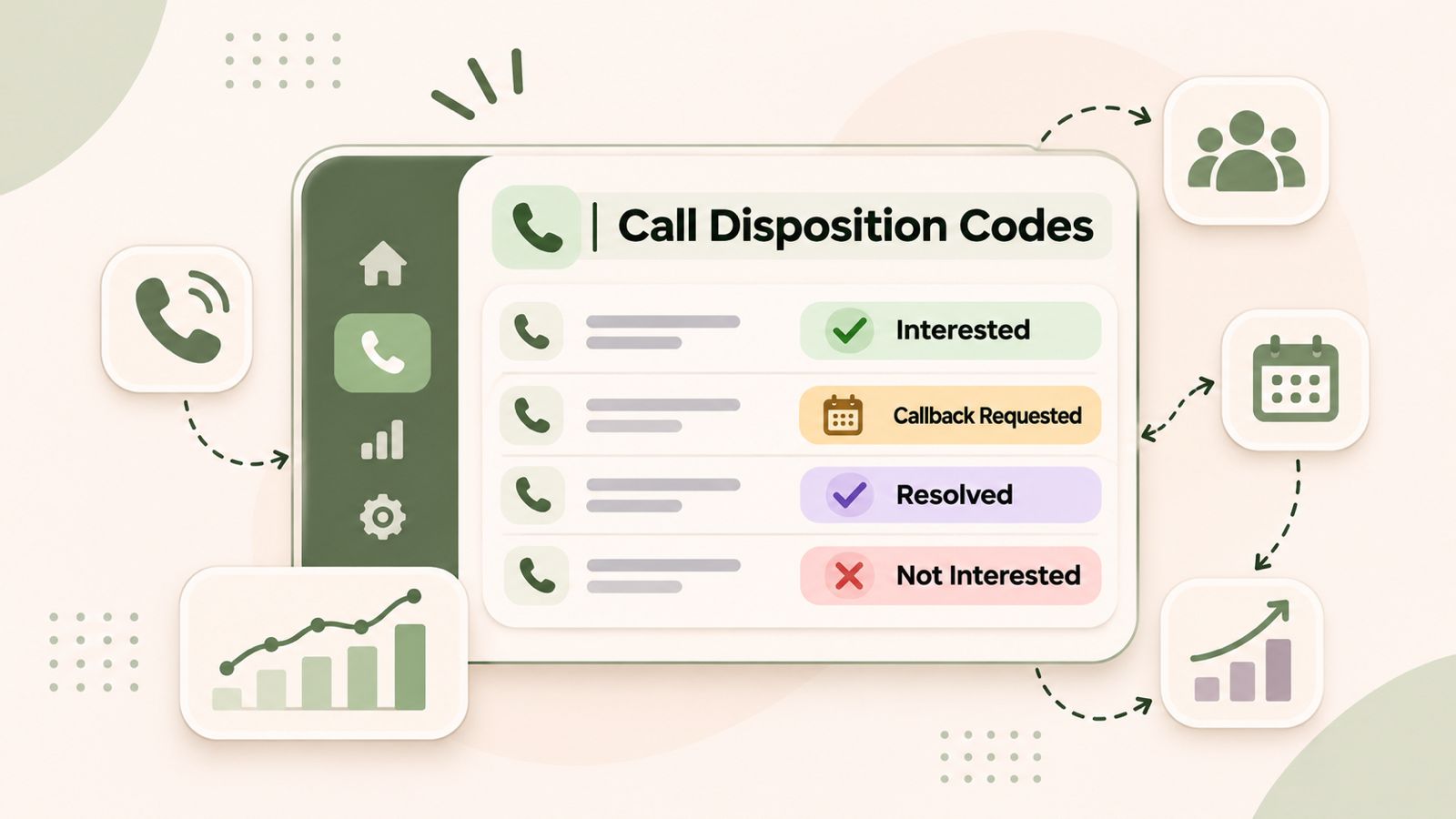
    Call disposition codes help sales and customer support teams record the outcome of every phone call. These codes show whether a customer answered, a prospect showed interest, a customer requested a callback, or an issue needs more attention.

    For example, a sales representative can use a call disposition code to mark an interested prospect for follow-up. Similarly, a support agent can record whether a customer’s issue was resolved or needs further help.

    As a result, businesses can keep better call records, manage follow-ups, and understand their calling activity. In this guide, we explain what call disposition codes are, share 30 practical examples, and cover the best ways to use them.

    What Are Call Disposition Codes and How Do They Work?

    Call disposition codes are predefined labels that describe the result of a phone conversation. After a call, an agent or sales representative selects the label that best matches the outcome.

    For example, a sales representative might select “Interested – Follow-Up Required” after speaking with a potential customer. On the other hand, a support agent might select “Issue Resolved” after solving a customer’s problem.

    These labels help every team member record calls in the same way.

    Some common call disposition codes include:

    • Answered
    • No Answer
    • Voicemail Left
    • Callback Requested
    • Interested
    • Not Interested
    • Demo Scheduled
    • Issue Resolved
    • Escalation Required
    • Wrong Number

    However, not every business needs the same list. The right codes depend on the type of calls your team handles and the actions your business wants to track.

    Why Are Call Disposition Codes Important for Businesses?

    Recording a call is only the first step in managing customer communication. However, businesses also need to know what happened during the conversation and what should happen next.

    This is where call disposition codes become useful.

    1. Improve Sales Follow-Ups

    Sales teams speak with prospects at different stages of the buying process. Some prospects request a demo, while others need more information or time to decide.

    Therefore, sales representatives can use call disposition codes to record each result.

    For example, a prospect marked “Callback Requested” needs another call. Similarly, a prospect marked “Demo Scheduled” has moved to the next stage of the sales process.

    2. Maintain Consistent Call Records

    Without standard labels, employees may describe the same result in different ways.

    For example, one representative might write “Call Later,” while another writes “Follow Up Tomorrow.”

    As a result, managers may find it difficult to review and compare call records.

    A shared set of call disposition codes solves this problem. It gives employees clear options and makes call records easier to understand.

    3. Understand Team Performance

    Managers can review call outcomes to understand how their teams handle customer conversations.

    For example, they can check:

    • How many calls were answered.
    • How many prospects requested callbacks.
    • How many calls resulted in meetings.
    • How often customers requested extra help.
    • How many conversations still need follow-up.

    In addition, managers can compare these results over time to identify changes in team activity.

    4. Improve Customer Support Workflows

    Customer support teams handle different types of requests every day. Some issues are resolved during the first call, while others need more work.

    Call disposition codes help agents separate resolved issues, pending requests, escalations, and missed interactions.

    Therefore, support managers can quickly identify which conversations still need attention.

    5. Keep Better CRM Records

    A CRM stores customer details and records of previous interactions. Similarly, clear call outcomes make these records more useful.

    For example, a representative can review a previous call before contacting the same customer again.

    In addition, managers can use these records to create reports and understand customer communication patterns.

    30 Call Disposition Codes Examples for Sales and Customer Support

    The right call disposition codes depend on your business, sales process, and customer support needs.

    Below are 30 practical examples divided into four groups. Each code includes its meaning and the next action your team can take.

    A. General Call Outcome Codes

    These codes describe what happened when someone made or received a call.

    CodeDefinitionNext Action
    AnsweredThe recipient answered the callRecord the conversation outcome
    No AnswerThe recipient did not answerSchedule another attempt
    Voicemail LeftThe agent left a voicemailPlan a follow-up
    BusyThe recipient’s line was busyTry again later
    Wrong NumberThe number does not belong to the intended contactCheck the contact details
    Call DisconnectedThe call ended unexpectedlyTry to reconnect
    Callback RequestedThe recipient asked for another callSchedule a callback
    Not ReachableThe recipient could not be reachedCheck the number and try again

    These basic codes help teams understand the result of each call attempt. In addition, they make it easier to plan the next action.

    B. Sales Call Disposition Codes

    Sales teams need codes that show prospect interest and progress through the sales process.

    CodeDefinitionNext Action
    InterestedThe prospect showed interest in the product or serviceShare more information
    Not InterestedThe prospect declined the offerRecord the reason
    Qualified LeadThe prospect meets the sales team’s requirementsMove to the next sales stage
    Unqualified LeadThe prospect does not meet the requirementsUpdate the lead status
    Demo ScheduledThe prospect agreed to a product demoConfirm the meeting
    Follow-Up RequiredMore discussion is neededCreate a follow-up task
    Pricing DiscussionThe prospect asked about pricingShare pricing details
    Decision PendingThe prospect needs more time to decideSchedule another conversation
    ConvertedThe prospect became a customerUpdate the CRM
    Do Not ContactThe contact asked not to receive further callsUpdate contact preferences and respect the request

    These sales call disposition codes help representatives understand where each prospect stands. As a result, they can focus on the right follow-up activities.

    C. Customer Support Call Disposition Codes

    Support teams can use these codes to track customer issues and service requests.

    CodeDefinitionNext Action
    Issue ResolvedThe customer’s problem was solvedClose the support case
    Issue PendingThe problem still needs attentionContinue the investigation
    Escalation RequiredAnother team needs to handle the issueTransfer or escalate the request
    Information ProvidedThe customer received the requested informationRecord the details
    Complaint ReceivedThe customer reported a problemReview the complaint
    Technical Support RequiredThe issue needs technical helpAssign a specialist
    Refund RequestedThe customer asked for a refundFollow the refund process
    Follow-Up RequiredMore communication is neededSchedule another interaction

    For example, a support agent can select “Issue Pending” when a problem cannot be solved during the first conversation. The next agent can then review the record and continue the work.

    D. Appointment and Service Call Codes

    Businesses that manage bookings, appointments, and service requests may need these additional codes.

    CodeDefinitionNext Action
    Appointment ScheduledA new appointment was confirmedUpdate the calendar
    Appointment RescheduledAn existing appointment was changedConfirm the new time
    Appointment CancelledThe customer cancelled the bookingUpdate the booking record
    Confirmation ReceivedThe customer confirmed the appointmentKeep the booking active

    These examples provide a starting point. However, businesses should choose codes that match their actual calling process instead of using every available option.

    What Is the Difference Between Call Status, Call Disposition and Call Notes?

    Call status, call disposition, and call notes are related terms. However, each one serves a different purpose.

    TermMeaningExample
    Call StatusShows the connection resultAnswered, missed, failed
    Call DispositionShows the business outcomeInterested, demo scheduled, issue resolved
    Call NotesGive extra details about the conversationCustomer requested a quotation next Monday

    Consider this example.

    A sales representative calls a potential customer. The call record may look like this:

    • Call Status: Answered
    • Call Disposition: Interested – Follow-Up Required
    • Call Notes: Customer wants to review the pricing proposal with their manager.

    In this example, the call status shows that the connection was successful. Meanwhile, the disposition explains what happened during the conversation. Finally, the notes provide extra details.

    Using all three helps businesses maintain clear and useful customer records.

    How to Choose the Right Call Disposition Codes for Your Team

    A good disposition system should be easy to understand and simple to use. Therefore, businesses should plan their categories before adding them to their calling workflow.

    Follow these steps to create a useful system.

    1. Identify Your Calling Objectives

    First, understand why your team makes calls.

    For example:

    • Sales teams focus on lead qualification, meetings, and sales.
    • Customer support teams focus on solving issues and handling requests.
    • Recruitment teams focus on candidate availability and interviews.
    • Service teams focus on bookings and job completion.

    Your call disposition codes should match these goals. This way, employees can select the right result after each conversation.

    2. Separate Main Outcomes From Extra Details

    Use the main disposition to record the primary result of a call.

    For example:

    • Interested
    • Not Interested
    • Callback Requested
    • Issue Resolved
    • Escalation Required

    Then, use call notes or secondary tags to record more details where your platform supports them.

    This approach keeps your main categories simple. It also makes reports easier to read.

    3. Use Clear Labels

    Avoid vague labels such as:

    • Other
    • Miscellaneous
    • General
    • Done

    Instead, choose labels that describe a clear result.

    For example, use “Pricing Information Requested” instead of “Other.” This makes it easier for employees and managers to understand the call record.

    4. Avoid Too Many Categories

    A long list can confuse employees. Moreover, it may slow down their work after a call.

    Therefore, start with the outcomes your team uses most often. Add more codes only when your business needs them.

    5. Explain When to Use Each Code

    Write a short description for every category.

    For example, use “Callback Requested” only when the customer or prospect asks for another call.

    Similarly, use “Issue Resolved” only when the customer’s problem has been solved.

    Clear rules help employees choose the same code for similar situations.

    6. Review Your Categories Regularly

    Business needs can change over time. Therefore, review your call disposition codes on a regular basis.

    Look for categories that:

    • Are rarely used.
    • Have the same meaning as another category.
    • No longer match your calling process.
    • Do not provide useful information.

    Finally, update the list and inform your team about any changes.

    How to Use Call Disposition Codes to Improve Sales Performance

    Sales managers can use call outcomes to understand how prospects move through the sales process.

    Here are four practical ways to use this information.

    Track Prospect Interest

    Compare outcomes such as Interested, Not Interested, No Answer, and Callback Requested.

    This helps managers understand how prospects respond to sales calls. In addition, it can help teams review their outreach approach.

    Find Follow-Up Opportunities

    A prospect marked “Follow-Up Required” should not get lost in the sales pipeline.

    Instead, connect the disposition to a clear next step. This could be another call, an email, or a product demonstration.

    Review Sales Progress

    Compare the number of qualified leads, scheduled demos, and converted prospects over the same period.

    As a result, managers can see where prospects are moving forward and where they may need more support.

    Improve Sales Training

    Managers can review call recordings, notes, and outcomes to understand how representatives handle conversations.

    For example, they can identify common customer questions or objections. Then, they can use these findings to improve sales training and communication.

    Learn more about DialNext sales calling solutions.

    How to Use Call Disposition Codes in Customer Support

    Customer support teams can use call disposition codes to keep a clear record of customer conversations.

    Here are three useful ways to apply them.

    Identify Unresolved Issues

    Use codes such as Issue Pending and Escalation Required to find conversations that need more work.

    Therefore, managers can review open requests and assign them to the right team members.

    Understand Common Customer Problems

    Review the support categories that appear most often.

    For example, frequent complaints or technical support requests may show where customers need more help.

    As a result, support managers can focus on common problems and improve their service process.

    Maintain Better Customer History

    Clear call outcomes and notes help another agent understand previous conversations.

    This means customers do not need to explain the same problem again when the team has accurate records.

    Learn more about DialNext customer support solutions and how organized communication can help support teams manage customer conversations.

    How Does Call Disposition Data Improve CRM Reporting?

    A CRM stores customer details and records of business interactions. When teams record call outcomes in a consistent way, they can create more useful reports.

    For example, managers can review:

    • Call outcomes: See how many calls were answered, missed, or ended with another result.
    • Sales progress: Track qualified leads, scheduled demos, and conversions.
    • Follow-up activity: Find contacts that need another call or message.
    • Agent activity: Compare recorded call outcomes across team members.
    • Customer support: Review resolved, pending, and escalated issues.

    Consider a sales manager who wants to find prospects waiting for another call.

    The manager can filter records marked “Callback Requested.” Next, they can check whether each representative completed the follow-up.

    This makes it easier to manage pending sales activities.

    However, the quality of these reports depends on accurate records, clear categories, and reliable CRM activity logging.

    For more information, explore DialNext lead generation solutions.

    For additional guidance, read the HubSpot guide to creating custom call and meeting outcomes.

    You can also review the Salesforce CallDisposition field reference.

    Common Call Disposition Mistakes to Avoid

    Even a good disposition system can fail if employees do not use it correctly.

    Therefore, businesses should avoid these common mistakes.

    Using Vague Categories

    Labels such as “Other” and “Done” do not explain what happened during a call.

    Instead, use clear categories that describe the actual outcome.

    Mixing Call Status With Business Outcomes

    An answered call does not always mean a successful sales conversation.

    For this reason, keep connection results separate from sales and support outcomes.

    Ignoring Follow-Up Actions

    Recording “Callback Requested” is not enough.

    Managers should also assign responsibility and set a clear next step. Otherwise, the prospect or customer may not receive the expected response.

    Creating Duplicate Categories

    Avoid using labels such as “Call Later,” “Follow Up,” and “Callback Required” for the same result.

    Instead, choose one standard label and explain when employees should use it.

    Not Training Employees

    Employees need to know how and when to select each category.

    Therefore, provide simple guidelines and review how your team uses the codes.

    Ignoring Call Reports

    Collecting data is only useful when managers review it.

    Regularly check call outcomes and use the results to improve team workflows.

    How DialNext Helps Teams Manage Call Outcomes

    Managing business communication involves more than making and receiving calls. Teams also need a clear way to review conversations and maintain customer records.

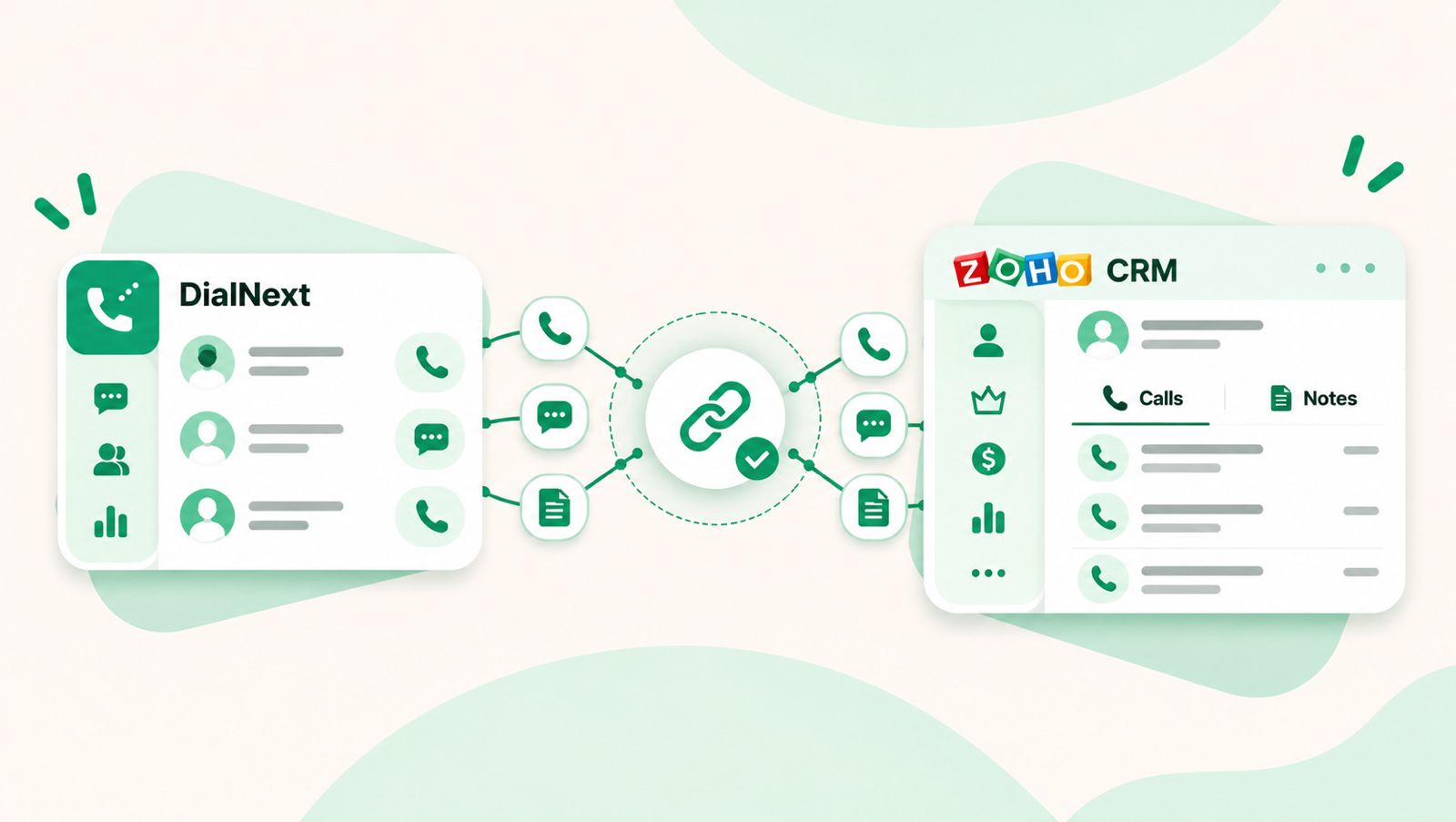
    DialNext provides business calling, call recording, call tags, notes, SMS, and CRM connectivity to support sales and customer support workflows.

    With DialNext, teams can:

    • Record and review customer conversations.
    • Add call tags to group and identify interactions.
    • Maintain notes alongside customer interaction history.
    • Track call activity through available analytics and reporting.
    • Manage inbound and outbound business calls.
    • Connect communication activity with supported CRM workflows.

    For example, a lead generation team can use call tags to group prospect interactions based on outcomes such as Qualified, Not Interested, and Callback Needed.

    As a result, managers can get a clearer view of campaign activity and follow-up needs.

    Similarly, customer support teams can use call tags and notes to keep track of customer requests.

    By combining business calling with organized interaction records, DialNext helps teams manage customer communication more clearly.

    Explore the DialNext business calling platform to learn more about its communication solutions.

    Frequently Asked Questions About Call Disposition Codes

    1. What are call disposition codes?

    Call disposition codes are predefined labels that record the result of a phone call. They help businesses group conversations, track follow-ups, and review call activity.

    2. What are the most common call disposition codes?

    Common call disposition codes include Answered, No Answer, Voicemail Left, Callback Requested, Interested, Not Interested, Demo Scheduled, Issue Resolved, and Escalation Required.

    3. What is the difference between a call disposition and a call tag?

    A call disposition usually describes the main result of a conversation. On the other hand, a call tag can group calls by topic, customer type, campaign, or another detail. The exact difference depends on the calling platform.

    4. Why are call disposition codes important for sales teams?

    Call disposition codes help sales teams track prospect interest, find follow-up opportunities, review sales progress, and understand the results of outbound calls.

    5. Can call disposition codes improve customer support?

    Yes. Support teams can use these codes to track solved issues, pending requests, complaints, and escalations. As a result, agents can maintain better customer records and manage follow-ups.

    6. How many call disposition codes should a business use?

    There is no fixed number. Start with a small list that covers your team’s most common call outcomes. Then, add more codes only when they provide useful information.

    7. Should call disposition codes be mandatory?

    Making dispositions mandatory can improve record keeping. However, employees need clear options and a simple process. Businesses should also allow suitable exceptions when a call cannot be placed into a specific category.

    8. Are call disposition codes the same as call outcomes?

    These terms are often used in the same way. However, some platforms separate automatic call results, such as Answered or No Answer, from outcomes selected by an agent, such as Interested or Callback Requested.

    9. Can call disposition codes be used in CRM systems?

    Yes. Many CRM systems support call outcomes or custom activity categories. These records help teams filter interactions, review sales progress, and manage follow-up tasks.

    10. How often should businesses review their call disposition codes?

    Businesses should review their codes regularly and whenever their sales or support process changes. Remove duplicate labels and update categories that no longer match your team’s needs.

    Final Thoughts

    Call disposition codes help businesses turn phone conversations into clear and useful records.

    By using simple categories, keeping accurate call notes, and connecting outcomes to follow-up tasks, sales and support teams can manage their daily work more effectively.

    However, the best disposition system is not the one with the most categories. It is the one employees can understand and use in the same way.

    With clear calling workflows and reliable interaction records, businesses can get more value from every customer conversation.

    For better call management, explore DialNext’s business calling platform to manage customer conversations and organize your calling workflows.
  • How to Use Call Transcription and AI Insights in DialNext

    How to Use Call Transcription and AI Insights in DialNext

    Call transcription helps businesses turn recorded conversations into searchable, readable text. Speech-to-text technology converts spoken words into written text. With DialNext, users can review customer and agent conversations, follow timestamps, and revisit important parts of a call.

    DialNext also provides AI Insights through the Overview section. Users can explore call summaries, conversation chapters, identified topics, action items, sentiment indicators, and call quality metrics.

    This guide explains how to access call transcripts, review recordings, understand AI-generated insights, and use call quality information to get more value from every conversation.

    How to Access Call Transcription in DialNext

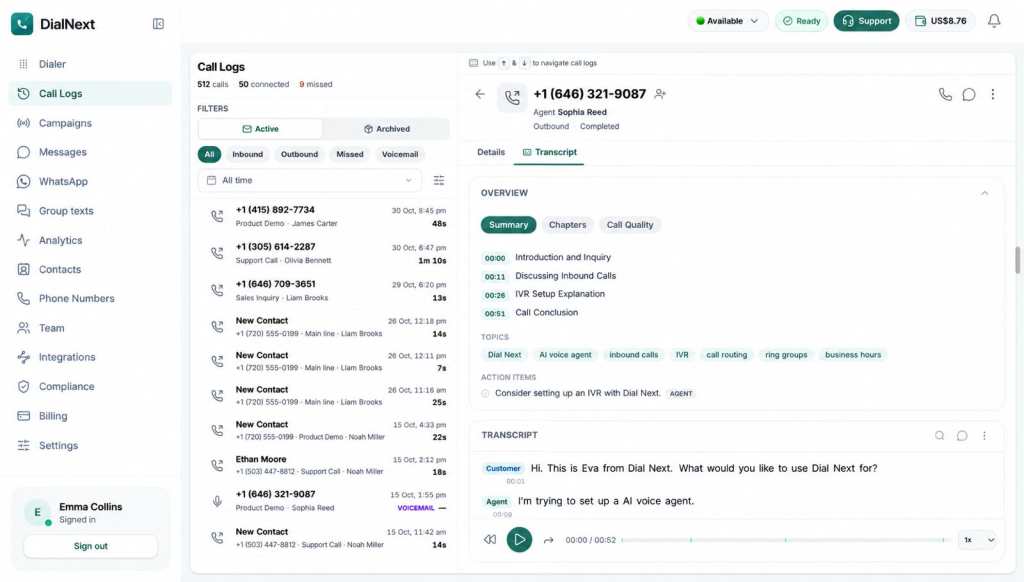
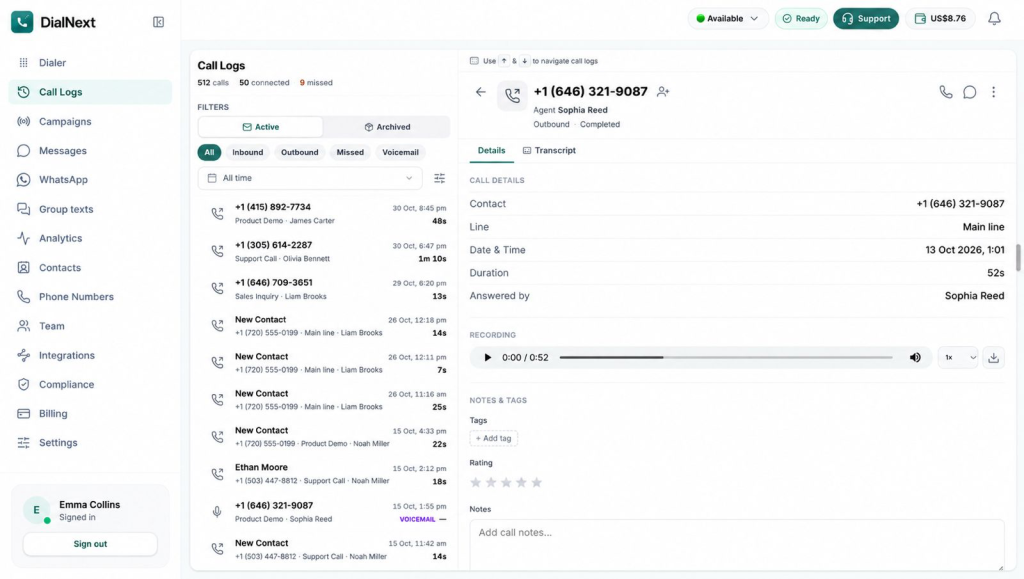
    You can access call transcripts directly from the Call Logs section in DialNext. Follow these steps to find and open a transcript:

    1. Log in to your DialNext account.
    2. Click Call Logs in the left sidebar.
    3. Select Active or Archived, depending on where the call is listed.
    4. Use the available filters to find the call. You can filter by All, Inbound, Outbound, Missed, or Voicemail.
    5. Select the call you want to review from the call list.
    6. Open the Transcript tab in the call details panel.

    DialNext displays the available transcript for the selected call. You can then review the conversation and explore the related call information.

    Figure 1: Call Logs in DialNext. This screen displays the Active and Archived call views, available call filters, and selected call details. Users can review call information, access recording controls, and navigate to the Transcript tab.

    How to View and Read Call Transcripts in DialNext

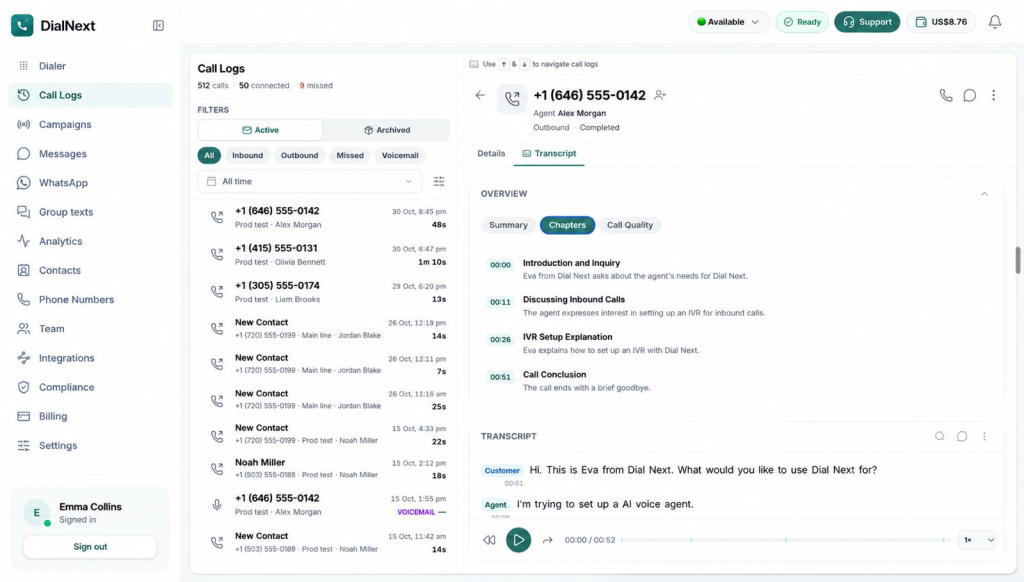
    After opening the Transcript tab, you can review the conversation between the Customer and Agent. DialNext displays the recognized speech along with speaker labels and timestamps.

    The transcript interface helps you follow the conversation and review specific parts of a call.

    You can find the following details:

    • Speaker Labels: Identify whether each conversation entry belongs to the Customer or Agent.
    • Timestamps: See when each part of the conversation occurred.
    • Recognized Conversation Text: Read the spoken words converted into text.
    • Audio Playback: Use the available audio player to listen to the call while reviewing the transcript.

    These details make it easier to follow conversations, revisit important exchanges, and understand what was discussed during a call.

    Figure 2: Call Transcript and AI Overview in DialNext. This screen displays the call summary, conversation chapters, identified topics, and action items. The transcript section shows Customer and Agent conversations with timestamps, along with audio playback controls for reviewing the recording.

    Understanding Chapters

    The Chapters tab organizes a call into separate discussion segments. It helps you navigate the conversation without having to review the entire transcript from beginning to end.

    Each chapter includes three key details:

    • Timestamp: Shows when the discussion segment begins.
    • Chapter Title: Highlights the main subject discussed in that segment.
    • Description: Provides a brief overview of the discussion.

    To explore the chapters, open the Chapters tab under Overview. Review the chapter timestamps and descriptions to find the discussion segment relevant to your needs.

    This makes it easier to review specific discussions, understand the flow of a call, and find relevant information quickly.

    Figure 3: Chapters Overview in DialNext. The Chapters tab organizes call conversations into individual discussion segments. Each segment displays a timestamp, chapter title, and brief description, helping users quickly understand the key stages of a conversation.

    Understanding Call Quality

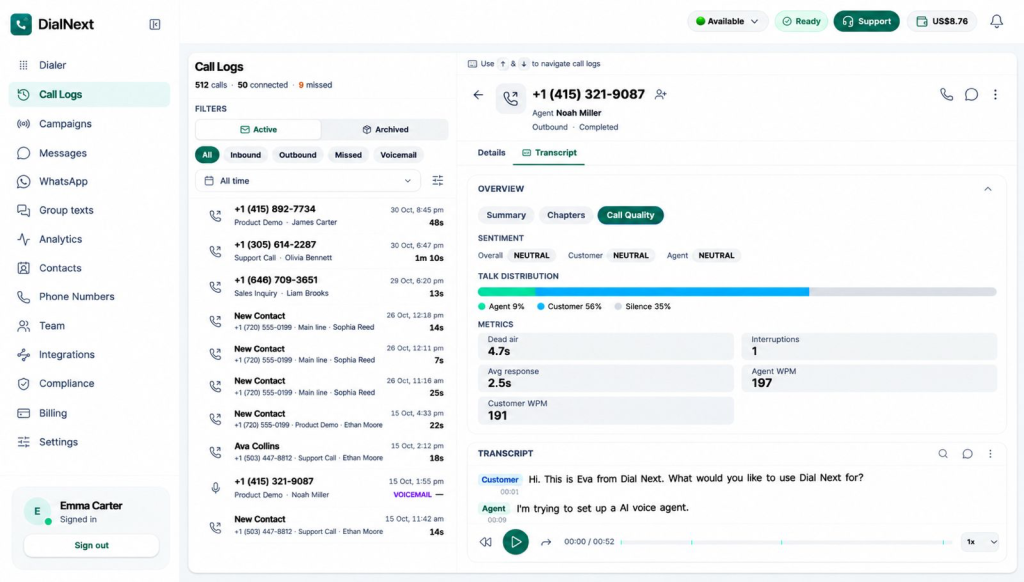
    The Call Quality tab provides an overview of different aspects of a recorded conversation. It brings together sentiment indicators, talk distribution, and call metrics to help users review call performance.

    You can explore three types of information:

    1. Sentiment Analysis

    The Sentiment section displays sentiment indicators for different parts of the call:

    • Overall: Shows the overall sentiment of the conversation.
    • Customer: Displays the customer’s sentiment.
    • Agent: Displays the agent’s sentiment.

    2. Talk Distribution

    Talk Distribution shows how speaking time is divided between the participants and silence.

    • Agent: Displays the percentage of time the agent speaks.
    • Customer: Displays the percentage of time the customer speaks.
    • Silence: Displays the percentage of time without speech.

    3. Call Metrics

    The Metrics section displays additional information about the conversation:

    • Dead Air: Displays the dead air value for the call.
    • Interruptions: Shows the number of interruptions.
    • Avg Response: Displays the average response value.
    • Agent WPM: Shows the agent’s words per minute.
    • Customer WPM: Shows the customer’s words per minute.

    To access these details, open the selected call and navigate to the Call Quality tab under Overview.

    For more information about network factors that can affect call performance, read our VoIP Call Quality and Network Setup Guide.

    Figure 4: Call Quality Overview in DialNext. This screen displays overall, customer, and agent sentiment, along with talk distribution and key call metrics such as dead air, interruptions, Avg Response, and words per minute (WPM) for both participants.

    How to Play and Download Call Recordings in DialNext

    DialNext lets you play and download call recordings directly from the call details panel. The built-in audio player provides playback controls to help you review conversations at your preferred speed.

    Follow these steps to access a call recording:

    1. Open Call Logs from the left sidebar.
    2. Select the call you want to review.
    3. Open the Details tab in the call details panel.
    4. Locate the Recording section.
    5. Click the Play button to listen to the recording.
    6. Use the playback timeline to move to a specific part of the recording.
    7. Adjust the volume using the volume control.
    8. Select a playback speed: 0.75x, 1x, 1.25x, 1.5x, or 2x.
    9. Click the Download icon to download the recording.

    These controls help you review conversations, revisit specific moments, and access recordings when needed.

    Figure 5: Call Recording Player in DialNext. Users can play recordings, navigate the audio timeline, adjust volume and playback speed, and download recordings.

    Call Too Short

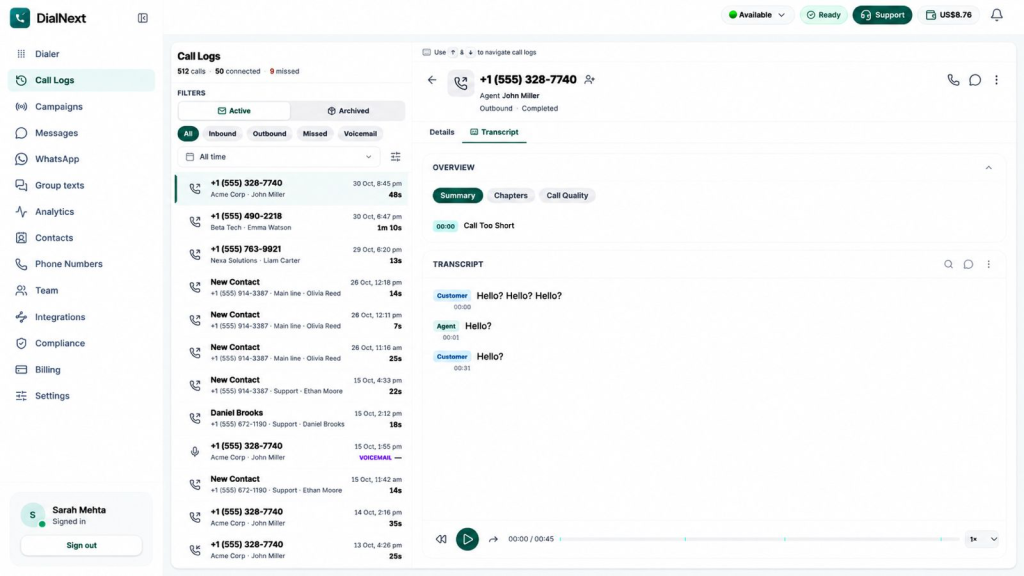
    Sometimes, DialNext may not generate an AI summary for a call because the conversation does not contain enough speech.

    In such cases, the Summary tab displays a Call Too Short status instead of the usual AI-generated insights.

    Why does this happen?

    Short conversations, brief exchanges, or repeated greetings may not provide enough speech for DialNext to generate a meaningful summary.

    What can you do?

    • Review the transcript: Open the Transcript tab to check the recognized conversation text.
    • Check the conversation: See whether the call contains enough meaningful speech.
    • Review the call recording: Use the audio player to listen to the conversation again.

    Even when a meaningful summary is unavailable, you may still be able to review the available transcript entries.

    Figure 6: Call Too Short Status in DialNext. When a call does not contain enough speech, DialNext displays the Call Too Short status instead of generating a meaningful AI summary. The transcript remains available for reviewing the recognized conversation.

    Frequently Asked Questions

    1. How can I access call transcripts in DialNext?

    Open Call Logs, select the call you want to review, and click the Transcript tab in the call details panel.

    2. What information does a DialNext call transcript include?

    A call transcript displays recognized conversation text, Customer and Agent labels, and timestamps for individual conversation entries.

    3. What are AI Insights in DialNext?

    AI Insights help users review conversations through the Summary, Chapters, and Call Quality tabs. These sections display conversation summaries, topics, action items, sentiment indicators, and call metrics.

    4. Why does DialNext show a Call Too Short status?

    DialNext displays this status when a call does not contain enough speech to generate a meaningful AI summary. You may still be able to review the available transcript entries.

    5. Can I play and download call recordings in DialNext?

    Yes. Open the selected call’s Details tab and locate the Recording section. You can play the recording, adjust its volume and playback speed, navigate the timeline, and download it.

    6. What metrics are available under Call Quality?

    The Call Quality tab displays sentiment indicators, talk distribution, dead air, interruptions, average response, and Agent and Customer words-per-minute (WPM) values.

    Conclusion

    Call Transcription and AI Insights help businesses get more value from their customer conversations. With DialNext, teams can review call transcripts, explore AI-generated summaries, navigate conversation chapters, and understand call quality through sentiment indicators and performance metrics.

    These features make it easier to revisit important discussions, identify follow-up actions, and gain a clearer understanding of customer interactions. By using call recordings and AI Insights together, teams can make more informed decisions and improve their communication processes.

    Explore more setup guides, tutorials, and product documentation in the DialNext Help Center.

  • Call Queue Management: How to Reduce Caller Wait Times and Improve Customer Experience

    Call Queue Management: How to Reduce Caller Wait Times and Improve Customer Experience

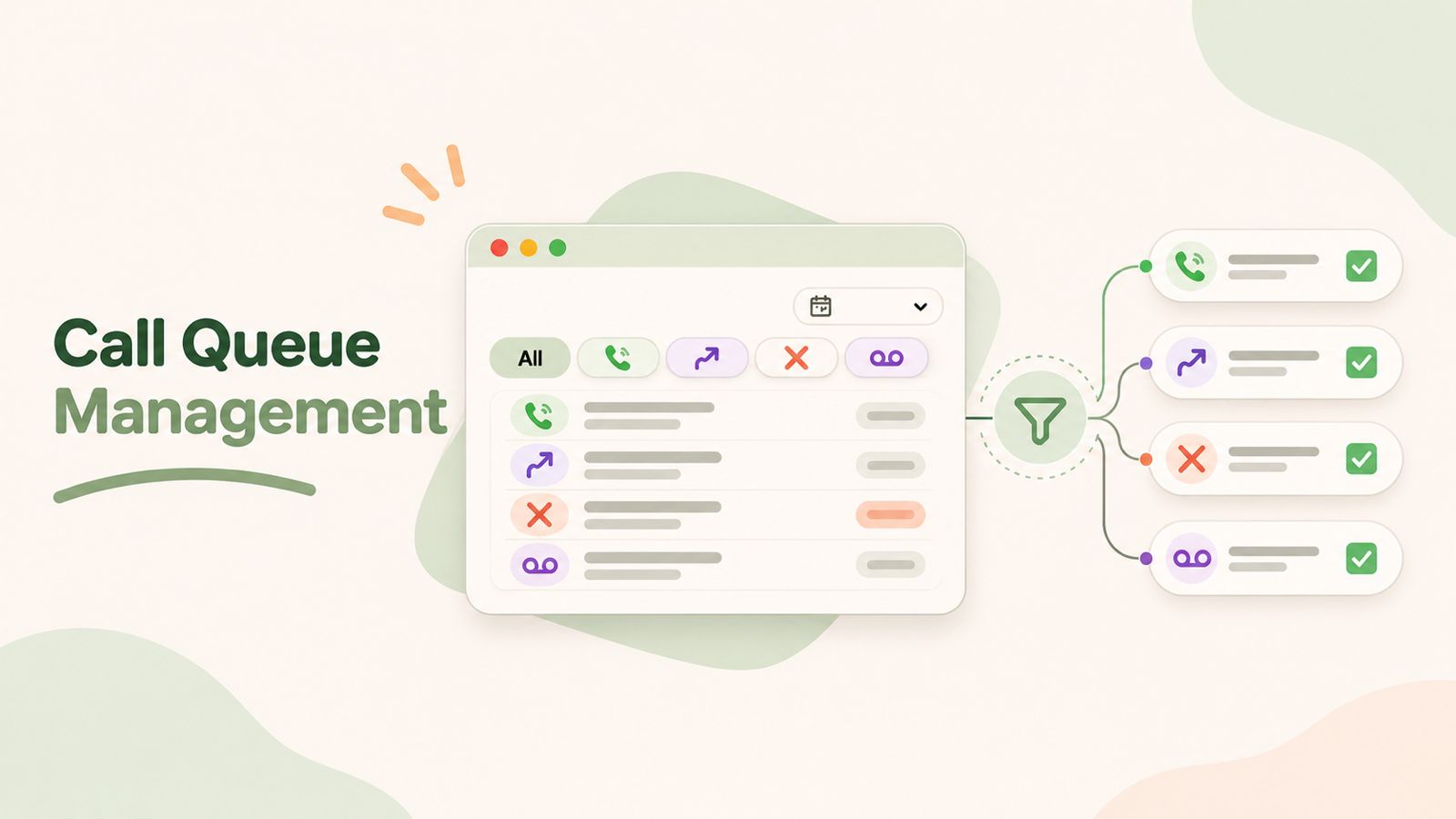
    Long caller wait times can frustrate customers and put extra pressure on support teams. Call queue management helps businesses organize incoming calls, direct callers to the right team, and handle busy periods more consistently.

    The right approach starts with clear call routing, realistic staffing, and regular reviews of call data. In this guide, you will learn how call queues work, which metrics to monitor, and practical ways to reduce caller wait times without making the customer experience more complicated.

    What Is Call Queue Management?

    Call queue management is the process of organizing incoming calls when agents are busy or unavailable. It helps businesses place callers in a waiting queue and connect them with the right team when an agent becomes available.

    A call queue management system helps teams handle high call volumes in a more organized way. Instead of sending every call to the same person, businesses can use call routing rules to direct callers to the appropriate department or group.

    For example, a customer calling a support team may need help with billing, a technical issue, or an order. A well-planned call queue helps direct that customer to the appropriate team and reduces unnecessary transfers.

    Effective call queue management involves more than placing callers on hold. Businesses also need to review staffing levels, monitor waiting times, and understand why callers disconnect before reaching an agent.

    The goal is simple: help customers reach the right person with as little unnecessary waiting as possible.

    How Does a Call Queue Work?

    A call queue manages incoming calls when multiple customers contact a business at the same time. It organizes waiting callers and connects them to an appropriate agent as availability changes.

    Here is how a typical call queue works:

    1. A customer calls: The business receives an incoming call through its phone system.
    2. The caller selects an option: If an Interactive Voice Response (IVR) menu is available, the caller can choose a department or service.
    3. The system routes the call: Routing rules direct the call to the appropriate team or queue.
    4. The caller waits: If no suitable agent is available, the caller may remain in the queue until an agent can answer.
    5. An agent answers: When an eligible agent becomes available, the system connects the caller according to its configured routing rules.

    The exact process depends on the phone system and its configuration. Some systems also offer alternative handling options, such as voicemail or callback functionality.

    For a smoother experience, businesses should keep routing options clear and review how calls move through each stage. This helps identify unnecessary transfers and delays that can increase caller wait times.

    Why Call Queue Management Matters

    Effective call queue management helps businesses handle incoming calls without creating unnecessary frustration for customers. It also helps support teams manage their workload during busy periods.

    Here are the main benefits of managing call queues effectively.

    1. Reduces Caller Frustration

    Long waits can make customers feel ignored, especially when they need urgent assistance. Clear routing and helpful waiting messages make the experience more predictable. As a result, callers know what to expect while they wait.

    2. Improves Agent Productivity

    Without a clear call handling process, agents may receive calls outside their area of responsibility. Proper routing helps direct customers to the right team. This reduces unnecessary transfers and allows agents to focus on the issues they are trained to resolve.

    3. Helps Reduce Call Abandonment

    Call abandonment occurs when a caller disconnects before speaking to an agent. Long waits, unclear instructions, and repeated transfers can contribute to this problem. Monitoring queue performance helps businesses identify these issues and take corrective action.

    4. Supports Better Staffing Decisions

    Call volumes often change throughout the day. Reviewing historical call patterns helps managers identify peak hours and plan staff coverage accordingly. This can reduce pressure on agents during busy periods.

    5. Creates a More Consistent Customer Experience

    Customers expect reliable service whenever they contact a business. A well-organized queue helps standardize how calls are routed and handled. Consequently, customers are more likely to reach the appropriate team without unnecessary delays.

    Overall, call queue management helps businesses balance customer needs with available resources. Regular reviews of call activity and queue performance can reveal where improvements are needed.

    Call Queues vs. IVR vs. Ring Groups

    Call queues, Interactive Voice Response (IVR), and ring groups help businesses manage incoming calls. However, each serves a different purpose. Understanding these differences makes it easier to design an efficient call handling process.

    What Is the Difference?

    FeatureMain purposeHow it works
    Call queueManage callers waiting for an agentHolds calls in a queue until an eligible agent can answer.
    IVRGuide callers to the right destinationUses recorded prompts and menu options to collect caller input.
    Ring groupAlert a group of agents or phonesRings configured destinations according to the system’s rules.

    When Should You Use Each One?

    Call queues: Use a call queue when several customers may call at the same time and agents cannot answer every call immediately. It helps organize waiting callers and manage demand.

    IVR: Use IVR when callers need to choose a department or service before speaking to someone. Clear menu options can reduce misrouted calls and unnecessary transfers.

    Ring groups: Use ring groups when multiple team members should receive an incoming call alert. Depending on the configuration, the system may ring several destinations together or follow a defined sequence.

    Can These Features Work Together?

    Yes. Many business phone systems combine these features to create a more organized call flow.

    For example, a customer calls a support number and selects the technical support option through IVR. The system then routes the call to the appropriate team. If no agent can answer immediately, the caller may enter a queue, depending on the configured call flow.

    This approach helps businesses direct callers efficiently while providing a consistent experience during busy periods.

    When choosing call routing software, consider how these features work together. The best setup depends on your call volume, team structure, and customer support requirements.

    Best Practices for Managing Incoming Call Queues

    Managing incoming call queues effectively requires clear routing, appropriate staffing, and regular performance reviews. Small improvements in these areas can help businesses reduce unnecessary waiting and deliver a more consistent customer experience.

    Simplify the Caller Journey

    Keep your phone menu short and easy to understand. Too many options can confuse callers and make it harder to reach the right department.

    Use clear menu labels and review them whenever your services or team structure changes. This helps customers choose the correct option without navigating unnecessary steps.

    Route Calls to the Right Team

    Use call routing rules to direct customers to agents who can resolve their queries. For example, billing questions should reach the billing team rather than general technical support.

    Review your routing setup regularly. If customers are frequently transferred between departments, your current rules may need improvement.

    Keep Callers Informed While They Wait

    Waiting without any information can make callers feel uncertain. Use clear greetings and appropriate hold messages to explain what customers should expect.

    If your phone system supports queue position or estimated waiting time announcements, consider whether these options would help your callers. Do not provide estimates that your system cannot reliably calculate.

    Match Staffing to Call Demand

    Call volumes often vary by time of day, day of the week, and season. Review historical call data to identify recurring busy periods.

    Use these patterns to plan staff schedules and breaks. Adequate coverage during peak hours can help prevent queues from growing faster than agents can handle them.

    Monitor Agent Availability

    Make sure calls are routed to the intended agents and teams. Incorrect availability settings or outdated routing rules can prevent calls from reaching staff who are ready to answer.

    Review these settings whenever team responsibilities or working hours change. This helps keep the call handling process aligned with actual staffing.

    Review Queue Performance Regularly

    Track waiting times, abandoned calls, and missed calls to understand how your queue performs. Look for recurring problems rather than reacting to individual busy periods.

    For example, consistently long waits during lunchtime may indicate a scheduling gap. Adjusting staff coverage could help address the underlying issue.

    Effective call queue management is an ongoing process. Review your call flows, listen to customer feedback, and make adjustments based on the results.

    What Happens When All Agents Are Busy?

    When all agents are busy, incoming callers may need to wait until someone becomes available. Without a clear plan, this situation can lead to longer queues, frustrated customers, and more abandoned calls.

    Businesses can prepare for these situations by defining what should happen when no agent can answer.

    Keep Callers in a Queue

    A call queue can hold incoming calls until an eligible agent becomes available. Depending on the phone system, callers may hear hold music or recorded messages while they wait.

    Keep these messages clear and relevant. Avoid making promises about waiting times unless the system can provide reliable estimates.

    Set Up an Appropriate Fallback

    Some callers may not be able to remain on hold. A fallback process gives businesses another way to handle calls when agents are unavailable.

    Depending on the system’s capabilities, options may include:

    • Sending callers to voicemail.
    • Directing calls to another available team.
    • Playing a message with alternative contact instructions.
    • Offering a callback option, if supported.

    Choose a fallback that suits your business and the type of assistance callers need. For example, a support team may direct callers to voicemail outside operating hours, while another team may route calls to an alternative department.

    Plan for Peak Call Volumes

    A sudden increase in incoming calls can overwhelm an otherwise well-managed team. Review historical call patterns to identify busy periods and prepare staffing plans in advance.

    You can also review recurring causes of high call volumes. If customers frequently call to ask about the same issue, clearer website instructions or self-service resources may help reduce avoidable calls.

    Review Unanswered and Abandoned Calls

    Do not focus only on the calls that agents answer. Review missed calls and abandoned calls to identify gaps in your handling process.

    Look for patterns by time of day, department, and call volume where the available data allows it. These insights can help you decide whether to adjust staffing, routing rules, or fallback options.

    A clear overflow plan helps businesses respond more consistently when demand exceeds available capacity. It also gives callers a more predictable experience when an immediate answer is not possible.

    How to Reduce Caller Wait Times

    Reducing caller wait times requires more than adding agents to a support team. Businesses also need to identify delays, improve call routing, and manage incoming demand effectively.

    The following practices can help shorten queues and improve customer support.

    Match Staffing to Call Demand

    Review historical call volumes to identify peak hours and busy days. Schedule enough agents during these periods to handle expected demand.

    Also, account for breaks, meetings, and training sessions when planning staff coverage. This helps prevent situations where too few agents are available to answer incoming calls.

    Reduce Unnecessary Call Transfers

    Customers may wait longer when their calls move between departments. Clear IVR menus and appropriate routing rules can help direct callers to the right team from the start.

    Review common transfer patterns and identify where calls frequently reach the wrong department. Then, update your routing rules or menu options to address the problem.

    Review Long Call Handling Times

    Long conversations can reduce the number of calls agents handle during busy periods. However, rushing agents to finish calls may harm the quality of support.

    Instead, identify common reasons for lengthy conversations. Better training, clear troubleshooting guides, and access to relevant customer information can help agents resolve queries more efficiently.

    Simplify IVR Menus

    Complicated phone menus can delay callers before they even enter a queue. Keep options short, use familiar language, and organize departments logically.

    Review menu choices regularly to remove outdated options. Make sure callers can identify the correct destination without listening to unnecessary instructions.

    Improve Queue Messages

    Clear waiting messages help customers understand what is happening while they wait. If your phone system supports queue position or estimated waiting time announcements, use them carefully.

    Keep recorded messages concise and avoid repeating lengthy promotional content. If alternative contact options are available, explain them clearly.

    Analyze Call Patterns and Adjust

    Use available call reports to identify recurring delays and missed calls. Compare performance across different days, hours, and teams to find areas that need attention.

    For example, if waiting times rise consistently during a particular hour, review staffing levels and agent availability during that period. If delays occur across the entire day, investigate routing rules and overall team capacity.

    Reducing caller wait times is an ongoing process. Make one change at a time where practical, then review the results to determine whether it improves queue performance.

    Call Queue Metrics Businesses Should Monitor

    Effective call queue management depends on understanding how incoming calls move through your business. Tracking the right metrics helps managers identify delays, improve staffing decisions, and spot problems before they affect more customers.

    Here are six important call queue metrics to monitor.

    1. Average Waiting Time

    Average waiting time measures how long callers spend waiting before receiving assistance. Depending on the reporting system, this metric may cover only time spent in the queue or a broader part of the call journey.

    Review waiting times across different hours and departments. Consistently high values may indicate insufficient staffing, inefficient routing, or increased call demand.

    2. Average Speed of Answer

    Average speed of answer (ASA) measures the average time taken to answer calls. Its exact calculation depends on the reporting system and whether abandoned calls are included.

    A rising ASA may indicate that incoming demand is exceeding available capacity. Compare this metric over time to identify periods when additional staffing or routing changes may be needed.

    3. Call Abandonment Rate

    Call abandonment rate measures the percentage of callers who disconnect before reaching an agent. A high rate may indicate long waits, confusing menus, or a mismatch between call demand and staffing.

    Use the following formula when measuring abandonment among calls that entered the queue:

    Call Abandonment Rate = (Abandoned Queue Calls / Total Calls Entering the Queue) x 100

    For example, if 20 out of 200 callers abandon the queue, the abandonment rate is 10%.

    Make sure your reporting system uses the same definitions for every reporting period. Some systems exclude short calls or apply other rules to the calculation.

    4. Missed Call Rate

    The missed call rate measures the proportion of incoming calls that are not answered, based on the phone system’s reporting rules. Depending on the system, missed calls may include calls that ring without an answer or calls handled through other outcomes.

    Review missed calls alongside abandoned calls. This helps you distinguish problems with queue waiting from problems with call routing or agent availability.

    5. Service Level

    Service level measures the percentage of eligible calls answered within a defined time threshold. For example, a business might measure the percentage of calls answered within 30 seconds.

    The target should reflect your business needs and customer expectations. Review the calculation rules carefully because reporting systems may treat abandoned calls differently.

    6. Agent Occupancy

    Agent occupancy measures the proportion of an agent’s available working time spent handling calls and related work, depending on the system’s definition.

    High occupancy over extended periods can indicate that agents have little time between interactions. This may increase pressure on the team and make it harder to manage sudden increases in call volume.

    How to Use These Metrics Together

    No single metric explains every queue problem. Average waiting time and ASA help identify delays, while abandonment and missed call rates reveal where calls are not reaching agents successfully.

    Service level shows whether the team meets its defined response target. Agent occupancy adds context about workload and available capacity.

    Review these metrics together and compare them across consistent reporting periods. This approach helps you identify the underlying causes of poor call queue performance and choose appropriate improvements.

    Common Call Queue Management Mistakes

    Even with call queue software in place, poor configuration and inconsistent processes can create unnecessary delays. Identifying these mistakes helps businesses improve call handling and deliver a better customer experience.

    1. Using Complicated IVR Menus

    Too many menu options can confuse callers and delay them before they reach the right team. Customers may also select the wrong option and need to call another department.

    Keep menus short and use clear, familiar language. Review the options regularly to remove outdated choices and simplify the caller journey.

    2. Ignoring Peak-Hour Demand

    Staffing levels that work during quiet periods may not be sufficient during busy hours. When incoming calls exceed the team’s capacity, queues can grow quickly.

    Review historical call volumes and adjust staff schedules to match demand. Include breaks and planned absences when calculating available coverage.

    3. Routing Calls to the Wrong Team

    Incorrect routing rules can send callers to agents who cannot resolve their issues. This leads to transfers, repeated explanations, and longer handling times.

    Review common transfer patterns and update routing rules when responsibilities change. Clear department options can also help customers reach the appropriate team.

    4. Leaving Callers Without Useful Information

    Silence or repetitive messages can make waiting feel longer and leave customers unsure about what to do next.

    Use concise greetings and helpful hold messages. If the phone system supports reliable wait-time announcements or alternative contact options, consider using them where appropriate.

    5. Ignoring Abandoned Calls

    A completed call does not tell the whole story of queue performance. Callers who disconnect before reaching an agent may represent unresolved customer needs or lost business opportunities.

    Review abandonment patterns alongside waiting times and call volume. Investigate recurring problems instead of assuming every abandoned call has the same cause.

    6. Failing to Review Queue Performance

    A call queue that worked well last month may struggle after a change in staffing, demand, or business processes.

    Review available call reports regularly and compare performance across consistent periods. Use the findings to adjust staffing, routing, and queue procedures.

    7. Choosing Software Without Checking Its Capabilities

    Not every phone system offers the same queue controls, reporting features, or fallback options. Assuming that a platform supports a particular function can create problems during implementation.

    Before choosing call queue software, confirm which features are included, how they are configured, and whether they meet your team’s requirements.

    Avoiding these mistakes helps businesses manage incoming calls more consistently. Regular reviews and small, evidence-based improvements can make the queue easier for both customers and agents to navigate.

    How to Choose a Call Queue Management Solution

    Choosing the right call queue management solution helps businesses handle incoming calls efficiently as customer demand changes. The right system should support your team’s workflow, make call handling easier, and provide useful information for improving performance.

    Before selecting a solution, evaluate the following factors.

    Check Call Routing Options

    Look for a system that can direct incoming calls to the appropriate teams or agents. Clear routing rules can reduce unnecessary transfers and help customers reach the right department.

    Check whether the available routing options match your team’s structure and support requirements.

    Evaluate Queue Management Features

    Review how the system handles calls when agents are busy or unavailable. Check whether it supports queue waiting, hold messages, and appropriate fallback options.

    If you need advanced features such as callbacks, queue position announcements, or priority routing, confirm their availability before making a decision.

    Review Reporting and Analytics

    Useful reporting helps managers understand call volume, waiting times, abandoned calls, and agent workload.

    Check which metrics the platform provides and whether reports can be filtered by team or time period. Reliable reporting makes it easier to identify recurring delays and plan improvements.

    Consider IVR and Ring Group Support

    IVR menus can help callers select the right department, while ring groups can alert multiple configured destinations to an incoming call.

    Choose a system that supports the call flow your business needs. Also, check how these features work together when all agents are busy.

    Check Business-Hours and Fallback Rules

    Your call handling process should account for evenings, weekends, holidays, and periods when staff are unavailable.

    Look for configurable business-hours routing and suitable after-hours handling. Confirm that the available options match your operational requirements.

    Assess Scalability and Integration Needs

    Your call handling requirements may change as your business grows. Consider whether the solution can support additional agents, departments, and higher call volumes.

    If your team uses a CRM or help desk, check whether the phone system supports the integrations you need. Verify the specific integration capabilities rather than assuming every connection offers the same functionality.

    Compare Costs and Support

    Review pricing, included features, usage limits, and any additional charges. A low starting price may not reflect the total cost of operating the system.

    Also, evaluate documentation, onboarding assistance, and technical support. These factors can affect how easily your team adopts and maintains the solution.

    The best call queue management solution is one that fits your actual workflow and business requirements. Compare the available features carefully, test the call flow where possible, and confirm important capabilities before committing to a provider.

    Frequently Asked Questions

    What Is a Call Queue Management System?

    A call queue management system organizes incoming calls when agents are busy or unavailable. It places callers in a waiting queue and connects them to an appropriate agent when one becomes available, depending on the system’s configuration.

    How Can Businesses Reduce Caller Wait Times?

    Businesses can reduce caller wait times by matching staffing to call demand, improving call routing, simplifying IVR menus, and reviewing queue performance. Analyzing call data also helps identify recurring delays and missed calls.

    What Is the Difference Between Call Queuing and Call Routing?

    Call routing directs incoming calls to the appropriate destination based on configured rules. Call queuing manages callers who must wait until an agent becomes available. Both features can work together to improve inbound call management.

    What Causes High Call Abandonment Rates?

    High call abandonment rates may result from long waiting times, insufficient staffing, confusing phone menus, or poor routing. Reviewing abandonment data alongside call volume and waiting times can help businesses identify the underlying causes.

    Which Metrics Should Businesses Track for Call Queues?

    Important metrics include average waiting time, average speed of answer, call abandonment rate, missed call rate, service level, and agent occupancy. Tracking these metrics together provides a more complete picture of queue performance.

    What Should Happen When All Agents Are Busy?

    When all agents are busy, callers may wait in a queue until someone becomes available. Depending on the phone system, businesses may also offer voicemail, alternative routing, recorded messages, or callback options if supported.

    Is Call Queue Software Suitable for Small Businesses?

    Yes. Small businesses that receive multiple incoming calls can benefit from organized call handling. The right solution depends on call volume, team size, routing requirements, budget, and the features the business actually needs.

    Improve Your Call Queue Management with DialNext

    Effective call queue management starts with understanding your customers’ needs and identifying where delays occur. Clear routing, appropriate staffing, and regular performance reviews can help businesses manage incoming calls more efficiently.

    DialNext offers business communication features such as call queuing, IVR, ring groups, and business-hours routing to support organized call handling. Its available analytics and reporting capabilities can also help teams review call activity and identify areas for improvement.

    Explore the DialNext website to learn more about its business calling solutions, or visit the DialNext Help Center for product information and support resources.

    With the right processes and tools in place, your business can create a more consistent calling experience while making better use of its support team’s time.

  • WhatsApp Business Messaging for Sales Teams: How to Manage Customer Conversations More Effectively

    WhatsApp Business Messaging for Sales Teams: How to Manage Customer Conversations More Effectively

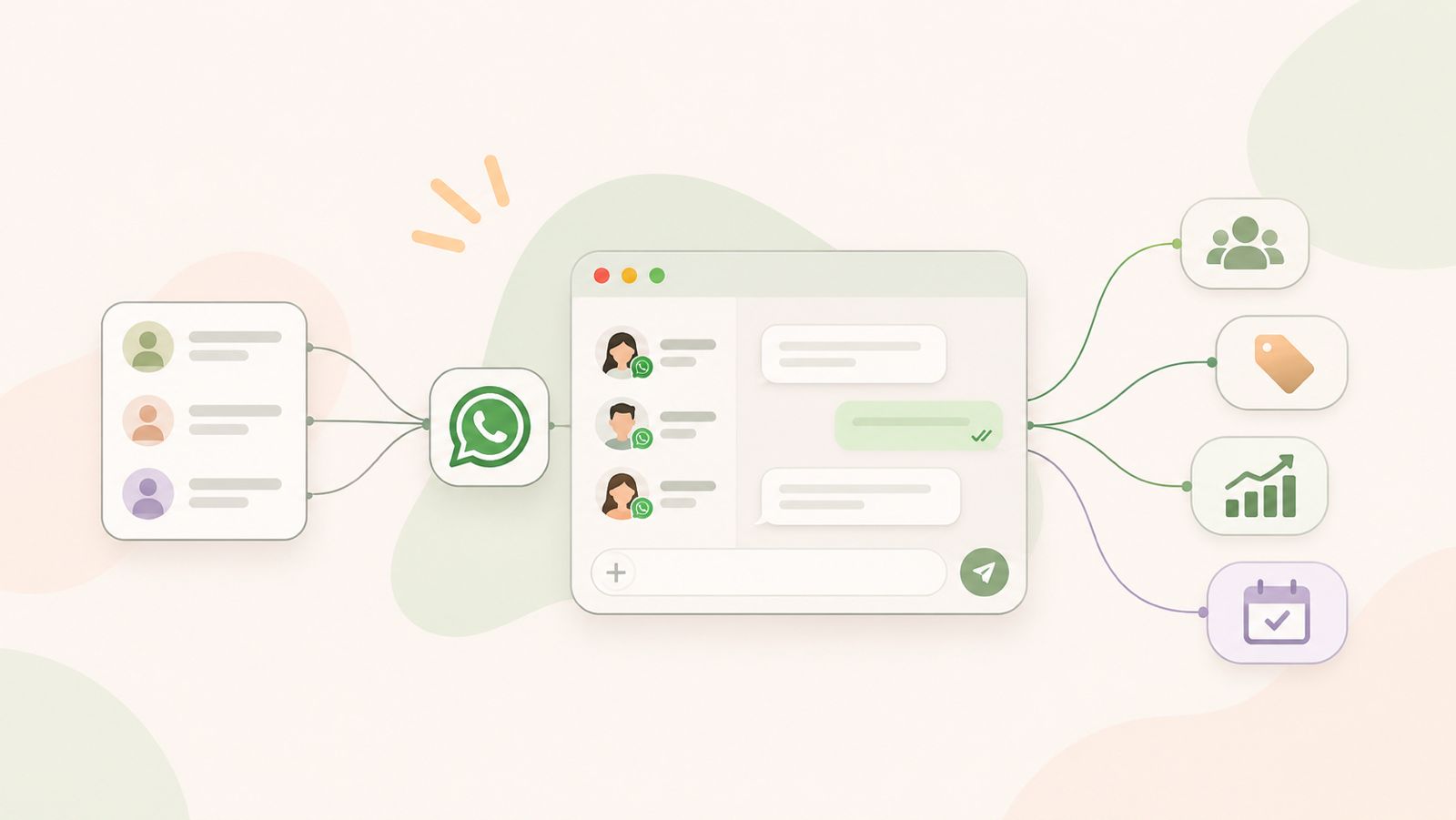
    WhatsApp business messaging helps companies communicate with customers through a familiar messaging channel. Sales teams can use it to answer inquiries, share relevant information, and follow up with potential customers.

    However, managing customer conversations can become difficult as the number of inquiries grows. Teams may miss follow-ups, lose track of customer questions, or struggle to maintain consistent communication.

    A clear messaging workflow can help solve these problems. By organizing inquiries, understanding customer needs, and planning the next steps, businesses can manage conversations more effectively.

    In this guide, we’ll explore how businesses use WhatsApp for sales communication, build better follow-up workflows, and choose the right messaging solution for their needs.

    What Is WhatsApp Business Messaging?

    WhatsApp business messaging helps businesses connect with customers. They can answer questions, share product details, and discuss services through WhatsApp.

    Businesses can choose between two main solutions:

    • WhatsApp Business app: This app helps small businesses manage customer chats directly.
    • WhatsApp Business Platform: This solution helps businesses connect WhatsApp with software and other business tools, depending on their setup.

    However, both solutions work differently. Available features depend on the solution a business chooses.

    For example, the WhatsApp Business Platform supports approved message templates for certain types of messages. It can also connect with other business systems through supported integrations.

    For sales teams, sending a message is only the first step. They also need to understand customer needs and decide what to do next.

    Therefore, a clear messaging process is important. Teams can respond to inquiries, plan follow-ups, and keep track of customer conversations more consistently.

    As a result, businesses can build a more organized communication process without losing sight of important customer requests.

    How Businesses Use WhatsApp for Sales Communication

    Businesses use WhatsApp to answer questions, share useful information, and stay in touch with potential customers. When teams follow a clear process, they can manage inquiries more consistently.

    Responding to Customer Inquiries

    Customers often have questions before making a purchase. They may ask about pricing, product features, availability, or services.

    Sales teams can use WhatsApp to answer these questions directly. Quick and relevant replies help customers understand their options.

    For example, a customer may ask about a service package. The sales representative can explain the available options and ask what the customer needs.

    Following Up With Leads

    Not every customer makes a decision after the first conversation. Some need more information or time to compare their options.

    Therefore, sales teams should plan their follow-ups. They can note the last conversation and agree on a suitable time to reconnect.

    However, teams should respect customer preferences and avoid sending unwanted messages. They must also follow the applicable WhatsApp messaging rules.

    Sharing Product and Service Information

    Customers often need more details before choosing a product or service. WhatsApp can help businesses share relevant information during these conversations.

    For example, sales representatives can share product details, service descriptions, or pricing information when appropriate. This helps customers review their options before making a decision.

    However, teams should keep messages clear and relevant. Too much information in one message can make it harder for customers to understand the key points.

    Handling Customer Questions

    Customer conversations may continue even after a purchase. Customers might ask about delivery, setup, billing, or ongoing support.

    In these situations, sales and support teams should provide clear answers. If another team needs to handle the request, the representative should explain the next step.

    As a result, customers know what to expect and who will assist them.

    Maintaining Ongoing Customer Communication

    Customer relationships often require more than one conversation. Businesses may need to share updates, answer new questions, or reconnect when customers request more information.

    To stay organized, teams should record important details and agree on the next action. They should also follow customer communication preferences and applicable messaging rules.

    The key is consistency. A clear process helps sales teams manage conversations without losing track of customer needs.

    How to Build an Effective WhatsApp Sales Workflow

    A clear WhatsApp sales workflow helps teams manage customer inquiries and follow-ups. It also makes the next step easier to identify. Here are five steps businesses can follow.

    Step 1: Capture the Customer Inquiry

    First, understand why the customer contacted your business. They may want product details, pricing, or help choosing a service.

    Record the important details where appropriate. For example, note the customer’s name, needs, and reason for contacting your team.

    This information helps sales representatives respond with relevant answers. It also reduces confusion when another team member needs to take over.

    Step 2: Understand the Customer’s Needs

    Next, ask simple questions to understand what the customer wants. Avoid sending product information before you understand their requirements.

    For example, a sales representative might ask about the customer’s budget, preferred features, or expected timeline.

    As a result, the team can recommend suitable options instead of sharing irrelevant details.

    Step 3: Send Relevant Information

    Once you understand the customer’s needs, share the most useful information. This may include pricing, product details, service options, or answers to specific questions.

    Keep each message clear and focused. If the customer needs several details, share them in a logical order.

    However, avoid sending repeated messages or unnecessary promotional content. Always follow the customer’s preferences and applicable WhatsApp messaging rules.

    Step 4: Plan the Next Follow-Up

    Not every conversation leads to an immediate decision. Therefore, decide what should happen next before closing the conversation.

    For example, you might agree to reconnect after the customer reviews a proposal. Record the agreed date and next action in your team’s chosen tracking system.

    This simple habit helps prevent missed follow-ups. It also gives sales representatives a clear reason to contact the customer again.

    Step 5: Record the Outcome Where Appropriate

    Finally, record the result of the conversation. The customer may be ready to purchase, need more information, or decide not to proceed.

    Update the relevant sales record when appropriate. Include the current status and any agreed next steps.

    This process helps teams understand which inquiries need attention. It also makes handoffs between sales representatives easier.

    Remember: These steps describe a general sales workflow, not a claim that DialNext automates every step through WhatsApp. The tools and features available will depend on your business messaging setup.

    WhatsApp vs SMS for Business Communication

    WhatsApp and SMS help businesses communicate with customers. However, each channel serves different needs. The right choice depends on the message, customer preferences, and communication goals.

    Key Differences Between WhatsApp and SMS

    FeatureWhatsAppSMS
    Message formatSupports text and, depending on the solution, mediaPrimarily text, with some support for links and other formats
    Customer interactionSupports two-way conversationsSupports replies where the service and setup allow them
    Internet accessRequires an internet connectionUsually works through a cellular network
    Business use casesCustomer questions, product details, and ongoing conversationsAlerts, reminders, and short updates
    Business requirementsFeatures depend on the WhatsApp solution usedFeatures depend on the SMS provider and service

    When Should Businesses Use WhatsApp?

    WhatsApp can be useful when customers need to discuss a product or service in more detail.

    For example, a sales representative can answer questions about a service package and share relevant information. The customer can then ask follow-up questions in the same conversation.

    However, businesses must follow the applicable messaging rules and respect customer preferences.

    When Should Businesses Use SMS?

    SMS works well for short messages and simple updates.

    For example, a business might send an appointment reminder, a service notification, or a brief confirmation. SMS can also reach customers who prefer text messages over messaging apps.

    However, delivery and reply options depend on the provider, network, and service configuration.

    Can Businesses Use Both Channels?

    Yes. Businesses can use WhatsApp and SMS for different communication needs.

    For example, a team might use SMS for a short appointment reminder and WhatsApp for a detailed customer discussion. The choice should reflect the customer’s preferences and the purpose of the message.

    DialNext offers business calling and SMS capabilities. Businesses evaluating their communication setup should confirm which channels and features their chosen plan supports.

    The key takeaway: Choose the channel that best fits the conversation. A clear communication process matters more than using every available channel.

    WhatsApp Messaging and CRM Workflows

    A customer relationship management (CRM) system helps businesses organize customer details, track leads, and manage sales activities. When teams use WhatsApp for customer conversations, a clear CRM workflow can help them maintain better records.

    However, using WhatsApp and a CRM together does not always mean messages sync automatically. The available features depend on the messaging platform and integration.

    Keep Customer Information Organized

    First, record important customer details in the appropriate system. These details may include contact information, product interests, previous discussions, and current sales status.

    This information helps sales representatives understand the customer’s needs. It also makes future conversations easier to manage.

    Track Conversations and Next Steps

    Next, record the outcome of important customer interactions. For example, note whether the customer requested a quotation or wants to discuss the service again.

    Then, assign a suitable next action and follow-up date. As a result, team members can identify which leads need attention.

    Improve Team Handoffs

    Sometimes, another representative needs to continue a customer conversation. In these situations, clear notes help the next person understand the customer’s requirements.

    For example, a sales representative can record the customer’s main concern and the information already shared. This reduces repeated questions and creates a more consistent customer experience.

    Check Integration Capabilities Before Choosing a Platform

    Businesses should confirm how their chosen tools connect before building a messaging workflow.

    Check whether the solution supports:

    • Contact syncing between systems.
    • Access to conversation history.
    • Lead status updates.
    • Follow-up task management.
    • Reporting on customer interactions.

    These features are not available in every setup. Therefore, verify each requirement with the provider before relying on it.

    DialNext offers business communication and CRM integration capabilities. However, businesses should confirm the specific functionality available for their chosen CRM and messaging channel.

    The goal is simple: Keep customer information organized, make ownership clear, and ensure every important conversation has a defined next step.

    Best Practices for Business WhatsApp Messaging

    Good WhatsApp communication starts with clear messages and a consistent process. Businesses should focus on customer needs rather than sending messages just to stay visible.

    Follow these best practices to manage conversations effectively.

    1. Keep Messages Clear and Relevant

    First, understand what the customer wants to know. Then, share information that answers their question.

    Use simple language and short messages. For example, explain the key service details before sharing additional information.

    This approach makes conversations easier to follow. It also helps customers decide what to do next.

    2. Respond Within a Reasonable Time

    Customers appreciate timely responses. Therefore, establish clear expectations for handling incoming inquiries.

    For example, assign responsibility for checking new messages during business hours. If a response needs more time, let the customer know when to expect an update.

    However, avoid promising response times your team cannot maintain.

    3. Get Permission Before Sending Promotional Messages

    Always respect customer preferences when communicating through WhatsApp. Businesses should obtain the required permission before sending messages and follow applicable WhatsApp policies.

    In addition, make it easy for customers to stop receiving promotional messages. Keep records of their preferences and honor opt-out requests.

    These steps help businesses maintain more respectful customer relationships.

    4. Plan Follow-Ups Carefully

    A useful follow-up gives the customer a clear reason to continue the conversation.

    For example, a sales representative might share a requested quotation and agree on a suitable time to discuss it. Record the next step so the team can follow through.

    However, avoid sending repeated messages when a customer has not responded. Give them space and respect their communication preferences.

    5. Protect Customer Information

    Customer conversations may contain personal or business information. Therefore, limit access to authorized team members and follow your company’s data protection policies.

    Use appropriate business tools to manage customer records. Also, avoid sharing sensitive information with people who do not need it.

    6. Review Your Communication Process Regularly

    Finally, review how your team handles customer inquiries and follow-ups.

    Check whether messages receive timely responses and whether representatives record important outcomes. Identify recurring delays and improve the process where needed.

    If your messaging solution provides relevant reports, use them to understand team performance. However, available reporting features vary by provider.

    Remember: Effective WhatsApp business messaging depends on relevance, timely responses, customer permission, and consistent follow-ups. A simple, well-managed process is more useful than sending a high volume of messages without a clear purpose.

    Common WhatsApp Messaging Mistakes to Avoid

    Businesses can improve customer communication by avoiding a few common mistakes. A clear messaging process helps sales teams stay organized and maintain better customer relationships.

    1. Sending Messages Without a Clear Purpose

    Every business message should serve a purpose. It might answer a question, share requested information, or confirm the next step.

    However, sending irrelevant messages can frustrate customers. Therefore, make sure each message provides useful information.

    2. Forgetting to Follow Up

    Sales teams sometimes lose track of conversations after the first interaction. As a result, interested customers may not receive the information they need.

    To prevent this, record important conversations and set reminders for agreed follow-ups. Also, assign responsibility so team members know who should respond.

    3. Sending Too Many Messages

    Frequent messages do not always lead to better customer relationships. In fact, repeated messages can make customers less willing to engage.

    Instead, follow a reasonable communication schedule. Respect customer preferences and stop promotional messages when customers opt out.

    4. Using Generic Replies for Every Customer

    Different customers have different questions and needs. Therefore, sending the same response to everyone may not solve their problems.

    Use clear, relevant replies based on the customer’s inquiry. You can prepare standard responses for common questions, but adapt them when the situation requires a personal answer.

    5. Failing to Record Important Details

    When teams do not record customer interactions, important information can get lost. This becomes especially difficult when another representative takes over the conversation.

    To avoid this problem, record relevant details, decisions, and agreed next steps in your team’s chosen system.

    6. Assuming Every Messaging Platform Has the Same Features

    Not every business messaging solution supports the same tools. Some may offer integrations or automation, while others may require additional setup.

    Therefore, check the available features before choosing a platform. Confirm that it supports your team’s actual needs instead of relying on assumptions.

    The takeaway: Better business messaging starts with relevant communication, organized follow-ups, and clear ownership. Avoiding these mistakes helps teams create a more consistent customer experience.

    How to Choose a WhatsApp Business Messaging Solution

    Choosing the right WhatsApp business messaging solution depends on your team’s needs, communication volume, and existing tools. The best option should fit your workflow without adding unnecessary complexity.

    Consider these factors before making a decision.

    1. Identify Your Business Requirements

    First, decide how your team plans to use WhatsApp. You may need to answer customer questions, manage sales inquiries, or provide ongoing support.

    Next, list the features required for these tasks. This helps you compare solutions based on actual business needs rather than promotional claims.

    2. Check Messaging Capabilities

    Different solutions offer different messaging features. Therefore, confirm which message types and conversation options are available.

    If your team needs business-initiated messages, check the applicable template and customer permission requirements. Also, confirm any setup requirements before implementation.

    3. Review CRM Integration Options

    If your sales team uses a CRM, check whether the messaging solution supports your specific system.

    For example, you may want to access customer details, review conversation history, or update lead records. However, these capabilities depend on the integration and may require additional configuration.

    4. Understand Automation and Reporting

    Some businesses need automated replies, scheduled follow-ups, or messaging reports. Others may only need a simple way to handle customer conversations.

    Therefore, identify which features are essential for your team. Then, verify that the provider supports them under your chosen plan.

    Avoid paying for features your business does not currently need.

    5. Compare Costs and Setup Requirements

    Before choosing a provider, review the pricing structure and implementation requirements.

    Check subscription fees, messaging charges, integration costs, and any additional service fees. Also, consider the time your team will need to learn and manage the solution.

    As a result, you can make a more informed decision about the total cost.

    6. Evaluate Security and Customer Support

    Finally, review how the provider handles customer information and protects account access.

    Check available security controls, data handling practices, and support options. If your team depends on messaging for daily sales activities, reliable technical support is also important.

    The bottom line: Choose a WhatsApp business messaging solution that matches your communication goals, integrates with your existing workflow where needed, and offers clear pricing and support. Always verify specific features before committing to a provider.

    Frequently Asked Questions

    What Is WhatsApp Business Messaging?

    WhatsApp business messaging allows businesses to communicate with customers through WhatsApp. Teams can use it to answer questions, share product information, and manage customer conversations.

    How Can Businesses Use WhatsApp for Sales?

    Businesses can use WhatsApp to respond to inquiries, understand customer needs, share relevant information, and follow up with potential buyers. A clear process helps sales teams manage conversations and track next steps.

    Is WhatsApp Better Than SMS for Business Communication?

    It depends on the purpose of the message. WhatsApp is useful for ongoing conversations and sharing supported media. In contrast, SMS works well for short updates and reminders. Businesses should choose the channel that best suits their customers and communication goals.

    Can Businesses Use WhatsApp for Customer Follow-Ups?

    Yes. Businesses can follow up with customers who have requested information or shown interest in a product or service. However, they must respect customer preferences and follow the applicable WhatsApp messaging policies.

    What Is the WhatsApp Business Platform?

    The WhatsApp Business Platform allows businesses to connect WhatsApp messaging with software and business systems. Depending on the setup, it can support integrations and approved message templates for eligible use cases.

    How Does WhatsApp Messaging Work With CRM Systems?

    Businesses can connect WhatsApp messaging with a CRM when their chosen platform and integration support it. This may help teams manage customer details, review conversation history, and track sales activities. Available features vary by provider.

    What Should Businesses Consider When Choosing a WhatsApp Messaging Platform?

    Businesses should review messaging features, CRM integrations, automation options, reporting, pricing, security, and customer support. They should also confirm setup requirements and applicable messaging rules before choosing a provider.

  • Call Attribution: How to Find Which Marketing Campaigns Generate Real Leads

    Call Attribution: How to Find Which Marketing Campaigns Generate Real Leads

    Every marketing campaign aims to generate leads, but how do you know which campaigns actually bring potential customers to your phone lines? A high number of clicks or website visits does not always mean more business.

    Call attribution helps businesses connect phone calls with the marketing campaigns that generated them. It gives marketing and sales teams a clearer picture of where enquiries come from and which sources deserve more attention.

    For example, a business may receive calls from Google Ads, organic search, social media, and offline promotions. By tracking these sources and evaluating call outcomes, the team can identify which campaigns attract qualified leads rather than simply generate more calls.

    In this guide, you will learn how call attribution works, which metrics matter, and how to use call data to make smarter marketing decisions. You will also discover practical ways to connect campaign activity with lead quality, sales outcomes, and marketing ROI.

    What Is Call Attribution?

    Call attribution is the process of identifying which marketing campaign, channel, or source led a customer to make a phone call. It helps businesses understand how their marketing activities generate phone enquiries.

    For example, a potential customer might see a Google Ads campaign, visit a landing page, and then call your sales team. Call attribution helps connect that enquiry to its marketing source when the right tracking methods are in place.

    However, identifying the source is only the first step. Businesses also need to understand whether a call represents a genuine sales opportunity.

    Call Attribution vs. Call Tracking

    Call tracking records information about incoming and outgoing calls, depending on the tools used. Call attribution goes a step further by connecting calls to marketing activities.

    Here is how they differ:

    • Call tracking: Records call activity, such as call time, duration, and caller details where available.
    • Call attribution: Identifies the marketing source associated with a phone enquiry.
    • Lead attribution: Connects a potential customer to the marketing touchpoints that influenced their journey.
    • Conversion tracking: Measures whether a desired action, such as a qualified enquiry or completed purchase, occurs.
    • Marketing ROI measurement: Compares the revenue or business value generated with the cost of marketing activities.

    These concepts work together, but they are not interchangeable. For example, a campaign may generate many calls without producing many qualified leads.

    By combining reliable call data with lead qualification and sales outcomes, businesses can make more informed decisions about their marketing budgets.

    How Does Call Attribution Work?

    Call attribution connects marketing activity with incoming phone calls and, where data is available, the outcomes of those calls. The process helps businesses understand which campaigns attract potential customers and which generate valuable sales opportunities.

    Although the exact setup depends on the tools a business uses, the process generally follows five steps.

    Step 1: Identify the Marketing Source

    First, identify where potential customers discover your business. Common sources include Google Ads, organic search results, social media, email campaigns, and offline advertisements.

    Businesses can use tracking links, campaign-specific phone numbers, or website analytics to identify these sources. The right method depends on the marketing channel and available tracking tools.

    Step 2: Track the Incoming Call

    Next, record the incoming call and connect it with the available campaign information. Depending on the setup, this may include the call time, source, duration, and caller details.

    For website visitors, dynamic number insertion can display different phone numbers based on the visitor’s traffic source. However, this method requires a suitable call tracking system and technical implementation.

    Step 3: Connect the Call With Lead Information

    A phone call becomes more useful when the business can connect it with a lead record. Sales teams can record relevant details, such as the enquiry type, customer requirements, and follow-up status.

    A CRM (Customer Relationship Management) system can help organize these records. However, accurate attribution requires the tracking system and CRM to share the relevant information correctly.

    Step 4: Evaluate the Call Outcome

    Not every phone enquiry represents a qualified lead. Some callers may ask general questions, request support, or contact the wrong department.

    Therefore, businesses should classify calls according to their outcomes. For example, they can distinguish qualified enquiries from missed calls, irrelevant calls, and sales opportunities.

    This step helps marketing teams measure lead quality instead of relying on call volume alone.

    Step 5: Use Attribution Data to Improve Campaigns

    Finally, compare campaign performance using call sources, qualified leads, conversion rates, and campaign costs.

    For example, a campaign that generates fewer calls may still deliver better results if it attracts more qualified prospects. Meanwhile, a campaign with high call volume may need adjustments if most enquiries fail to convert.

    By reviewing these results regularly, businesses can identify stronger marketing channels and make more informed budget decisions.

    Why Call Attribution Matters for Marketing Teams

    Marketing teams need more than clicks, impressions, and website visits to understand campaign performance. They also need to know whether those activities generate meaningful business enquiries.

    Call attribution helps connect marketing efforts with phone leads. As a result, businesses can evaluate campaign quality, improve targeting, and make better decisions about their marketing budgets.

    1. Identify High-Performing Marketing Channels

    Not every marketing channel attracts the same type of customer. Paid search may generate immediate enquiries, while organic search may attract prospects who research their options before calling.

    Call attribution helps businesses compare these sources. They can then identify which channels consistently bring relevant enquiries.

    2. Measure Lead Quality, Not Just Call Volume

    A campaign that generates 100 calls is not necessarily better than one that generates 40 calls. The smaller campaign may attract more qualified prospects who are ready to buy.

    Therefore, businesses should evaluate call outcomes alongside call volume. This approach helps marketing teams focus on genuine sales opportunities rather than vanity metrics.

    3. Make Smarter Marketing Budget Decisions

    Marketing budgets work best when spending decisions reflect actual performance. Attribution data can help teams identify campaigns that generate qualified leads at a reasonable cost.

    For example, a business might reduce spending on a campaign that produces irrelevant enquiries. It could then test whether investing more in a stronger campaign delivers better results.

    However, teams should consider sample size, campaign costs, and sales conversion rates before reallocating budgets.

    4. Improve Marketing and Sales Alignment

    Marketing teams generate enquiries, while sales teams work to convert them into customers. Without shared data, both teams may struggle to understand which campaigns produce valuable opportunities.

    Connecting call records with lead information and sales outcomes creates a clearer view of the customer journey. It also helps teams agree on what counts as a qualified lead.

    5. Understand the Customer Journey

    Customers do not always convert after their first interaction with a business. They may discover a brand through social media, visit its website later, and call after seeing a search advertisement.

    Call attribution can reveal parts of this journey when suitable tracking is available. Although it may not capture every interaction, it helps businesses understand how marketing channels contribute to phone enquiries.

    Ultimately, call attribution gives marketing teams a stronger foundation for evaluating performance. By combining source data with lead quality and sales outcomes, businesses can make decisions based on business value rather than activity alone.

    Call Tracking vs. Call Attribution

    Call tracking and call attribution are closely related, but they serve different purposes. Call tracking helps businesses monitor phone activity, while call attribution connects that activity to marketing sources.

    Understanding the difference helps marketing teams choose the right methods and evaluate campaign performance more effectively.

    FeatureCall TrackingCall Attribution
    Primary purposeMonitor phone call activityIdentify the marketing source behind a call
    Typical dataCall time, duration, and available caller detailsCampaign, channel, or traffic source associated with a call
    Main questionHow many calls did we receive?Which marketing activities generated these calls?
    Business valueImproves call visibility and follow-upHelps evaluate marketing campaign performance
    Measurement focusCall activity and handlingCampaign contribution and lead generation

    How Do They Work Together?

    Call tracking provides the call data that attribution methods can use to identify marketing sources. Businesses can then connect this information with lead qualification and sales outcomes to understand the value of their campaigns.

    For example, a company may track 200 incoming calls in a month. However, without reliable source information, it may not know whether those calls came from paid advertising, organic search, or referrals.

    With an appropriate attribution setup, the company can connect identifiable calls to their marketing sources. It can then compare qualified leads and conversions across campaigns.

    Which One Does Your Business Need?

    Most businesses that rely on phone enquiries can benefit from understanding both concepts.

    • Choose call tracking when you need better visibility into call activity and follow-up.
    • Use call attribution methods when you want to understand which marketing sources generate phone enquiries.
    • Connect call and CRM data when you also want to evaluate lead quality and sales outcomes.

    Keep in mind that attribution accuracy depends on the tracking methods you implement. Some calls may have unknown sources, and not every marketing interaction can be identified.

    The most useful approach combines reliable call records, identifiable campaign sources, and accurate lead outcomes. This gives marketing teams a clearer understanding of which activities contribute to business growth.

    Common Call Attribution Methods

    Businesses can use different methods to connect phone enquiries with marketing campaigns. The right approach depends on where customers discover the business, which tools are available, and how much attribution detail the team needs.

    Here are four common methods to consider.

    1. Dynamic Number Insertion

    Dynamic number insertion (DNI) displays different phone numbers to website visitors based on their traffic source or campaign. A tracking system replaces the website’s default phone number with a number assigned to the visitor’s session.

    For example, a visitor arriving through a paid search advertisement may see a different number from someone arriving through organic search. When the visitor calls, the tracking system can associate the call with the relevant source.

    DNI can provide detailed website-level attribution. However, it requires a compatible call tracking platform, suitable phone numbers, and correct technical implementation.

    2. Campaign-Specific Phone Numbers

    Campaign-specific phone numbers use different numbers for different marketing channels or campaigns. Businesses can assign one number to a print advertisement and another to a digital campaign.

    For example, a local service provider might display one number on a billboard and another in a social media advertisement. Incoming calls can then help the business compare responses from those campaigns.

    This method is relatively straightforward to understand. However, it requires managing multiple numbers and may offer less detailed information about individual website visits.

    3. URL and UTM Tracking

    UTM parameters are tags added to campaign URLs to identify traffic sources in compatible analytics tools. They can help businesses distinguish visitors arriving from different advertisements, emails, or social media campaigns.

    For example, a campaign URL might contain parameters identifying Google as the source and a spring promotion as the campaign. Website analytics can then report visits associated with those parameters.

    However, UTM tracking alone does not automatically identify the source of a phone call. Businesses need an additional method to connect website session data with call records.

    4. CRM and Lead Attribution

    A customer relationship management (CRM) system stores information about leads, customer interactions, and sales opportunities. When call data and marketing source information are connected to CRM records, businesses can evaluate which campaigns contribute to qualified leads and customers.

    For example, a sales team might record a prospect’s original campaign, enquiry details, qualification status, and final sales outcome. Marketing teams can then compare campaign performance using these records.

    The quality of the results depends on accurate data entry and reliable integration between the relevant systems. A CRM does not automatically provide complete call attribution unless the necessary tracking and data connections are configured.

    Which Method Should You Choose?

    The best method depends on your attribution goals.

    • For website-level tracking: Consider dynamic number insertion.
    • For offline campaigns: Consider campaign-specific phone numbers.
    • For identifying digital campaign traffic: Use UTM parameters with suitable analytics tools.
    • For evaluating lead quality and sales outcomes: Connect attribution data with CRM records.

    Businesses can combine these methods when appropriate. However, each method requires the right setup, and none guarantees that every call will be attributed correctly.

    Before selecting a solution, confirm which tracking, reporting, and integration capabilities your chosen platform actually supports.

    Which Marketing Metrics Should Businesses Measure?

    Call attribution helps businesses understand which campaigns generate valuable leads. However, call volume alone does not show campaign success. Teams should also measure lead quality, sales, and marketing costs.

    Call Volume by Campaign

    Call volume shows how many calls each campaign generates. It helps businesses compare sources such as paid search, organic search, and social media.

    However, more calls do not always mean better results. A campaign may attract many callers but generate few qualified leads.

    Qualified Calls

    Qualified calls come from people who meet your business criteria. These callers may have a genuine need for your product or service.

    Set clear rules for qualifying leads. For example, consider customer needs, budget, and buying interest. Consistent rules make campaign comparisons more reliable.

    Call-to-Lead Conversion Rate

    This metric shows how many tracked calls become qualified leads.

    Formula: (Qualified Leads ÷ Total Tracked Calls) × 100

    For example, a campaign generates 80 tracked calls. Of these, 20 become qualified leads. Its call-to-lead conversion rate is 25%.

    Use the same qualification rules across campaigns. This makes the results easier to compare.

    Lead-to-Customer Conversion Rate

    This metric measures how many leads become paying customers.

    Formula: (Customers Acquired ÷ Total Leads) × 100

    Suppose a campaign generates 30 leads and six customers. Its lead-to-customer conversion rate is 20%.

    A campaign with fewer leads may still perform better. This happens when more leads become paying customers.

    Cost per Qualified Lead

    Cost per qualified lead (CPQL) shows how much you spend to gain one qualified lead.

    Formula: Campaign Cost ÷ Qualified Leads Generated

    For example, a campaign costs ₹20,000 and generates 40 qualified leads. The cost per qualified lead is ₹500.

    Include relevant campaign expenses in your calculation. Also, use the same cost rules when comparing campaigns.

    Revenue Attributed to Campaigns

    Revenue attribution connects sales revenue with marketing campaigns. It helps businesses measure results beyond calls and leads.

    For example, a company may compare revenue from two advertising campaigns. However, customers often interact with several channels before buying.

    Choose a clear attribution method. Also, separate confirmed sales data from estimates. This helps teams avoid giving campaigns more credit than the evidence supports.

    Use Metrics Together

    No single metric tells the whole story. Call volume shows demand, while conversion rates reveal lead quality. Cost and revenue help explain business value.

    Review these metrics together to find your strongest campaigns. This approach helps you make better marketing decisions based on real outcomes.

    How to Connect Call Attribution With CRM Data

    Connecting call attribution with CRM data helps businesses understand what happens after a customer calls. It links marketing sources with lead records, sales activity, and customer outcomes.

    Without this connection, teams may know how many calls a campaign generates. However, they may not know how many callers become customers.

    Step 1: Capture the Marketing Source

    First, record where each lead comes from. Sources may include paid ads, organic search, social media, and referral campaigns.

    Use tracking links or campaign-specific phone numbers to identify these sources. If the source is unknown, record it as unknown instead of guessing.

    Step 2: Create a Lead Record

    Next, store relevant caller information in your CRM. This may include contact details, enquiry type, campaign source, and call date.

    Keep records accurate and avoid duplicate leads. Also, collect personal information only when necessary and follow applicable privacy requirements.

    Step 3: Record Lead Qualification

    Ask your sales team to record the outcome of each enquiry. For example, a lead may be qualified, unqualified, awaiting follow-up, or converted.

    Use the same rules across your team. This makes campaign comparisons more reliable.

    Step 4: Connect Leads With Sales Outcomes

    Track what happens after qualification. A lead may book a meeting, request a quote, or become a paying customer.

    When CRM records include these outcomes, marketing teams can see which campaigns contribute to sales. However, accurate reporting depends on reliable source data and regular updates.

    Step 5: Review Campaign Performance

    Finally, compare campaigns using qualified leads, conversion rates, and costs. Review results over a suitable period instead of relying on a few calls.

    For example, one campaign may generate fewer enquiries but attract more paying customers. This campaign could deliver greater value than one with higher call volume.

    DialNext can be considered as part of your business calling workflow. Before using it for marketing attribution, verify that its available features support your CRM integration, call data, and reporting needs.

    How to Use Call Attribution to Improve Marketing ROI

    Call attribution helps businesses understand which marketing campaigns generate valuable phone leads. By connecting call data with lead quality and sales outcomes, teams can make better decisions about their marketing budgets.

    Identify Campaigns That Generate Qualified Leads

    Start by comparing the number of qualified leads from each campaign. Do not judge performance by call volume alone.

    For example, a paid campaign may generate many calls but few qualified enquiries. Another campaign may attract fewer callers who are more likely to buy.

    Review these results to identify which sources deserve further testing and investment.

    Compare Campaign Costs With Results

    Next, compare campaign spending with the qualified leads and customers generated. Cost per qualified lead can help you understand which campaigns use your budget more efficiently.

    However, a lower cost does not always mean better results. Consider lead quality and the number of leads that become paying customers.

    Improve Campaign Targeting

    Attribution data can reveal which channels attract relevant prospects. Use these insights to refine your advertising messages, audience targeting, and landing pages.

    For example, if a campaign attracts many irrelevant enquiries, review its keywords and ad copy. Clearer messaging may help attract people who need your services.

    Improve Lead Follow-Up

    A qualified lead may lose interest if your team responds too late. Review missed calls, follow-up activity, and lead outcomes to identify gaps in your sales process.

    Create a clear process for handling missed calls and contacting interested prospects. Consistent follow-up can help your team manage enquiries more effectively.

    Test Changes Before Increasing Spending

    Finally, test changes on a small scale before committing more of your budget. Compare results over similar periods and use consistent measurement rules.

    Track qualified leads, conversion rates, campaign costs, and customer revenue where available. This helps you assess whether a change delivers meaningful results.

    The key takeaway: Call attribution supports better marketing decisions, but it does not guarantee higher ROI. Reliable tracking, accurate lead records, and consistent campaign analysis are essential for measuring performance.

    Common Call Attribution Mistakes to Avoid

    Call attribution can help businesses measure marketing performance. However, inaccurate tracking and poor data quality can lead to misleading results.

    Avoid these common mistakes to make better campaign decisions.

    1. Focusing Only on Call Volume

    More calls do not always mean more sales. Some campaigns attract irrelevant enquiries or callers who are not ready to buy.

    Track qualified leads and customer conversions alongside total calls. This gives you a clearer view of campaign quality.

    2. Ignoring Unknown Call Sources

    Some callers may find your number through an untracked channel. Others may switch devices or return to your website later.

    Do not assign these calls to a campaign without evidence. Record unknown sources separately and improve your tracking setup where possible.

    3. Treating Every Call as a Qualified Lead

    A call may involve a support request, a wrong number, or a general question. Counting every call as a sales lead can distort your results.

    Set clear qualification rules and apply them consistently. This helps your team measure genuine sales opportunities.

    4. Using Inconsistent Tracking Methods

    Different campaigns may use different tracking setups. As a result, some sources may be easier to identify than others.

    Choose suitable tracking methods for your marketing channels. Check that campaign links, phone numbers, and lead records capture the information you need.

    5. Ignoring Follow-Up and Sales Outcomes

    A call may generate a promising lead, but the sale could happen days or weeks later. Reviewing only the initial call can hide the campaign’s full value.

    Update lead records as prospects move through your sales process. Where possible, connect campaign sources with final sales outcomes.

    6. Making Decisions Too Quickly

    Small data samples can produce misleading conclusions. One successful sale does not necessarily prove that a campaign will perform well over time.

    Review results across a suitable period. Consider campaign costs, lead quality, conversion rates, and other relevant factors before changing your budget.

    7. Overlooking Privacy and Consent

    Call attribution may involve personal information, tracking technologies, or call recordings. Businesses should understand the rules that apply to their location and industry.

    Collect only the information you need. Provide appropriate notices, obtain consent where required, and follow applicable privacy and data protection laws.

    By avoiding these mistakes, businesses can improve attribution accuracy and make more informed marketing decisions.

    Challenges and Limitations of Call Attribution

    Call attribution helps businesses understand where phone enquiries come from. However, it cannot always identify every marketing interaction or explain every sale.

    Understanding these limits helps teams interpret their data more accurately.

    Incomplete Tracking Data

    Some calls come from sources that businesses do not track. For example, a customer may see an advertisement, remember the phone number, and call several days later.

    In this case, the original campaign may remain unknown. Use suitable tracking methods and review missing source data regularly.

    Multiple Marketing Touchpoints

    Customers often interact with several channels before contacting a business. They might discover a brand on social media, visit its website, and later click a search advertisement.

    A tracking system may identify only the last recorded source. Therefore, businesses should choose an attribution model that matches their goals and available data.

    Limited Lead Information

    A call record does not always reveal whether a caller is a potential customer. Call duration alone cannot confirm buying intent or lead quality.

    Sales teams should record enquiry outcomes and qualification status. This makes campaign reporting more useful.

    Tracking and Integration Issues

    Incorrect campaign links, phone number settings, or CRM connections can lead to missing or inaccurate data.

    Check your tracking setup regularly. Also, test the complete process from the first website visit to the final lead record.

    Privacy and Data Protection

    Some attribution methods rely on cookies, tracking technologies, personal information, or call recordings. These practices may be subject to privacy and data protection laws.

    Explain relevant data practices to customers and obtain consent where required. Collect only the information needed for legitimate business purposes.

    Attribution Does Not Prove Marketing ROI

    A campaign may receive credit for a sale without being the only reason the customer purchased. Other marketing activities, referrals, and previous interactions may also influence the decision.

    Use attribution data alongside campaign costs, sales records, and conversion rates. This provides a more balanced view of marketing performance.

    Remember: Call attribution is a decision-making tool, not a perfect record of every customer interaction. Accurate tracking and clear reporting rules help businesses draw more reliable conclusions.

    How to Build a Practical Call Attribution Workflow

    A clear call attribution workflow helps businesses connect marketing campaigns with phone leads and sales outcomes. It also helps marketing and sales teams work with consistent data.

    Follow these steps to build a practical workflow for your business.

    Step 1: Define Your Attribution Goals

    First, decide what you want to measure. You may want to identify which campaigns generate calls, qualified leads, or paying customers.

    Choose a clear goal before selecting your tracking methods. This keeps your reporting focused on useful business results.

    Step 2: Select Your Tracking Methods

    Next, choose methods that match your marketing channels. You might use campaign-specific phone numbers, tracking links, or dynamic number insertion.

    Check that your chosen tools support the tracking information you need. Do not assume that every platform offers all these features.

    Step 3: Record Call and Campaign Data

    Collect relevant information for each tracked call. Depending on your setup, this may include the campaign source, call date, and lead details.

    Use consistent naming rules for campaigns. Accurate records make it easier to compare results across channels.

    Step 4: Connect Calls With Lead Records

    Where possible, connect call information with your CRM or lead management system. This helps your team follow each enquiry from the first call to the final outcome.

    Check that the connection works correctly. Missing or duplicated records can affect your reports.

    Step 5: Define Lead Qualification Rules

    Agree on what makes a lead qualified. For example, a qualified lead may have a genuine need for your service and meet your basic sales criteria.

    Ask your team to apply these rules consistently. This prevents differences in lead classification from distorting campaign comparisons.

    Step 6: Measure Campaign Performance

    Review call volume, qualified leads, conversion rates, and campaign costs. Where reliable data is available, also measure customer revenue.

    Compare campaigns over similar periods. Consider lead quality and sales outcomes rather than choosing a winner based on call volume alone.

    Step 7: Improve and Review the Workflow

    Finally, review your tracking setup and reporting process regularly. Check for unknown sources, missing lead outcomes, and inaccurate campaign records.

    Use the findings to improve your process and test campaign changes. Document important changes so your team can interpret results correctly.

    A Simple Call Attribution Workflow

    Marketing Campaign → Website Visit → Tracked Phone Call → Lead Record → Qualification → Sales Outcome → Campaign Analysis

    Each stage provides useful information. Together, they help businesses understand how marketing activity contributes to phone leads and sales.

    Start with the tracking methods your business can support today. Then improve the workflow as your reporting needs grow.

  • DialNext Zoho CRM Integration: Setup Guide

    DialNext Zoho CRM Integration: Setup Guide

    The DialNext Zoho CRM integration helps businesses manage customer communication by connecting call and SMS activity with Zoho CRM contact records. Incoming and outgoing calls are logged under Calls, while SMS conversations are recorded as Notes. This helps teams keep customer communication history organized and easily accessible.

    How to Integrate DialNext with Zoho CRM

    Step 1: Log in to your DialNext account.

    Log in to your DialNext account. Use your registered credentials to access the dashboard.

    Step 2: Open the Integrations section.

    Go to the Integrations section in your DialNext dashboard. Look for the available CRM integrations.

    Step 3: Select Zoho CRM.

    Find Zoho CRM in the integrations list. Click the Zoho CRM integration card to view its details.

    Step 4: Authorize the Connection Between DialNext and Zoho CRM

    Click the Integrate button on the Zoho CRM card. This starts the connection process.

    Step 5: Complete the Zoho CRM Authorization.

    Follow the on-screen instructions to authorize the connection. Complete the required steps to proceed.

    Step 6: Configure the Integration

    Choose the settings you want to enable. Review your selections and save the changes to complete the setup.

    Step 7: Verify the Integration

    Open your DialNext dashboard and check the integration status. Make sure Zoho CRM is connected.

    Next, check Zoho CRM for call and SMS activity. Incoming and outgoing calls appear under Calls. SMS conversations appear as Notes on the relevant contact records.

    How to View Calls and SMS in Zoho CRM

    Once the integration is configured, you can review call and SMS activity in Zoho CRM. Open the relevant contact record to find these details.

    1. View Call Logs

    Open the relevant contact record in Zoho CRM. Go to the Calls section to view incoming and outgoing call records.

    2. View SMS Conversations

    Open the same contact record and navigate to Notes. Here, you can review the recorded SMS conversations.

    Key Features of the DialNext Zoho CRM Integration

    1. Incoming and Outgoing Call Logging

    DialNext records incoming and outgoing calls in Zoho CRM. You can review these activities under Calls.

    2. SMS Conversation Logging

    DialNext records SMS conversations as Notes on relevant contact records. This helps you keep messaging history organized.

    3. Contact Communication History

    View available call and SMS activity through the relevant contact record. This makes customer interactions easier to review.

    4. Organized Customer Records

    Keep supported communication records in one place. This helps your team manage customer information more efficiently.

    Frequently Asked Questions

    1. How does the DialNext Zoho CRM integration work?

    DialNext connects communication activity with Zoho CRM. It records calls and SMS conversations on relevant contact records.

    2. Where can I find call logs in Zoho CRM?

    Open the relevant contact record. Check the Calls section to view incoming and outgoing calls.

    3. Where are SMS conversations stored?

    SMS conversations appear as Notes on the relevant Zoho CRM contact records.

    4. Does DialNext support automatic call logging?

    Incoming and outgoing calls are logged as Calls in Zoho CRM. Contact DialNext Support if you need details about sync timing.

    5. What should I do if activity is missing?

    Check the relevant contact record first. Look under Calls for call logs and Notes for SMS conversations. If the activity is still missing, contact DialNext Support.

    Conclusion

    The DialNext Zoho CRM integration helps you organize customer communication. It records incoming and outgoing calls under Calls. SMS conversations appear as Notes on relevant contact records.

    These records make it easier to review customer interactions in Zoho CRM.

    Visit DialNext to learn more about our business communication solutions. If you need help with setup, contact DialNext Support.

  • DialNext GoHighLevel Integration: Setup Guide

    DialNext GoHighLevel Integration: Setup Guide

    The DialNext GoHighLevel integration helps businesses connect their communication workflows with customer relationship management. DialNext offers business calling, dialer, voice, SMS, and WhatsApp solutions to support customer interactions.

    By connecting DialNext with GoHighLevel, businesses can work toward streamlining communication, organizing customer information, and reducing manual work. The available features depend on the supported integration capabilities.

    How to Integrate DialNext with GoHighLevel

    1. Log in or sign up to your DialNext account.

    2. In the left sidebar, click Integrations.

    3. Find GoHighLevel in the integrations list and click Integrate.

    4. Authorize the connection between DialNext and GoHighLevel.

    5. Choose the features you want to enable.

    6. Click Save settings to complete the integration.

    7. Make a test call or send an SMS from DialNext to verify that the activity is logged in GoHighLevel.

    8. Your DialNext account is now connected to GoHighLevel. Verify that the supported call and SMS activities appear in the relevant contact records.

    What does the DialNext GoHighLevel integration do?

    The integration connects DialNext with GoHighLevel to help businesses manage customer communication and CRM workflows more efficiently. It aims to reduce manual work and keep customer interactions organized.

    • Business calling: Support calling workflows through DialNext.
    • Call activity logging: Review call records in GoHighLevel, if supported by the integration.
    • SMS integration: Manage SMS communication through the supported workflow.
    • Customer communication: Keep relevant customer information organized for easier follow-ups.

    Note: Confirm each feature against the actual integration before publishing these capabilities as available.

    How to use the integration

    After completing the DialNext GoHighLevel integration, ensure the supported features are enabled in the integration settings. Once you save the settings, test the connection to confirm that the configured communication workflows are working correctly.

    You can also explore our DialNext Intercom Integration guide to learn more about connecting DialNext with another customer communication platform.

    Frequently Asked Questions

    1. How do I connect DialNext with GoHighLevel?

    Log in to DialNext, open Integrations, and look for GoHighLevel. If the integration is available, follow the on-screen instructions to authorize and configure the connection.

    2. Which features does the integration support?

    Supported features depend on the implemented integration. Confirm calling, SMS, and other communication capabilities before enabling them.

    3. Will calls automatically appear in GoHighLevel?

    Automatic call logging must be verified by placing a test call and checking the relevant contact record.

    4. Do SMS messages sync automatically with GoHighLevel?

    SMS syncing depends on the implemented integration. Send a test message and check the relevant conversation record to confirm the behavior.

    In conclusion, the DialNext GoHighLevel integration aims to help businesses streamline customer communication and organize their CRM workflows. Visit DialNext to learn more about its business communication solutions and integrations.

  • Missed Calls to Sales: How Businesses Can Automate Lead Follow-Up

    Missed Calls to Sales: How Businesses Can Automate Lead Follow-Up

    A missed call can be more than a missed conversation. For a business, it can mean a potential customer leaves before anyone gets the chance to help.

    A prospect may call to ask about a product, request a quote, book a service, or speak with a sales representative. If nobody answers, the customer may wait for a callback—or simply contact another business.

    This is where missed call follow-up becomes important. Instead of treating a missed call as the end of the interaction, businesses can turn it into the starting point for a structured follow-up process.

    A simple workflow can look like this:

    Missed Call → Immediate Follow-Up → SMS → CRM Update → Sales Rep Follow-Up → Conversion

    The goal is not just to notify a team that a call was missed. It is to make sure the customer receives a timely response, the lead is captured, and the right person knows what to do next.

    In this guide, we’ll look at how businesses can build an automated missed call follow-up workflow, where SMS and CRM systems fit in, what a good missed call message should say, and how teams can measure whether their follow-up process is actually recovering lost opportunities.

    Why Missed Calls Can Cost Businesses Leads

    A missed call often means a customer has already shown interest. They may be calling to ask about a product, request a quote, book an appointment, or speak with a sales representative.

    When that call goes unanswered, the customer has no clear idea of what happens next. If the business does not respond quickly, the customer may move on to another option.

    The problem becomes more serious when missed calls happen repeatedly. Without a clear missed call follow-up process, sales teams may rely on call logs or notifications and manually decide what to do next. This creates delays and makes it easier for leads to slip through the cracks.

    A missed call is often a missed opportunity

    Consider a simple customer journey:

    Customer calls → Business misses the call → Customer waits for a response → Customer may call another business → Lead becomes harder to recover

    The goal is not to eliminate every missed call. That is not always realistic. Instead, businesses need a system that responds when a call is missed.

    A timely acknowledgement, followed by an SMS and a clear sales follow-up process, can keep the conversation moving. When that activity is also connected to the CRM, teams have better visibility into who called, what happened next, and who should follow up.

    That turns a missed call from a dead end into a recoverable sales opportunity.

    What Happens After a Business Misses a Call?

    A missed call creates a small gap in communication. What happens during that gap can determine whether the customer continues the conversation or moves on.

    When a business misses a call, the first step is to recognize that the caller may have a specific reason for reaching out. They could be interested in a product, looking for pricing, requesting a service, or already be close to making a purchase.

    The customer calls

    The customer takes the first step by calling the business. This is a strong signal of interest because the customer has chosen to start a direct conversation.

    The business misses the call

    The call goes unanswered because the team is busy, outside working hours, or unable to reach the phone. The customer now has to decide what to do next.

    The customer waits

    Some customers may wait for a callback. Others may not. If there is no acknowledgement or clear next step, the customer may assume the business is unavailable.

    The customer may call another business

    Customers often have multiple options. A delay in responding can give a competitor an opportunity to answer the question or solve the problem first.

    The lead becomes harder to recover

    The longer a sales team waits, the harder it can become to restart the conversation. That is why a structured missed call follow-up process matters.

    Instead of treating the missed call as the end of the interaction, businesses can use it as a trigger for the next step: acknowledge the caller, send a relevant SMS, capture the interaction in the CRM, and give a sales representative a clear follow-up action.

    What Is Missed Call Follow-Up?

    Missed call follow-up is the process of responding to a customer after a business cannot answer their call. Instead of leaving the caller without a response, the business acknowledges the missed call and creates a clear path for continuing the conversation.

    A simple missed call follow-up can include an SMS, a callback from a sales representative, or an update to the customer’s CRM record. The exact process depends on the business and the reason for the call.

    Missed Call Notification vs. Missed Call Follow-Up

    A missed call notification simply tells a business that a call was not answered.

    Missed call follow-up goes one step further. It defines what the business should do after the missed call.

    For example:

    Missed call notification:
    “Your business received an unanswered call.”

    Missed call follow-up:
    “Your business received an unanswered call → acknowledge the caller → send an SMS → record the interaction → assign a callback → continue the sales conversation.”

    This difference matters because a notification creates awareness, while a follow-up process creates an action.

    For sales teams, the goal is not simply to know that a call was missed. The goal is to make sure the potential customer does not get lost because nobody knew what to do next.

    How Automated Missed Call Follow-Up Works

    A strong missed call follow-up process connects each action instead of relying on someone to remember what to do after a call is missed.

    The workflow can be simple:

    Missed Call → Immediate Follow-Up → SMS → CRM Update → Sales Rep Follow-Up → Conversion

    Each step has a specific purpose.

    Step 1: A Customer Calls

    The process starts when a potential customer calls the business.

    The caller may want product information, pricing, an appointment, a service, or a sales consultation. Because the customer has already taken the initiative to call, the business should treat the interaction as a potential lead.

    Step 2: The Call Is Missed

    The team may be unavailable, already handling another customer, or unable to answer the call.

    Instead of allowing the interaction to end there, the missed call should become a trigger for the next follow-up action.

    Step 3: The Customer Receives a Follow-Up Message

    An immediate SMS can acknowledge the missed call and let the customer know that the business is available to help.

    For example:

    “Hi [Name], sorry we missed your call. How can we help? Reply to this message or let us know a good time to call you back.”

    The message should be short, clear, and focused on giving the customer an easy next step.

    Step 4: The Lead Is Logged or Updated

    The interaction should be connected to the customer record whenever the business uses a CRM.

    This gives the sales team useful context, such as the customer’s contact details and previous communication. It also reduces the chance of a missed call being forgotten.

    Step 5: A Sales Rep Follows Up

    The next step is human follow-up.

    A sales representative can review the available customer context and call the lead back. If the customer has already responded by SMS, the representative can continue the conversation from there.

    Step 6: The Lead Continues Through the Sales Process

    The missed call should not remain an isolated event in the call history.

    Once the customer is contacted, the lead can continue through the normal sales process, such as qualification, appointment booking, quotation, or purchase.

    This creates a simple but repeatable system:

    Capture → Acknowledge → Record → Follow Up → Convert

    Why SMS Is Useful for Missed Call Follow-Up

    A missed call leaves the customer waiting for a response. SMS can help businesses acknowledge that interaction and give the customer a simple way to continue the conversation.

    Unlike a voicemail or a missed call notification, a text message puts a clear response directly in front of the customer. It can also give the sales team another channel for continuing the conversation when a callback is not immediately possible.

    Immediate acknowledgement

    A quick SMS lets the customer know that the business noticed the call and intends to respond.

    This matters because silence can create uncertainty. A short message can reassure the customer that their call has not been ignored.

    A simple way to continue the conversation

    Not every customer can take another phone call immediately. With SMS, they can reply when it is convenient for them.

    For example, a customer could reply with a preferred callback time or briefly explain what they need.

    Keeps the follow-up connected

    When calling and SMS work together, the business can move from a missed phone conversation to a written conversation without making the customer start again from scratch.

    For sales teams, this creates a more consistent missed call follow-up process.

    Helps sales teams respond with context

    SMS should not replace the sales callback. Instead, it can bridge the gap until a representative is available.

    The ideal workflow is simple:

    Missed Call → SMS Acknowledgement → Customer Response → Sales Follow-Up

    When this communication is connected with CRM activity, the team can also keep better track of the lead and the actions taken after the missed call.

    What Should a Missed Call SMS Say?

    A missed call SMS should do one simple job: acknowledge the customer’s call and make it easy to take the next step.

    The message does not need to explain why the call was missed or include a long sales pitch. A short, helpful message is usually more useful because the customer can understand it quickly.

    Keep It Immediate

    Send the message as soon as possible after the missed call. A timely response helps keep the conversation active while the customer’s reason for calling is still relevant.

    Identify the Business

    Tell the customer who is contacting them. This is especially important when customers may not recognize the number sending the message.

    For example:

    “Hi [Name], thanks for calling [Business]. We’re sorry we missed your call.”

    Give the Customer a Clear Next Step

    Make it easy for the customer to respond. You can invite them to reply by SMS or provide a suitable time for a callback.

    For example:

    “Reply to this message with a convenient time to call you back, and our team will get in touch.”

    Keep the Message Short

    Avoid adding unnecessary information. The customer already tried to contact the business, so the SMS should focus on continuing that conversation.

    Avoid Sounding Like a Bot

    Automation can handle the first response, but the message should still feel natural. Avoid complicated wording, excessive promotional language, or messages that make the customer feel like they are entering a generic marketing campaign.

    A simple missed call SMS could look like this:

    “Hi [Name], sorry we missed your call. How can we help? Reply to this message or let us know a good time to call you back.”

    The best message depends on the business, the type of caller, and what action the team wants the customer to take next.

    Missed Call Follow-Up and CRM

    A missed call should not remain as an isolated entry in a call log. When a business connects missed-call activity with its CRM, the sales team can turn that interaction into an actionable lead.

    The CRM can provide a central place to track the customer, communication history, assigned owner, and follow-up activity. This makes it easier for sales teams to understand what happened and decide what needs to happen next.

    Keep the Customer Record Updated

    When a customer calls, the interaction can be recorded against the relevant customer or lead record. This gives the sales team more context before making a callback.

    Instead of asking, “Who called and what did they need?”, the representative can start with the information already available in the CRM.

    Assign Ownership

    A missed call should have a clear owner.

    Depending on the business process, the lead can be assigned to a salesperson or the appropriate team. Clear ownership reduces the chance that everyone assumes someone else will make the callback.

    Track the Follow-Up

    The CRM can help teams keep track of what happened after the missed call.

    For example:

    Missed Call → SMS Sent → Lead Assigned → Callback Made → Follow-Up Scheduled

    This creates visibility into the entire follow-up process rather than just the original call.

    Connect Communication With Sales Activity

    When calling, SMS, and CRM activity work together, sales representatives have a clearer view of the customer journey.

    This is especially useful for businesses handling a high volume of inbound calls. Instead of manually checking different tools, teams can work from a more connected record of the customer interaction.

    The goal is simple: turn the missed call into an identifiable lead with a clear next action.

    How to Build an Effective Missed Call Recovery Workflow

    A good missed call recovery workflow should make the next action clear at every stage. The goal is to respond quickly, capture the lead, and make sure someone takes responsibility for the follow-up.

    Define What Counts as a Missed Lead

    Not every missed call has the same value. A business should identify which missed calls may represent sales opportunities and prioritize them accordingly.

    For example, an inbound call from a new prospect may need faster follow-up than a routine internal call.

    Decide What Happens Immediately

    The team should define the first action after a call is missed.

    A simple process could be:

    Missed Call → Acknowledgement → SMS → CRM Update

    This removes guesswork and gives the team a consistent response process.

    Send the Right SMS

    The message should acknowledge the missed call and provide a clear next step.

    Avoid turning the first message into a long promotional pitch. The objective is to reopen the conversation.

    Assign the Lead to Someone

    Every recoverable lead should have a clear owner.

    Depending on the business, that could be a salesperson, support representative, receptionist, or another team member.

    Set the Callback Process

    Define when and how the assigned person should follow up.

    The process could include a callback, an SMS conversation, or a scheduled follow-up if the customer is unavailable.

    Track the Outcome

    A missed call workflow is more useful when the business records what happened next.

    For example:

    Missed Call → SMS Sent → Callback → Connected → Qualified → Converted

    If the customer does not respond, the team can also record that outcome and decide whether another follow-up is appropriate.

    Improve the Workflow Over Time

    Once the process is running, review the results regularly.

    Look for patterns such as delayed callbacks, low SMS response rates, or missed leads that never receive a second follow-up. These insights can help businesses improve their process instead of treating every missed call as an isolated event.

    A well-designed workflow turns missed call recovery into a repeatable sales process rather than a task that depends on someone remembering to call back.

    Missed Call Follow-Up Examples by Industry

    The right missed call follow-up process can look different depending on the customer’s reason for calling. However, the basic workflow stays the same: acknowledge the call, keep the conversation open, record the interaction, and make sure the right person follows up.

    Real Estate

    A prospect calls an agent about a property but the agent cannot answer.

    Instead of leaving the prospect without a response, the business can acknowledge the missed call with an SMS and invite the prospect to share a convenient callback time.

    The agent can then review the lead information, call the prospect back, and continue the conversation about the property.

    Workflow:
    Missed Call → SMS → Lead Record → Agent Callback → Property Discussion

    Healthcare

    A patient calls a clinic to ask about an appointment or service, but the staff cannot answer immediately.

    A short acknowledgement can let the patient know that the clinic received the call. The appropriate staff member can then follow up and handle the request.

    The message should remain clear and professional, especially when the caller may be contacting the clinic about a time-sensitive need.

    Workflow:
    Missed Call → Acknowledgement SMS → Patient Record → Staff Callback → Appointment or Next Step

    Home Services

    A customer calls a service provider about a repair, installation, cleaning service, or another home-service requirement.

    If the team is already handling another job, an immediate follow-up message can keep the customer engaged until someone is available to respond.

    The assigned team member can then call the customer back, understand the requirement, and continue the sales or service process.

    Workflow:
    Missed Call → SMS → Lead Assignment → Callback → Service Requirement → Next Action

    Across all three examples, the principle is the same: a missed call should trigger a clear follow-up process rather than ending the customer conversation.

    Common Missed Call Follow-Up Mistakes

    A missed call recovery process only works when the follow-up is consistent. Even businesses that use calling and SMS can lose leads if the process has unnecessary delays or unclear ownership.

    Here are some common mistakes to avoid.

    Only Sending a Missed Call Notification

    Knowing that a call was missed is not the same as following up with the customer.

    A notification should lead to an action, such as an SMS, a callback, or a CRM task.

    Waiting Too Long to Respond

    A delayed response can make it easier for a potential customer to move on.

    Businesses should define a clear follow-up process so that missed calls do not sit unattended in the call history.

    Sending a Vague SMS

    A message such as “We missed your call” does not give the customer much direction.

    A better message acknowledges the call and provides a clear next step, such as replying to the SMS or choosing a convenient callback time.

    Using a Different Number for Follow-Up

    When possible, keeping the communication connected to the same business identity can make the conversation easier for customers to recognize and continue.

    Not Assigning Ownership

    If nobody owns the follow-up, everyone may assume someone else will handle it.

    Assigning the lead to a specific person or team makes the next action clear.

    Failing to Record the Interaction

    If the missed call and follow-up activity are not recorded, sales representatives may lack the context they need when they contact the customer.

    Keeping communication history connected to the lead helps create a clearer customer journey.

    Treating Every Missed Call the Same

    Not every missed call represents the same opportunity.

    A new sales inquiry, an existing customer request, and an internal call may require different follow-up priorities. Businesses should define their process based on the type and importance of the call.

    Measuring Missed Calls but Not Recovery

    A high number of missed calls is useful information, but it does not tell the whole story.

    Businesses should also measure what happens afterward. The real question is not only “How many calls did we miss?”but also “How many of those opportunities did we recover?”

    How to Measure Missed Call Follow-Up Performance

    A missed call follow-up workflow should be measured by what happens after the call, not only by how many calls the business misses.

    Tracking the right metrics helps sales teams identify delays, understand which follow-up actions work, and find opportunities to improve lead recovery.

    Missed Calls

    Start by tracking how many inbound calls go unanswered during a specific period.

    This gives the business a baseline and can also reveal patterns. For example, missed calls may increase during busy hours, weekends, or periods when staffing is limited.

    Follow-Up Response Time

    Measure how long it takes the business to respond after a missed call.

    A shorter response time makes it easier to keep the conversation moving. Teams can compare response times across different periods and identify where delays occur.

    SMS Response Rate

    If SMS is part of the follow-up process, track how many customers respond to the message.

    This can help businesses understand whether their messages are clear, relevant, and giving customers an easy next step.

    Callback Rate

    Track how many missed calls result in an attempted or completed callback.

    This shows whether the team is actually acting on missed-call opportunities rather than simply receiving notifications.

    Contact Rate

    A callback attempt does not always result in a conversation. Tracking the contact rate helps businesses understand how often their team successfully reconnects with missed callers.

    Lead Conversion Rate

    The most important question is whether recovered leads move forward.

    Depending on the business, a conversion could mean a booked appointment, completed consultation, qualified opportunity, quotation, or purchase.

    Recovery Rate

    Businesses can also track how many missed-call opportunities are successfully recovered.

    A simple framework is:

    Missed Calls → Follow-Up → Contacted Leads → Qualified Leads → Conversions

    Looking at the complete journey gives sales teams a clearer picture of whether their missed call follow-up process is actually helping recover opportunities.

    How DialNext Fits Into a Missed Call Follow-Up Workflow

    A missed call follow-up process works best when calling, SMS, and customer information are connected instead of handled through separate tools.

    DialNext brings business calling and SMS together with CRM workflows, helping businesses keep customer communication and sales activity connected. This can make it easier for teams to manage the steps that follow an unanswered call.

    Connect Calling and SMS

    A missed call can be followed by an SMS that acknowledges the customer’s attempt to reach the business.

    This creates a simple transition from a missed phone conversation to a written conversation, while giving the customer another way to respond.

    Keep Customer Activity Connected to the CRM

    When communication is connected with the CRM, teams can keep track of customer interactions and follow-up activity in one workflow.

    This helps sales representatives understand the context before making a callback and reduces the risk of important interactions being overlooked.

    Give Sales Teams Better Follow-Up Visibility

    A connected workflow can help teams see what happened after a missed call:

    Missed Call → SMS Follow-Up → CRM Activity → Sales Callback → Next Sales Action

    Instead of treating a missed call as an isolated event, businesses can make it part of their broader lead-management process.

    The goal is simple: use every customer interaction as an opportunity to move the conversation forward.

    Frequently Asked Questions About Missed Call Follow-Up

    What is missed call follow-up?

    Missed call follow-up is the process of responding to a customer after a business cannot answer their call. It can include an SMS, a callback, CRM activity, or other actions that help continue the customer conversation.

    How should businesses respond to missed calls?

    Businesses should acknowledge the missed call as soon as possible and provide a clear next step. This could be an SMS asking the customer to reply or a callback from the appropriate team member.

    What is a missed call SMS?

    A missed call SMS is a text message sent after a business misses a customer’s call. It usually acknowledges the call and gives the customer an easy way to continue the conversation.

    How quickly should a business follow up after a missed call?

    Businesses should follow up as soon as reasonably possible. A faster response can help keep the customer’s interest active and reduce the chance of the lead moving to another business.

    Can missed calls be followed up with SMS?

    Yes. SMS can be used to acknowledge a missed call and provide the customer with another way to respond while they wait for a callback.

    Why is missed call follow-up important for sales?

    A missed call can represent an existing sales opportunity. A structured follow-up process helps businesses respond to the customer, capture the interaction, and give a sales representative a clear next action.

    How can CRM help with missed call follow-up?

    A CRM can help keep customer information, communication history, lead ownership, and follow-up activity connected. This makes it easier for sales teams to see what happened after a missed call and take the next action.

    What should a missed call text message say?

    A good missed call text message should be short, identify the business, acknowledge the missed call, and provide a clear next step.

    For example:

    “Hi [Name], sorry we missed your call. How can we help? Reply to this message or let us know a good time to call you back.”

  • What Is Bulk SMS? How It Works and How Businesses Use It

    What Is Bulk SMS? How It Works and How Businesses Use It

    Bulk SMS helps businesses send text messages to many customers at once. It can be used for promotions, reminders, updates, alerts, and sales follow-ups.

    Instead of sending each message manually, businesses can use a messaging service to reach more customers quickly. With the right audience, timing, and consent, text messaging can become a simple part of a business communication plan.

    In this guide, you will learn what bulk SMS is and how it works. You will also learn how businesses use it, its benefits and limits, and the best ways to send effective messages.

    What Is Bulk SMS?

    Bulk SMS lets businesses send the same or similar text message to many people at once. Companies can use it for promotions, reminders, alerts, updates, and other important information.

    Unlike regular SMS, which usually goes to one person at a time, this method is made for large-scale messaging. Businesses can select a contact list, write a message, and send it to the right audience through a messaging platform.

    For example, a retail business can send a sale announcement to its customers. Similarly, a service business can send appointment reminders to customers with upcoming bookings.

    However, effective messaging is not just about reaching a large list. Businesses also need to focus on audience selection, consent, message relevance, timing, and clear communication.

    How Does Bulk SMS Work?

    Bulk SMS follows a simple process. It helps businesses send messages to many recipients at once.

    1. Select Your Audience

    First, create or select a contact list. This list can include customers, leads, subscribers, or other relevant contacts.

    2. Create the Message

    Next, write the SMS. Keep the message clear, short, and relevant to the audience.

    3. Segment the Audience

    Then, group contacts based on factors such as customer type, location, interests, or past interactions. This helps businesses send more relevant messages.

    4. Send the Messages

    After that, the messaging platform sends the SMS to the selected recipients. Depending on the setup, messages may be sent in batches when working with large contact lists.

    5. Monitor Responses

    Finally, review delivery information and customer responses if the messaging platform supports these features. This information can help teams understand customer responses and improve future SMS campaigns.

    Why Do Businesses Use Bulk SMS?

    Businesses use this messaging method to reach many customers quickly. It can support marketing, sales, customer service, and daily business communication.

    Common reasons include:

    • Reach customers quickly: Businesses can send important messages to many people at once.
    • Send timely updates: SMS can help share reminders, alerts, and status updates.
    • Support sales follow-ups: Sales teams can use SMS to follow up with leads and existing customers.
    • Promote offers: Marketing teams can share promotions, new products, and event announcements.
    • Improve customer communication: Businesses can use SMS with other channels to keep customers informed.

    However, the goal is not just to reach more people. Businesses should send useful messages to the right audience at the right time.

    Common Bulk SMS Use Cases

    Businesses use SMS for many types of customer communication. The best use case depends on the audience, message, and goal.

    Promotional Messages

    Businesses can send offers, discounts, product launches, and event announcements to customers who have agreed to receive them.

    Customer Updates

    SMS can help businesses share important updates. For example, a company can notify customers about service changes, business hours, or planned maintenance.

    Appointment Reminders

    Service businesses can send reminders about upcoming appointments. This can help customers remember important dates and may reduce missed appointments.

    Order and Delivery Updates

    Retail and e-commerce businesses can use SMS to share order confirmations, shipping updates, and delivery notifications.

    OTP and Verification Messages

    Businesses can send one-time passwords and verification codes through SMS. Customers can use these codes to confirm their identity or complete an action.

    Sales and Follow-Up Messages

    Sales teams can use SMS to follow up with leads and share useful information. They can also remind prospects about an earlier conversation.

    Overall, SMS works best when each message reaches the right audience and provides useful information.

    Benefits of Bulk SMS for Businesses

    This messaging method helps businesses reach many customers while keeping messages short and clear.

    Fast Communication

    Businesses can send important messages to many people without contacting each customer one by one. This makes SMS useful for urgent updates and reminders.

    Scalable Messaging

    As a business grows, its contact list may also grow. A messaging service can help reach larger groups without sending every message manually.

    Direct Customer Reach

    SMS sends business messages directly to a customer’s phone. Therefore, it can be useful for reminders, updates, alerts, and other important information.

    Supports Different Business Teams

    Marketing teams can use SMS campaigns for promotions. Sales teams can send follow-ups, while support teams can share customer updates and notifications.

    Easy to Combine With Other Channels

    SMS does not have to work alone. Businesses can combine it with calls, email, CRM workflows, and other channels. As a result, teams can create a more connected customer communication process.

    Bulk SMS vs Regular SMS

    Bulk SMS and regular SMS both use text messages. However, they serve different communication needs.

    Bulk SMSRegular SMS
    Sent to multiple recipientsUsually sent to one recipient
    Designed for large-scale messagingDesigned for one-to-one communication
    Useful for campaigns, updates, and notificationsUseful for personal conversations and individual follow-ups
    Often managed through a business messaging platformCan be sent directly from a mobile phone

    For example, a business can use regular SMS to follow up with one customer. In contrast, bulk messaging can help send an important update to a larger group of customers.

    The main difference is scale and purpose. Bulk SMS is built for reaching multiple recipients efficiently, while regular SMS is better suited to individual conversations.

    Bulk SMS vs SMS Marketing

    Bulk SMS and SMS marketing are related. However, they do not mean the same thing.

    Bulk SMS means sending text messages to many recipients at once. These messages can include promotions, reminders, alerts, notifications, or customer updates.

    SMS marketing means using text messages to promote products, services, offers, or other marketing activities.

    For example, a business may use bulk SMS to send an appointment reminder to 500 customers. This is bulk messaging, but it is not necessarily SMS marketing.

    On the other hand, a business can send a special offer to opted-in customers through a bulk SMS campaign. In this case, the message is both bulk SMS and SMS marketing.

    In simple terms, bulk SMS explains how messages are sent, while SMS marketing explains why they are sent.

    Best Practices for Sending Bulk SMS

    Businesses can improve bulk SMS campaigns by choosing the right audience and writing clear messages. Good timing and responsible messaging also play an important role.

    Get the Right Permission

    First, send messages only to people who have agreed to receive them. Also, follow the messaging and privacy rules that apply to your business.

    Keep Messages Clear and Short

    Keep your message simple and easy to understand. Instead of adding too much detail, share the main information and a clear next step.

    Segment Your Audience

    Next, group contacts based on factors such as customer type, location, or interests. As a result, you can send more useful messages to each group.

    Personalize When Useful

    Where possible, use relevant customer details in your messages. This personal touch can make a message more useful than a generic message sent to everyone.

    Send at the Right Time

    Timing can affect how people respond to an SMS. Therefore, consider the recipient’s location, routine, and the urgency of the message.

    Make Opt-Outs Easy

    Always give recipients a clear way to stop receiving messages when required. This also helps keep your contact list up to date.

    Review Before Sending

    Finally, check the contact list, message, links, and sender details before sending a bulk SMS campaign. This simple check can help prevent common mistakes.

    Common Bulk SMS Mistakes to Avoid

    Bulk SMS can help businesses reach customers quickly. However, simple mistakes can reduce the value of a campaign and create a poor customer experience.

    Sending Without Proper Consent

    First, make sure recipients have agreed to receive your messages. Sending unwanted texts can damage trust. It may also break local messaging rules.

    Sending the Same Message to Everyone

    A single message may not suit every customer. Instead, divide your audience into relevant groups. Then, send messages that match their needs.

    Sending Too Many Messages

    Too many texts can annoy customers. Therefore, send messages only when they provide useful or timely information.

    Ignoring Messaging Rules

    Messaging rules can vary by country and message type. Before sending a campaign, check the rules that apply to your business and audience.

    Using Unclear Sender Information

    Recipients should know who sent the message. Clear sender information makes business text messages easier to recognize and trust.

    Writing Long or Confusing Messages

    SMS works best when the message gets to the point. Keep the wording simple. Include only the information the recipient needs.

    Failing to Review the Campaign

    Finally, check your contact list, message, links, timing, and opt-out details before sending. A quick review can help prevent avoidable mistakes.

    How Bulk SMS Fits Into a Business Communication Workflow

    Bulk SMS works best as part of a wider communication process. Businesses can use SMS with calls, CRM tools, email, and other channels to keep customer communication organized.

    Bulk Messaging for Marketing

    Marketing teams can use SMS to share offers, product updates, event announcements, and other relevant messages with customers who have agreed to receive them.

    SMS Follow-Ups for Sales

    Sales teams can use SMS after calls or other customer interactions. For example, a sales representative can send the next steps or share useful information with a prospect.

    SMS Updates for Customer Support

    Support teams can use SMS to share reminders, status updates, and other important information. This gives customers another way to receive timely updates.

    Connecting SMS With CRM Records

    When SMS works with a CRM, teams can keep customer conversations and other interactions in one place. As a result, sales and support teams can get better context before contacting a customer.

    A connected workflow can reduce manual work. It can also make customer communication easier to manage.

    Frequently Asked Questions About Bulk SMS

    What is bulk SMS?

    Bulk SMS is a way for businesses to send text messages to multiple recipients at the same time. It can be used for promotions, reminders, updates, alerts, and other business messages.

    How does bulk SMS work?

    Businesses select a relevant contact list, create a message, and send it through a messaging platform. The platform then delivers the message to the selected recipients.

    What is bulk SMS used for?

    Businesses use bulk SMS for promotional campaigns, customer updates, appointment reminders, order notifications, sales follow-ups, and other time-sensitive communication.

    Is bulk SMS the same as SMS marketing?

    No. Bulk SMS refers to sending messages to multiple recipients at scale. SMS marketing refers to using text messages for marketing purposes. A bulk SMS campaign can be promotional or non-promotional.

    What are the benefits of bulk SMS?

    Bulk SMS helps businesses reach multiple customers quickly. It can also support sales, marketing, customer support, and other business communication.

    Can businesses send bulk SMS to customers?

    Yes, businesses can use bulk SMS to communicate with customers. However, they should first obtain the required permission and follow the messaging rules that apply to their audience and location.

    What should businesses consider before sending bulk SMS?

    Businesses should consider consent, audience selection, message content, timing, opt-out options, and applicable messaging rules before sending a campaign.

  • DialNext Help Scout Integration: How to Connect Help Scout with DialNext

    DialNext Help Scout Integration: How to Connect Help Scout with DialNext

    Connect Help Scout with DialNext to keep your customer communication workflow connected. The DialNext Help Scout integration lets you connect your Help Scout account with DialNext and log calling activity within Help Scout.

    How to Integrate DialNext with Help Scout

    Follow these steps to connect DialNext with Help Scout :

    1. Log in to your DialNext account

    First, log in to your DialNext account using your registered credentials.

    2. Open Integrations

    Next, open the Integrations section from your DialNext dashboard. Here, you can view the available integrations.

    3. Select Help Scout

    Find Help Scout in the integrations list. Then, select it to start the connection process.

    4. Connect your Help Scout account

    Click the relevant connection button to connect your Help Scout account with DialNext.

    5. Authorize the connection

    Next, authorize the connection between DialNext and Help Scout. This allows the two platforms to connect.

    6. Configure the integration

    Choose the available settings or features you want to enable. Then, save your settings to complete the setup.

    7. Verify the integration

    Finally, make a test call or send a test message from DialNext. Check Help Scout to confirm that the activity is synced correctly.

    Your DialNext Help Scout integration is now connected.

    What does the DialNext Help Scout integration do?

    The DialNext Help Scout integration allows calling activity from DialNext to be logged in Help Scout. This helps support teams keep relevant customer communication activity alongside the customer’s conversation history.

    As a result, teams can keep their calling workflow connected to their Help Scout support workflow.

    How to use the integration

    Once the DialNext Help Scout integration is connected, use DialNext for your calling workflow. Help Scout can then keep the related call activity with the customer conversation.

    • Make and manage calls through DialNext.
    • View logged call activity in the relevant Help Scout conversation.
    • Check available call details to keep track of customer interactions.
    • Manage customer conversations in Help Scout while keeping calling activity connected.

    If you encounter any issues, you can reach us at help@dialnext.io